EP. 157: THE MORALS AND MORALE OF HEALTHCARE PROVIDERS
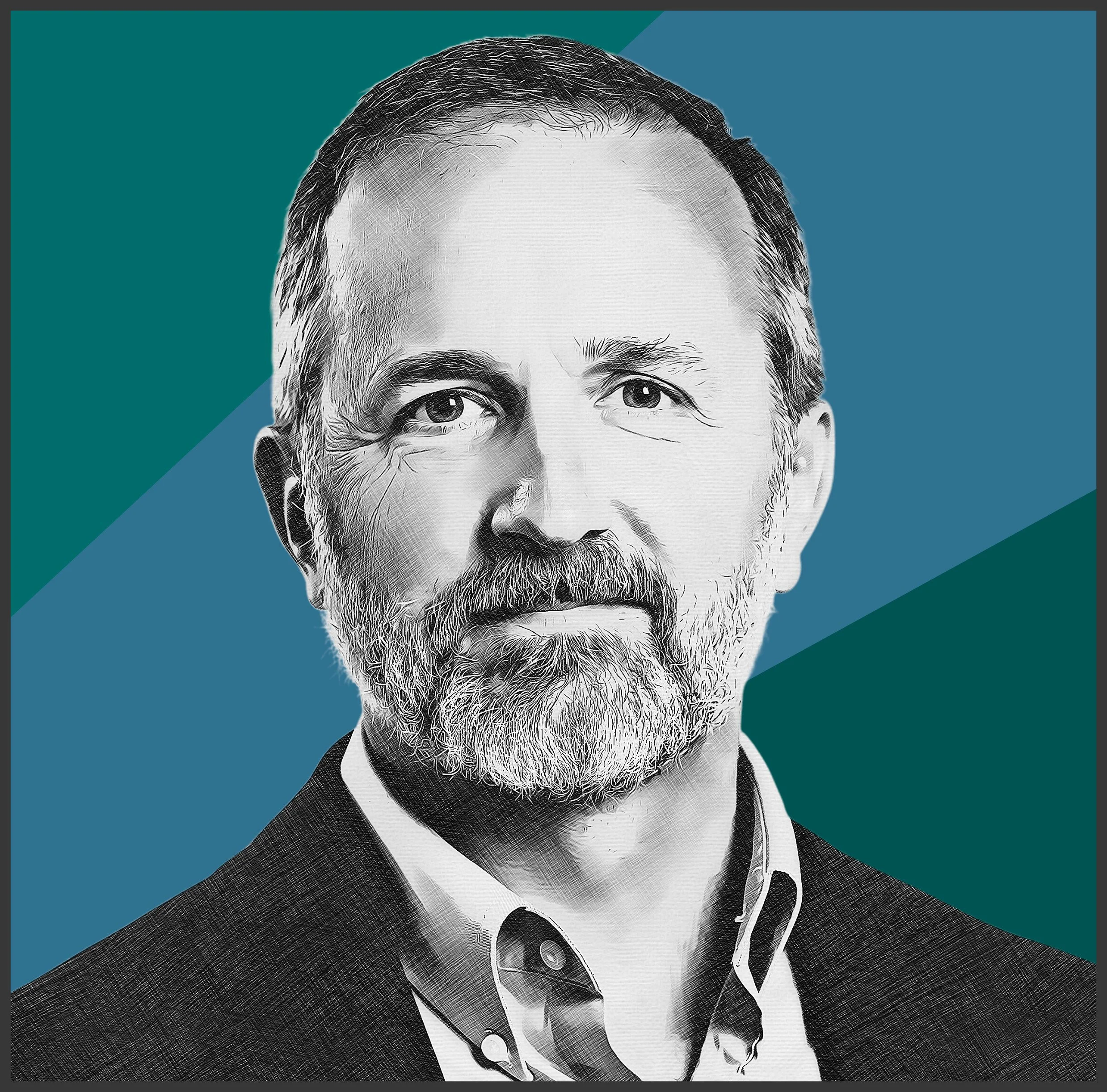
WITH FARR CURLIN, MD
A hospitalist, palliative care physician, and professor at Duke Divinity School advocates for recentering medicine on a fundamental question: “What is Good?”
Listen Now
Many medical trainees are driven to medicine by their moral or religious principles — only to find that they are expected to check their principles at the patient’s door. When this happens, physicians and patients may lose the opportunity for deeper, more healing relationships.
Our guest on this episode is Dr. Farr Curlin, a hospitalist and palliative care physician at Duke University School of Medicine. Dr. Curlin holds joint appointments in the Trent Center for Bioethics, Humanities & History of Medicine and Duke Divinity School, where he studies the intersection of medicine, ethics, and religion.
From a young age, Dr. Curlin was intrigued by the moral dimensions of medicine. As a medical trainee, he began to study how the religious backgrounds of physicians inform their practice. He is the co-author of The Way of Medicine, in which he challenges the modern “provider of services” model and calls for a recovery of medicine’s spiritual foundations as a healing profession. Now, at Duke Divinity School, he spends significant time helping physicians re-center their practice around the question: “What is Good?”
Over the course of our conversation, we discuss attitudes toward religion in the medical profession and how many medical professionals worry that being openly religious may make them seem retrograde — or worse. We explore striking the balance between offering physician wisdom while respecting patient autonomy, consider whether the project of medicine makes sense when viewed through the lens of secular humanism, and reflect on how the physician attributes of humility and respect enable physicians to productively bring their full selves to the bedside, all while practicing medicine within a morally pluralistic society.
-
Dr. Curlin is a hospice and palliative care physician with joint appointments in the Duke School of Medicine and Duke Divinity School. After graduating from medical school, he completed internal medicine residency training and fellowships in both health services research and clinical ethics at the University of Chicago before joining its faculty in 2003. Dr. Curlin’s empirical research charts the influence of physicians' moral traditions and commitments, both religious and secular, on physicians' clinical practices. Since 2015, through Duke Divinity School’s TMC Initiative, he and colleagues have brought graduate theological training to those with vocations to health care. As an ethicist, he addresses questions regarding whether and in what ways physicians' religious commitments ought to shape their clinical practices in a plural democracy.
Starting in 2023, Dr. Curlin began working with colleagues across North America to develop the Hippocratic Society, an association of students and practitioners dedicated to fulfilling the profession to heal. He is co-author, with Chris Tollefsen, of The Way of Medicine: Ethics and the Healing Profession (Notre Dame University Press, 2021), as well as more than 150 articles and book chapters addressing the moral and spiritual dimensions of medical practice.
-
In this episode, you’ll hear about:
2:48 - Dr. Curlin’s path to medicine and what drew him to a career at the intersection of religion and medicine
19:30 - Dr. Curlin’s thoughts on why doctors often feel they cannot be openly religious
35:45 - How Dr. Curlin would change medical training to create a deeper focus on personal commitments and moral conviction
41:15 - Exploring the limitations of artificial agnosticism at the patient’s bedside
51:50 - How fostering a spiritual connection to the work of healing can mitigate burnout
-
Henry Bair: [00:00:01] Hi, I'm Henry Bair.
Tyler Johnson: [00:00:03] And I'm Tyler Johnson.
Henry Bair: [00:00:04] And you're listening to The Doctor's Art, a podcast that explores meaning in medicine. Throughout our medical training and career, we have pondered what makes medicine meaningful. Can a stronger understanding of this meaning create better doctors? How can we build healthcare institutions that nurture the doctor patient connection? What can we learn about the human condition from accompanying our patients in times of suffering?
Tyler Johnson: [00:00:27] In seeking answers to these questions, we meet with deep thinkers working across healthcare, from doctors and nurses to patients and healthcare executives those who have collected a career's worth of hard earned wisdom probing the moral heart that beats at the core of medicine, we will hear stories that are by turns heartbreaking, amusing, inspiring, challenging, and enlightening. We welcome anyone curious about why doctors do what they do. Join us as we think out loud about what illness and healing can teach us about some of life's biggest questions.
Tyler Johnson: [00:01:02] Many medical trainees are driven to medicine by their moral or religious principles, only to find that they are expected to check their principles at the patient's door. When this happens, physicians and patients may lose the opportunity for deeper, more healing relationships. Our guest on this episode is Doctor Farr Curlin, a hospitalist and palliative care physician at Duke University School of Medicine. Doctor Curlin holds joint appointments in the Trent Center for bioethics, Humanities and History of Medicine and Duke Divinity School, where he studies the intersection of medicine, ethics, and religion from a young age. Doctor Curlin was intrigued by the moral dimensions of medicine as a medical trainee. He began to study how the religious backgrounds of physicians inform their practice. He is the coauthor of The Way of Medicine, in which he challenges the modern provider of services model and calls for a recovery of medicine's Spiritual foundations as a healing profession. Now at Duke Divinity School, he spends significant time helping physicians recenter their practice around the question what is good? Over the course of our conversation, we discuss attitudes toward religion in the medical profession and how many medical professionals worry that being openly religious may make them seem retrograde or worse. We explore striking the balance between offering physician wisdom while respecting patient autonomy. Consider whether the project of medicine makes sense when viewed through the lens of secular humanism, and reflect on how the physician attributes of humility and respect enable physicians to productively bring their full selves to the bedside, all while practicing medicine within a morally pluralistic society.
Tyler Johnson: [00:02:42] Doctor Curlin, welcome and thanks for being here.
Dr. Farr Curlin: [00:02:46] Thank you. I'm glad to be here, Tyler.
Tyler Johnson: [00:02:48] So we were hoping that you could start by telling us your origin story. This is where we often have people start. How did you end up going into the practice of medicine?
Dr. Farr Curlin: [00:02:58] Well, I was born at a very young age and grew up in a family where my dad was an ob gyn, and I think early on I was struck by how seriously he took his work. It wasn't that he always enjoyed it, but I remember he worked a lot and he didn't resent his work. That was clear. He clearly found it stimulating and worthwhile. For example, I remember he would come home for dinner, and usually within moments of dinner ending, he would be face down on the carpet a few feet away from the dining room, asleep, and he would have us maybe rubbing his back or something like that. And then inevitably, within 10 to 30 minutes, his squawk pager, the old school pagers that would say, doctor, please call Ladd, please call. Laddie would go off and he would stumble up, pick up the phone, call them back, and if the circumstances required, he would stumble back out the back of the house, into his car and back to the hospital. I think something about the moral seriousness of that always captured me. And my grandfather was also a physician. He was a general surgeon, and he always spoke about his work with affection and appreciation. And so I was I was intrigued from a young age.
Tyler Johnson: [00:04:26] So then was it a pretty straight line for you? Did you sort of get into college knowing you were going to go to medical school? And then it just way led on to way, and you ran it up right in medical school.
Dr. Farr Curlin: [00:04:36] I did have a period in high school where I thought I was going to be a genetic engineer. I think I had read some article about forthcoming advances in genetic engineering and thought that pretty cool. But by the time I went to college? Yes. I was pretty certain that I wanted to be a physician. My journey was roundabout in certain respects. I mean, by the time I went into medicine, I was persuaded I wanted to be a medical missionary of some sort. I had read biographies of physicians who spent their lives in far flung places, including the Belgian Congo and Tibet and other places like that, and I found their lives really intriguing and thought, I want to live in a similar way. Hmm. And then as I went through undergrad and went and spent a year in Guatemala, I found myself really enjoying speaking Spanish and interested in the Latino community in the US, and then interested in what people were doing. And particularly here Christians were doing in urban community development with health care. And so I became persuaded I wanted to be a doctor in a community health center in some large urban core in the United States. And then I ended up during residency, becoming persuaded. I needed to take some time to think about what was going on in medicine and about my own part within it. And that was the beginning of a series of doors opening up that led me into the kind of work I've done for the last 20 years.
Tyler Johnson: [00:06:12] So you described for us this image of your father who would come home. It sounds like both, you know, maybe fulfilled, but also somewhat beleaguered. If the first thing he's doing is lying down, face down on the floor to sleep after dinner, and then you have to or, well, his pager has to wake him up to then go back to the hospital. But I'm curious. So you're watching this beleaguered father who, you know, comes home, makes his way through dinner and then, you know, has to go back into the hospital. But the thing that you say stuck out to you about that, it would certainly be understandable if somebody told that exact same story, and then the ending was. And so then I knew, of course, I didn't want to do what he was doing. Right. But what you said instead was that what stuck out to you was what you called the moral seriousness of what he was doing. And so I'm curious about a few things. The first one is, what about the way that you saw your dad operating? I mean that more metaphorically than literally, but in that space struck you as morally serious. But more to the point, what was it about your wiring that made moral seriousness be the aspect of that that stuck out to you, rather than just the exhaustion or the beleaguered ness, or whatever other aspect might superficially seem more apparent to many people.
Dr. Farr Curlin: [00:07:32] Well, I'll start with the latter. I, in this family within which I am one of seven children, we were always talking about the challenge to live well and live faithfully around the dinner table. My parents were both very serious about their Christian faith, and that certainly was a framework through which we saw the world and talked about the world. But I will say within that there was also just a lot of talk about better and worse ways to live. I mean, my family's very opinionated about all manner of things, and there's a strong emphasis from the earliest moment on, as we came laughingly to remember my dad saying, I'm determined that you guys will not be worthless. There was a lot that went into that, but it was I don't want you to be people who just play. I don't want you to be people who just follow, who float along on the stream of public opinion and cultural trends. Live well, you know, determine to do so. I think the thing I noticed about my dad and his relationship to medicine was that he He was frequently exhausted, physically exhausted. But I don't think he was characterized by being beleaguered. At least it was clear that he did not experience the demands that his work put on him as something that he resented. It was clear that he perceived them as the kinds of demands this good work makes on him in his situation.
Tyler Johnson: [00:09:06] But wearing out your life in the pursuit of the good, in.
Dr. Farr Curlin: [00:09:09] Some sense, very much. Yeah. And I and I remember I mean, he definitely did not think of his work as just, you know, how can I limit the amount of work and get as much income out of it as possible? That's not to say he wasn't concerned about his income, but he was. He clearly was devoted to practicing well, and I remember even hearing him talk in ways that would preserve confidentiality about colleagues and so on. And his frustrations when he saw fellow physicians not taking with due seriousness their work and practicing badly. And he had a strong personality. He had a lot of tolerance for, um, disagreeing with people. And in the big five or big four personality profile, he would say be said to have disagreeableness, which means he could tolerate conflict. So he ended up getting called on by his colleagues frequently to deal with people who needed to be dealt with because they were not practicing well. And that makes it hard, uh, things for him, including, I believe he got sued by a fellow physician. But to me, it showed. He he thought it was very serious that we do this work well and that the work was good. You know, when you do it well, it's it's good. It's worthwhile.
Tyler Johnson: [00:10:18] It sounds like you had this intuitive both, you know, maybe some nature and some nurture sense that there was a deeper thread to this work, that it mattered for some reason that was foundational. It wasn't just a thing that he liked doing or a thing that was nice or fun to do, but that it it had some deeper moral purpose to it. So then let's pick up back the thread of your story. So you get into medical school. How did you decide what specialty to go into and then talk a little bit about? You know, you mentioned briefly a minute ago that as you got into your postgraduate training, you started to sense the need to ask some more foundational questions about both what you were doing and sort of what was happening in the medical world around you. Talk us through all of that a little bit.
Dr. Farr Curlin: [00:11:07] Sure. So I went to the University of North Carolina for undergrad and then thankfully, was able to stay for medical school. This is just, uh, to the chagrin of our younger listeners. Uh, my tuition at the University of North Carolina medical school was $1,000 a year, and the fees were $1,000.
Tyler Johnson: [00:11:27] Wow.
Dr. Farr Curlin: [00:11:28] Yeah. True. True story. And in terms of choosing a specialty, I had my version of a story I think I've observed many times, which is there were certain doctors that I just felt a kind of kinship with, you know, a kind of sense that the way they carry themselves I find attractive. And I want to be like them, including a doc named Tom Miller, who had devoted much of his practice to working with the underserved, which I knew as a Christian. I was something I needed. I needed to take seriously was how my work would connect with the underserved. So I chose medicine. I did think about general surgery, but in the end, I thought medicine was more of a fit for me. And in hindsight, it makes sense to me in that I'm wired for academic work, um, intellectual work, long hours of reading and sitting before a screen. And, you know, internists are able to sit still and think about small details for long periods of time and, you know, to a fault. And so I think it was it was a good fit. I went to the University of Chicago for internal medicine training, because I wanted to live on the West Side of Chicago in a little neighborhood called Lawndale, where there's a remarkable outpatient healthcare institution called the Lawndale Christian Health Center. It's a federally qualified community health center that does remarkable work. And I wanted to learn from those folks and live in that neighborhood with my wife and speak Spanish. And while I was doing my medical training and went along in that process with delight, I really loved, uh, residency training, had some amazing teachers, including some of my senior residents along the way.
Dr. Farr Curlin: [00:13:15] However, there was this growing sense it had begun in medical school, but a growing sense of dissatisfaction with what seemed to me a kind of assumption that we just follow the things we're taught here. And there was never an occasion where we were invited as trainees, in my experience, to even consider questions like what is medicine and what is medicine for? And how would you know a good physician when you saw one and why? And what are the rival visions that answer those questions? And then as a for me, particularly because I, I saw medicine as a line of work that could fit well within a Christian's vocation. It was striking to me that despite what I knew to be substantial contributions to the history of medicine and to assumptions we have in medicine, including most centrally, the notion that we should care for someone just because they're sick or injured without respect to other characteristics that Christianity had helped to contribute these things, that we were never invited within training to consider how different religious traditions inform our practices of medicine and what we take ourselves to be up to and what we take for granted. That dissatisfaction reached a point where I thought I in order for me to go on practicing medicine with integrity, I've got to take some time to take a step back, find people who can help me think and start to consider that further.
Tyler Johnson: [00:14:51] You know, so you're in residency, you're feeling this kind of, you know, these sort of deep soul level questions. You come to a decision that you need to take some time to really explore those. What did the rest of then your training look like, and how did that sort of unfurl into what eventually became your career?
Dr. Farr Curlin: [00:15:10] So as a resident, I had that longing and I looked around, how could I do that? And one of the opportunities that was right in front of me was to apply for the Robert Wood Johnson Foundation Clinical Scholars program. The University of Chicago was one of, at that time, the 7 or 8 sites around the country where one could be a fellow, and I applied proposing to study what experiences contribute to a person ending up working among the underserved, including religious commitments and experiences. I was accepted, and I basically, within those two years, had a lot of margin that I had not had before to start thinking and reading, and I began to study based on feedback from people as I went and proposed what I might do. I eventually pivoted toward studying how physicians religious characteristics track onto and help to explain their different clinical practices and their relevant ideas about what it means to be a good physician, which includes their disagreements about a number of controversial issues within medicine. And that got some legs. I did the first comprehensive national study of physicians religious characteristics, comparing them to those of the general population. The papers that came out of that were found interesting by people in the press, and I was offered a job at the University of Chicago to join the faculty.
Dr. Farr Curlin: [00:16:45] I then trained in my first year on faculty in clinical medical ethics at the University of Chicago's program, called the McLean center and McLean program. And then over the next several years, I got a K Award from the National Center for Complementary and Alternative Medicine, which somehow was persuaded that studying religion was kind of like alternative medicine. And then I got a couple of larger grants from the Templeton Foundation to develop opportunities at the University of Chicago, as well as across universities. More opportunities for people to take seriously the substance of religious faith and how it shapes and informs Forms the work of physicians. Not just not just the faith health connection research, which is studying how religion is associated with health outcomes for patients, but how how these traditions and commitments inform the practices of medicine. That's what I did for the next ten years or so doing a lot of empirical research, national surveys of doctors, qualitative studies, interview studies, and then creating institutions, small institutions. But like the Program on Medicine and Religion at the University of Chicago, which I founded with my colleague Dan Sulmasy, and then the the Conference on Medicine and Religion, which we launched in 2012. This year will be its 14th year.
Dr. Farr Curlin: [00:18:07] It's still going, but context that actually foster that kind of dialog that I had found entirely absent in my own, in my own training. And then just to bring us up to the present, in 2014, I was offered a really special position, which I hold at Duke University. It's an endowed professorship in the university's ethics center called the Trent Center, but with from the beginning a joint appointment in its divinity school, which the leader of which the dean of which, Richard Hayes, now deceased, invited me with colleagues to put forward a vision for how we could invite those with vocations to health care into in-depth theological training that the Divinity School is obviously committed to providing. That has been the joy of my whole career, has been the work we've been able to do over the past decade. Training. Now, more than 100 residential fellows have spent at least a year with us full time, and now we have a hybrid program that goes out that's designed for practicing clinicians, and we're seeing people come from around the country to dig deeply into Christian faith, Christian tradition, and how they can come to see and practice medicine with more clarity and joy and integrity and alignment than they have found possible to that point.
Tyler Johnson: [00:19:29] That's very helpful in terms of framing. So let's then pivot a little bit to talking a little bit more about the substance. Let me tell you a quick story that I think will set up a succession of questions that that I think are important. So Henry, who is my co-host on the podcast, but who unfortunately is in the middle of his second very demanding year of ophthalmology residency and so can't always be here with us for the interviews right now. We originally met because he when he was a student here in medical school, he had helped to found and then was helping to direct a course called Being Mortal, which was a course on sort of loosely based around Atul Gawande's book by the same name. But it was meant to sort of help medical students confront their own mortality and then kind of think through what it would mean both to care for people who were dying. In some circumstances, and also to try to integrate a conception of their own. Finitude and mortality in the process of becoming doctors. And so he had invited me to lecture in that class, and I've lectured there a number of times now. But more recently, that lecture began as sort of one thing and has morphed over the years. But more recently, the in effect, they have invited me to talk about both how to practice medicine in a way that allows medicine to remain meaningful across the duration of your career, and also how to make the meaningful practice of medicine part of a meaningful life. In other words, how to sort of build the foundations for allowing your life to retain meaning with medicine as part of it.
Tyler Johnson: [00:21:07] One of the things that I have started to talk about more openly in that class, as I have gained a little bit more experience and a little more sort of confidence from the institution and whatever is that. I have started to tell people explicitly that I think an important part of building a meaningful life is religious engagement, right? It's finding a church is the way that I often put it in the class. And I'll be honest that the first time I said those words in that class, which is open to all different sorts of Stanford students, I you know, I was pretty nervous about it. I wasn't sure how that would sort of come across. But what was really interesting is that then, separate from the lecture I gave in that class, I also teach a class called Meaning in Medicine that is a larger exploration about both how to find meaning in medicine and how to build a meaningful life, and the next semester or next quarter, after I had given that lecture in that class, when I taught the meaning in medicine class, we went around on the first day and found out why people who were in the class had decided to take it, and something like a third of the people said that the reason they had decided to take the class was because they had heard me give this lecture in the other class and quote, we knew it would be safe to come here and have a place to talk about religion within the medical school. So there are multiple things that strike me about that anecdote. But the thing that strikes me perhaps the most about that anecdote is the very strange idea that it is unsafe to talk about religion at a medical school, right? Like, on the face of it, I feel like that should strike all of us as a little bit counterintuitive, or at least as not intuitive.
Tyler Johnson: [00:22:50] Right? Like, why would people feel unsafe discussing their religious experiences in medical school? But having said that, of course I already know that that's true because as I said the first time that I mentioned, and it's not like I was, you know, evangelizing for evangelizing for some particular religion. But I just said, I think that the idea of engaging, I think there's a lot of social science research and we could talk about it, but anyway, that there's a lot of reason to believe that engaging with a religious community is a is an important part of a meaningful life. And yet I was a little bit afraid I might get like reported to the dean's office or something, right? Like which is just to say that we all kind of know that there's this kind of discomfort, like discussing religion within any medical context, but especially within an academic medical context is kind of lacks sophistication, or it's sort of something other people might do. But we, you know, that's just not really. We just don't do that here. Right? That's sort of the sense. So the first question that I want to ask is, why do you think that is? Like, how did we come to a state of affairs where it has come to appear almost unseemly for doctors to talk about religion, even if it is their own religious experience?
Dr. Farr Curlin: [00:24:02] Based on my experience as well, trainees and even medical practitioners sense that there is a kind of boundary between medicine and religious faith that must be respected. And if you don't respect it, you are in danger of violating an important professional boundary that might get you sent to the dean's office, or just might offend your colleagues and put you in a position of looking retrograde, or worse. I think the reasons for this are complex, but I think they go back hundreds, hundreds of years and are part of the whole era of modernity. One of the things that modernity has been characterized by is a skepticism regarding what is traditioned, a skepticism regarding claims by those in authority to pass on as to be received commitments, moral or otherwise. And there's been an emphasis. The corollary of that skepticism has been an emphasis on the quest for each person to break free of just being reproduced by what comes before, and instead authentically self-expressing himself or herself in a way that makes you interesting and unique and and defensible intellectually, because you haven't just done what past people might have thought was right. You have questioned it, you've challenged it. You've set it aside. You've gone your own way. I mean, this idea culturally, is in all advertisement, every practically every advertisement tells you you need to break out of the mold and be yourself, be different by driving a car or whatever. And of course, it becomes kind of laughable. But the deep longing is what the philosopher Charles Taylor calls the ethics of authenticity, which is his name, for his observation that moderns find the very center of the moral life. The most important thing for each of us is to be unique, is to be ourselves, and not let the constraints of what our parents teach us or our church teaches us or our, you know, the the people in authority teach us.
Tyler Johnson: [00:26:14] I think it's important to recognize their right that this is as you mentioned. I mean, you can see this in things as silly as beer and car commercials, right? Or arguably the most famous advertisement. I'm not an expert in advertising, but my understanding is that one of the most famous advertisements in history is the original advertisement for a mac computer, which is the same sort of right, the same kind of driving principle, but also a lot of what comes across as kind of it's hard to know even really what to call it. I don't pop psychology or philosophy, but the kind of catchphrases that define the 20 tens and 2020s, right, are things like you, do you or discover your own truth or whatever, right? Which is to say that it would seem, or the the tacit suggestion, even if we never articulated, is that the center of the moral universe somehow dwells within each individual, right? And that there is nothing universal or even universalizable. It is just sort of these completely atomized moral universes. And ultimately that's all that really matters.
Dr. Farr Curlin: [00:27:19] Yeah. That's right. And the way that cashes out in the world of medicine and medical ethics is an emphasis on patient autonomy in such a way that it appears physicians have a fundamental moral obligation, not just to respect a patient's authority through the doctrine and practice of informed consent, the authority to refuse any of our proposals, but actually to positively regard what the patient wants, what the patient imagines is good for him or her, and to prioritize our practices being goal concordant. It comes out in medical ethics, with an emphasis on medical ethicists not giving their own opinions about which courses of action are more and less ethical, alcohol, but instead just just giving options and data and being careful not to influence patients one way or the other. It comes out in the emphasis on non-directive counseling, which some ethicists, I think in a way that's that's, uh, self-contradictory and really intellectually indefensible in the end, have come to argue that doctors who counsel patients to do one thing versus another, even if they do so peaceably, and being clear, the patient has the ultimate authority to go along with what the doctor recommends or not, or thereby violating patient autonomy by letting the patient be driven by their opinions rather than the patient's.
Dr. Farr Curlin: [00:28:45] So trainees and clinicians today inhabit a world where there's this axiom that's operating at least as an implicit premise. And that is there's a personal life or a personal realm, and there's a professional life, a professional realm, and medicine is in the professional realm, and religion is in the personal realm Room, and one of your fundamental obligations is to keep those two realms from unduly interfering with one another. And there's obviously something in that. That's right. And to me, what's right about it is clearly, if you're going to be a medical professional, you do have to live up to what are the reasonable expectations of the profession. But what's wrong about it is, is a false sense that what we commit to in being a medical professional is to detaching ourselves from those, you know, fundamental convictions, commitments, moral and otherwise, that actually brought us to medicine and that we've, you know, historically affirm why medicine is such good work.
Tyler Johnson: [00:29:44] You know, as a religious person myself, it's often puzzling to me to look at depictions of religion and religious people in popular media, in the sense that they often seem to me to make mistakes on a very fundamental level. Right. And one of the primary mistakes that I think it's possible to make is the assumption that religion is a thing that can easily be kind of cordoned off or put in a particular box of your life, as if it amounted to, for example, going to church on Sunday for a couple of hours or whatever, and then you sort of put it away in the same way that you might take off a hat at the end of, you know, getting back from that and put it in your closet and then not pick it up again until you put on your church hat when you go the next week. Right. But I think that for many people that I know who find their lives to be most deeply altered by religion, it is precisely because the religion is not a hat that you take on and off every week. It is a force that lives inside of you. Right. And it is the lens through which you see the rest of what you do. And that doesn't mean that you, you know, to your point earlier, obviously there are inappropriate ways to, you know, you wouldn't want to go in whatever evangelize to your patients or what have you. But but the idea that you can just hang up that hat when you go to work, not only functionally does it not make sense, but just in terms of lived experience. There are many people from many different religious traditions who the moral understanding of the way that the universe works and the way that we are meant to function within it, is not a an adjunct to going into medicine. It is the very reason for going into medicine. It is the very reason for medicine to exist in the first place.
Dr. Farr Curlin: [00:31:44] Yeah, I have reminded students that medicine appears to be a perplexing practice if one begins with a strictly naturalistic set of assumptions, Options, because it does seem odd that we would devote so much energy and so many resources to the care of those who are either long past reproductive age or who, from a vantage of natural selection, the fitness of the future population would appear to be better off if they did not reproduce. And yet, everybody knows it's good to care for people who are sick and injured. I mean, everybody agrees about that. And I think that agreement reflects a sense, I propose a deep recognition of something true that ultimately science, you know, is not captured by science. It is captured by many religious traditions. And I think that it's captured by many religious traditions. And that is why the practice of medicine has historically held such esteem. In other words, just practically, it's not that the doctors of the 12th and the fifth and the, you know, the 17th century set aside their religious beliefs in order to practice medicine. No, on the contrary, it's the fact that in all those centuries, despite the deep disagreements people had across religious and other traditions, there was agreement that it's really good to attend to those who are sick or injured and seek to preserve and restore their health. It was something that everybody could agree on in its fundamental commitments, and that's what's made possible the formation of a unitary medical profession, insofar as it has been able to form and be sustained. Is is that that's an area of agreement?
Tyler Johnson: [00:33:30] Yeah. It is striking to me that I really appreciated in a book written by Yuval Noah Harari, who is not religious, um, that he recognized that it actually there often is a, an assumption that shrugging off any kind of religious ideology is important, precisely so that we can see clearly the need to embrace secular humanism. That's the as if religious commitments are a thing that need to be gotten past, so that then we can see the moral world clearly. But as he recognizes, if you truly shrug off all at least maybe not religious, but theological or metaphysical principles, there actually is no reason for secular humanism or for any other particular philosophical approach, right? Because if there is no ultimate reason for anything, then it's very difficult to make arguments about why you should do one thing more than you should do any other thing. Which is not to say that that any particular religious tradition. It's not to say that doctors or anyone else need to adhere to any particular religious tradition, or even to religious tradition per se. But the suggestion that engaging with the religious tradition somehow obscures your moral view of the universe in a way that will be clarified if you just gave that up. Does seem a very strange suggestion.
Dr. Farr Curlin: [00:35:01] Yeah, I agree, and it's a particularly strange suggestion if what you want to view clearly is the why of clinical medicine, and if you want to have institutions and practices of clinical medicine that answer to the demands, the reasonable demands of our neighbors upon us and that are just and that are, um, well ordered and that are going to be genuinely healing and not corrupted. Then, frankly, setting aside all the resources provided by all these historic traditions, most of them religious, seems to me particularly not well reasoned.
Tyler Johnson: [00:35:47] So one topic that is very difficult to avoid, I think when discussing all of this, you mentioned early on when you were describing sort of the arc of your career. You mentioned this, some of the questions that you started to think about when you were in residency in particular were things like even what is medicine or what makes a good doctor a good doctor, right? And what is striking to me is that, as I think back, you know, on my own medical education, I received what I consider to be a very rigorous medical education that I think prepared me really well for, for my residency and then residency that prepared me well for fellowship and fellowship, for practice. And yet, it is also true that in all of that, almost all of it was dedicated to learning. How does the body work? How can the body stop working? And what can we do to restore the functioning of the body when it has stopped working. Right. And then some sort of correlated skills about how to do physical exam maneuvers and interview techniques and whatever. But all of those things were ultimately in the service of figuring out, and I tell still, I tell my students, you know, here that to some degree, in in some parts of medicine, what you're really trying to do is figure out what's wrong and how are we going to fix it.
Tyler Johnson: [00:37:09] Right. Those are the two big questions. But all of that is to say that as rigorous as that education was, I think it is the case that for most people in medical education, that really is the focus and a focus on deeper questions of why are we even doing this? Or what does it look like to do a good job at this, other than the sort of tacit but intuitive suggestion, right. When you're in training, it is sort of inculcated, even if no one says it out loud. And even if you don't realize it, that being a good doctor looks like getting a high exam score or, you know, getting into the best residency or, you know, all of the other sort of external markers of success. So I guess what I'm wondering is, you know, if someone waved a magic wand and made you in charge of medical education and said, okay, you can do what you like with medical education, right? You're in charge of whatever the Acgme or and the Aamc and whatever, and you can just reform the education of doctors in any way you like. What would be at the top of your list? Like, what would you be thinking about as you went about trying to do that?
Dr. Farr Curlin: [00:38:18] Well, I would I would begin explicitly setting aside the notion that when you commit yourself to being a good doctor, you you commit yourself to setting aside your personal commitments and your personal values and so on. And I would instead, from the from the get go, make clear that medicine is the kind of practice insofar as it's not reducible to scientific ways of knowing natural scientific ways of knowing, insofar as it involves attention to human beings who are spiritual creatures. And there's different ways to describe what that means, but it certainly means we're self conscious. We are asking ourselves questions about how we should live, why we live, what the shape of a good life is, and so on. Because of that, medical educators will not be able to offer sufficient resources for a morally plural public, including the the morally plural set of future physicians to fully encompass what's at stake in our work. And we would basically have a posture of open and genuinely hospitable welcome to moral communities and traditions, to be a part of the dialog about what medicine is for, how one grows to be a kind of person who's reasonably commands the respect of others. Who answers well to the claims of our neighbors on us, and so on. And we would, as medical educators, have the humility to be self conscious and public about the fact that we're going to teach this art, we're going to teach the skills involved, we're going to teach the techniques involved.
Dr. Farr Curlin: [00:40:02] We're going to teach the science, the the data involved that we think is essential as building blocks for the practice. But we need all the help we can get in training a cadre of healers who are going to be well formed morally and are going to be the kinds of healers who can go out and care for patients who come from diverse moral traditions, which will have different kinds of judgments about when to pursue one feature of health and to what extent and with what amount of resources, and so on. So I would make from the start, I would make it clear that we don't have all the answers here. We do have answers. This is not just wide open. We're going to train you to be scientifically proficient, technically competent, and to have shown that you have the discipline of showing up as you should when people are sick and injured and doing what's expected of you there, but otherwise would say, you know, being a good doctor is is the work of a lifetime, and it's the work for which you're going to need not to set apart your religious communities or other moral communities. You're going to need all that they can provide you with. You and your colleagues.
Tyler Johnson: [00:41:13] All the help you can get.
Dr. Farr Curlin: [00:41:14] All the help you can get, all the help you can get.
Tyler Johnson: [00:41:17] So I think that it's important to highlight here a distinction that I hear you making that I think is important because it pushes back against, you know, I don't know at Duke, but here we often talk about the unwritten or unspoken curriculum. Right. The things that you learn in medicine that nobody ever, you know, it's not on a PowerPoint slide, but you just know from the way that people talk about things and whatever, right? And I would argue that to the degree that medicine as a tradition or as a cultural practice, particularly medical educators, to the degree that we think about the religious or other moral commitments of trainees at all, that the paradigm is something like this. We may sort of, roughly, vaguely recognize that patients may have religious or spiritual inclinations. Even that kind of makes us intuitively uncomfortable for complicated cultural reasons. But even to the degree that we recognize that, I think the implicit suggestion is that the best way for a trainee to be able to engage sort of even handedly or productively, or even just without conflict with a patient who has, whatever their moral or religious commitments are, is at the very least, to completely sort of box up their own religious or moral commitments when they come to work in favor of showing up as a.
Tyler Johnson: [00:42:52] Not that you necessarily need to be agnostic, but you need to show up in a sort of agnostic way, and that maybe the better thing at the end of the day, I think there's a pretty heavy cultural implicit message is that the better thing ultimately might be to just truly be agnostic, because if you are agnostic, then it allows you a sort of an increased degrees of freedom, so that maybe you don't have to respond to spiritual concerns at all, because they might be kind of silly. But if you do have to concern, you do have to deal with them. You can respond in a sort of a evenhanded, quote unquote objective, sort of detached, neutral way. Right. But what I hear you saying is a few critiques of that implicit argument. The first one is nobody detaches themselves from their moral commitments. You might change your moral commitments, or you might convince yourself that you're detaching yourself from moral commitments. But the idea that you're really detached, that's just silly, right? Like, I mean, especially in a field like medicine and actually in any field. Right? Even if you are just going into business and your goal is to make $1 billion, that's its own set of moral commitments.
Tyler Johnson: [00:43:57] It's just it's a different one. But it's still right. Everybody has moral commitments. That's thing number one. But thing number two is that because some version of faith, spirituality, whatever you want to call it, seems to be hardwired into us as humans. The idea that you can better relate to a person who maybe has a different set of spiritual commitments than you do, or used to, because you now no longer are committed to those previous commitments. On its face, doesn't actually make a lot of sense, right? It would seem to make a lot more sense that the better thing to do is to grow into your own commitments in a way that then actually opens a window to allow you to view what is sacred to another person, which may be very different from what is sacred to you. But that that understanding, if you will, of the sacred capital S as a category of thing in the universe, actually allows for dialog and allows for understanding in a way that is much more likely to foster a meaningful connection between doctor and patient than sort of pretending that that part of us as medical professionals doesn't exist. Does that seem like a reasonable articulation?
Dr. Farr Curlin: [00:45:15] Yes, absolutely. I have, in the practice of medicine, of course, met many patients who disagree with me on all manner of things, including Doing because we have different religious formation, different traditions, or just within the same general tradition have further disagreements. And what I found, though, is every patient knows that that's the world that they inhabit. Just as we do. And if doctors carry themselves with respect and candor, they will find that patients are deeply encouraged and refreshed to find a physician talking with them, person to person. Hey, you know, I'll be honest with you. Here's here's how I think about that issue. And I don't know, it's probably partly because of my own religious formation and so on. And tell me about yourself. How do you come to your view? And we can have those kinds of conversations with patients. Patients are much less worried, in my experience, that we might appear to disagree with them than that they're worried we will just refuse to engage them as a fellow human being at all. And it's that pretense of a kind of spiritual, moral, religious neutrality that I think is so patently vacuous that contributes to patients feeling like they're just treated as by someone who's not fully human. They're just a provider who's filling a role within a healthcare industry.
Tyler Johnson: [00:46:48] Yeah. You know, a couple of things building on that, that are really striking to me. One is that, you know, to be clear, there is a way to be very religious and be arrogant about it, right? There is there is a way to have religion show up in your life and in the way that you engage with the world and treat other people. That is largely about condescension. And that's really mostly what that version of religiosity is. Aim is, is to prove that you are better than someone else, or maybe more right than someone else. Right. So the reason that I bring that up is because I suspect that much of the kind of gut level discomfort that many people have with the idea of bringing that part of themselves to work, if you will, in a medical context, is because they have encountered people who are arrogant about it in that way, and who carry themselves in a way that that communicates that. And there is such a visceral response against that kind of arrogance that it comes to seem that we must in order to avoid that kind of arrogance, we must then avoid being a whole person at work in the first place. But of course, there are two ironies about that formulation. The first is that anybody who thinks that you cannot be, for example, a secular humanist and be arrogant Is probably not being fair, right? And indeed, where I went to medical school, which was a wonderful medical school in many ways, but it was an open secret that many faculty there, their words, including in, you know, required public lectures, were dripping with condescension towards people who were not secular humanists.
Tyler Johnson: [00:48:44] Like, you know, how could any reasonable person in the world, you know, not have moved on from religion after they got out of kindergarten? And so that's one irony. And then the other irony is that I think that most people have met people who encounter their religion as quite explicitly as the thing that awakens the most beautiful kind of humility in their lives. And that allows them to. If I am from religion A and I encounter a person from either religion B or who professes no religion at all to say precisely because of my religious and moral and whatever other kind of formation, I experience you as a sacred individual being who is your own universe, and I will encounter you and engage with you and treat you with the respect and humility that that recognition requires. I want to be clear. I'm not saying that religion is necessary for that, but the idea that being religious somehow bars you from that. I think that that bespeaks a inaccurate and unfortunately limited understanding of how religion can show up in a person's life.
Dr. Farr Curlin: [00:50:19] Indeed. You know, in the the Gospel of Matthew in the 25th chapter, we find Jesus is recorded as saying that as often as you have visited the sick or those in prison or the poor, or clothe those without clothing and so on, you've done so. To me, that's just a tradition within Christianity. But it has that has animated a conviction that if I see a patient, whether they're a Christian or not, if I see a patient who's sick or injured, then in some real way, I'm being visited by Jesus. I certainly don't think that leads me to treat them with disrespect or arrogance, although I'm certainly as human, susceptible to arrogance. But if I am arrogant, it's that sort of a reminder that will check my arrogance and will call me to account, you know, to return to treating people in the ways that befits their dignity because of the way God has made them, and the honor that God has shown them. So if you look through the history of medicine, that kind of thinking is all through. It's in Jewish contributions to to medicine. It's in Islamic contributions to medicine. It's this fundamental sense of an obligation to Revere and treat with great respect and honor the other because they are sick or injured, not just because they happen to agree with you on other things.
Tyler Johnson: [00:51:51] Well, and to sort of complete the circle, one thing that is, you know, and I'm not trying to tell your own story for you or impute motives to, to you or your dad, but, you know, we've been doing this podcast for a long time. We have had all sorts of conversations with all sorts of people. Occasionally we talk in a relatively explicit way about religion or how it shows up. Most of the time, that's not what we're talking about. And, you know, I have no idea in the vast majority of cases, if the people that we're talking with are religious or and if they are what their religious persuasion is, right. That's just not a thing that we talk about. The degree that we've talked about that so explicitly in this episode is very much the exception, not the rule. Having said that, though, when Henry and I embarked on the project of this podcast, the sort of, you know, initial, at least explicit reason for it was to explore the epidemic of burnout in medicine and to try to dig down and discover what might be the causes of that epidemic and how we might address it. Now, to be clear, there are many things right? We are very much in favor of reformatting the bureaucratization of medicine and the corporatization of medicine and electronic medical records and, you know, advances in technology that have had unintended consequences. Anyway, we could go on and on about all sorts of different things. But having said that, it is also true that I think what has been most surprising to Henry and I is that we have, over and over and over and over again from all sorts of different people in all sorts of different discussions.
Tyler Johnson: [00:53:28] And to be clear, Henry and I, there is little, if anything in common about our religious formations or our current religious commitments. You know, we're in very different places as far as that goes. But what has surprised both of us is that one theme that has asserted itself again and again and again on the program, including from people who clearly are trying almost to find a way to not quite come to these words, to say it, but then they can't find any other words, so they come back to saying it anyway, is that there is some part of the epidemic of burnout that seems to be that we have as a profession and as a culture, lost touch with what for? Because nobody can figure out a better word constitutes the Sacred Heart of the medical encounter. Whatever religious lexicon you might use to describe that yourself, there clearly seems to be what we also, sometimes in other contexts, have called the ineffable mystery. There is something that the best encounters between me and a medical student, me and a resident, me and a member of my team in the clinic, or me and a patient. It is all the same in the sense that it is what one philosopher called an I thou relationship, right? It is a an encountering of the other person, in particular a person who is suffering that recognizes the entirety of what it means to be confronted by a person. And I guess the point that I'm making is that I don't know another way of quite understanding that except for as something that is spiritual or theological or, as I said a moment ago, sacred.
Tyler Johnson: [00:55:21] And so I suppose that part of what I'm trying to get at is that now, to come back to the tableau that you painted of your father again, not I'm not trying to impute my own motives to him or whatever, but what I understand you to be saying is that here is a person who has worked so hard all day that he comes home and lies down, face first on the floor. And then a half an hour later, this incredibly terrible sounding pager goes off, and instead of grumbling and cussing and rolling his eyes and what do I you know, I have to go back to that stupid place again. I imagine that the thing that, you know, you corrected me, in effect, because I used the term beleaguered. But what I understand to be the reason for your correction is precisely that there is some deeper sense of a deeper meaning to what he's doing. That is the thing that pushes his exhausted body off the floor and gets him with some amount of respect and grace, to go back and to help the person who is hurting. And I guess the point that I'm trying to make is that it, you know, our if you like unofficial qualitative research of, you know, 150, 200 hours of discussions on this program suggests to us that at least some part of what may be going on in the epidemic of burnout is a loss of that sense of the sacred at the heart of what we do.
Dr. Farr Curlin: [00:56:52] Yeah, I put it I would put it this way, Tyler going back to my time in training when I started to long for a chance to reckon with what medicine is for. I think that was triggered by my becoming aware that there was this expectation of separating your personal from your professional values. There was this expectation that if you don't do that, you're likely to have your religious values impose on patients. And that would be a contradiction of your professional commitments. And I remember thinking, wait, something must have gone wrong for us to come up with this idea. What I can see now is what has gone wrong, in my judgment, is that we've had with the emphasis on individual authenticity, we've had that cash out in medicine with this commitment to support patient goals. That has really displaced, I think, the more historic and still more reasonable and defensible commitment of medicine to be a healing art. It is true that if religious commitments remain influential in a doctor's practice, then there will be points at which a patient Desires, understandably desires some intervention that the doctor believes is contrary to what medicine is for. And I think it's recognition that that happens, and outrage on the part of some that that happens that has really doubled down on this notion of separating the personal from the professional. But the end result of treating medicine as a kind of provision of health care services to be made available to patients without respect to what the doctor thinks is good for the patient or what is consistent with what the doctor has reasonably professed as a practitioner of medicine, that results in a moral flattening of our work, such that the doctor's own commitments, judgment, longing to do good seems like an obstacle to patients getting what they have a right to.
Dr. Farr Curlin: [00:58:56] And I would argue that it's that systemic pattern that has led to the demoralization of medicine, and that demoralization means that the average student and physician today is getting constant messages that really, their work is not about seeking what is genuinely good according to their best judgment. Their work is about providing proficient, effective, efficient, scientifically informed, technically competent healthcare services and setting aside their judgment about when that's actually good for their patient or not. And that seems to me like a perfect recipe for burnout. It means that insofar as doctors inhabit this way of thinking, they are conditioning themselves and being conditioned to set aside the question of what is good and what is worthwhile, because their judgment about that is part of their private values, their personal values. But setting aside what is the pursuit of what is good is is just a it's a recipe for demoralization. And to me, it's no wonder that morale declines as a result.
Tyler Johnson: [01:00:03] Yeah, it really it really is interesting to recognize the cognate similarity between morals and morale. Right. And to recognize that to become demoralized, which we often understand as a word that means sort of to become alienated or to develop a lack of enthusiasm, shares both a common etymological root, but also what seems like a sort of a philosophical root, with the idea of taking the moral dimension of the act out of the act. Right. So that it then becomes purely technocratic. And as Henry and I have said repeatedly in multiple forums now, that idea that doctors are little but fancy machinists seems to be right at the heart of what is making it harder and harder for many people to find the meaning here that that they once found.
Dr. Farr Curlin: [01:00:55] I agree.
Tyler Johnson: [01:00:56] Well, Doctor Farr Curlin, we thank you so much for all of the work that you have done, and we really appreciate your being on the show. Thank you so much for joining us.
Dr. Farr Curlin: [01:01:06] My pleasure. Thank you.
Henry Bair: [01:01:11] Thank you for joining our conversation on this week's episode of The Doctor's Art. You can find program notes and transcripts of all episodes at the doctor's Art.com. If you enjoyed the episode, please subscribe, rate, and review our show available for free on Spotify, Apple Podcasts, or wherever you get your podcasts.
Tyler Johnson: [01:01:30] We also encourage you to share the podcast with any friends or colleagues who you think might enjoy the program. And if you know of a doctor, patient or anyone working in healthcare who would love to explore meaning in medicine with us on the show, feel free to leave a suggestion in the comments.
Henry Bair: [01:01:44] I'm Henry Bair.
Tyler Johnson: [01:01:45] And I'm Tyler Johnson. We hope you can join us next time. Until then, be well.
You Might Also Like


LINKS
Discover Duke Divinity School’s Theology, Medicine, and Culture Initiative here.
Read about Dr. Curlin’s book The Way of Medicine.
Learn more about The Hippocratic Society here.