
EP. 164: TECHNOLOGY, MEDICINE, AND THE ERASURE OF SUFFERING
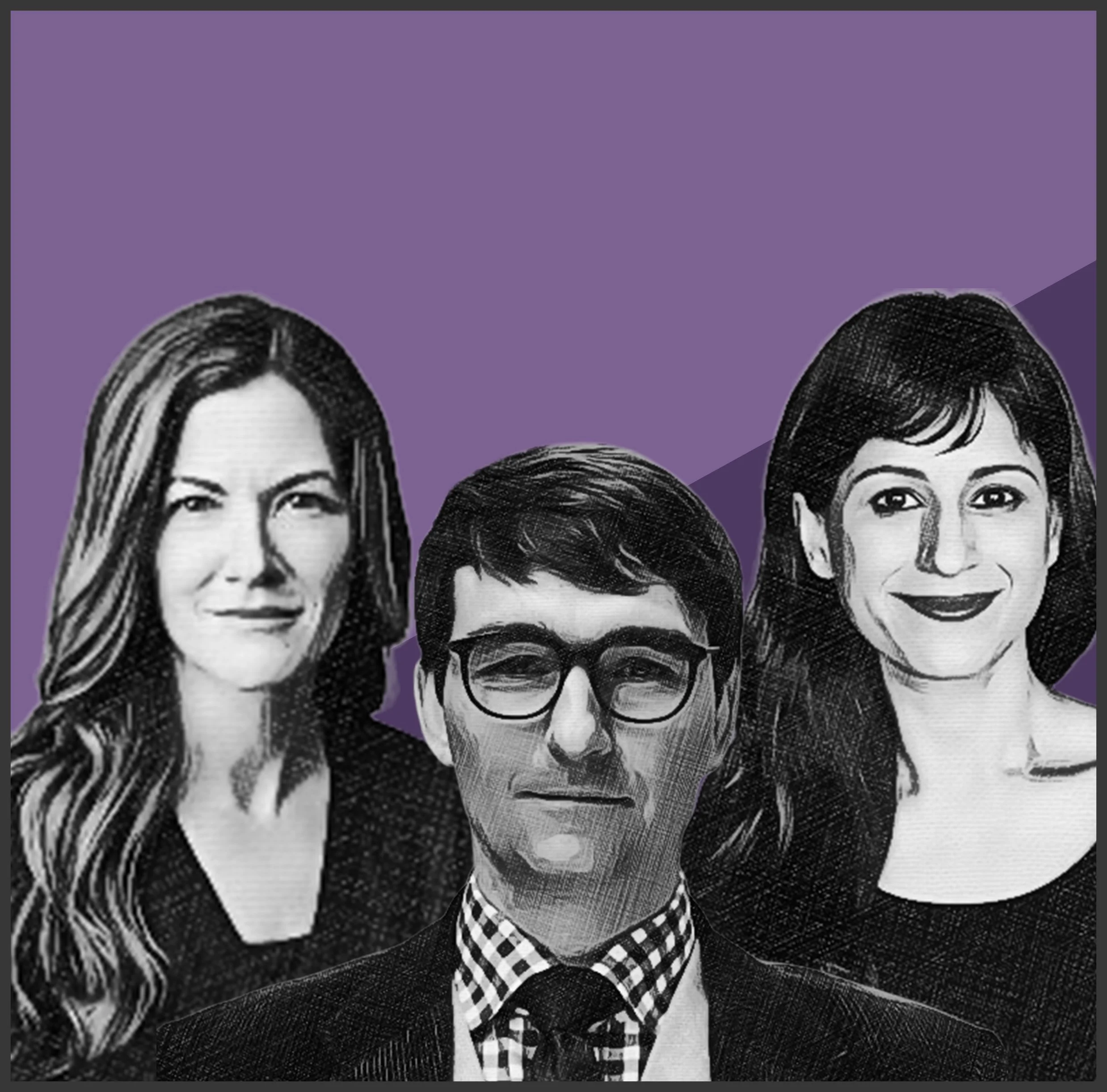
WITH SUNITA PURI, CHRISTINE ROSEN, AND MIKOLAJ SLAWKOWSKI-RODE
A historian, a philosopher, and a palliative care physician explore the interplay of technology, suffering, and medicine – and argue for the value of embracing life as mystery.
Listen Now
Over the past 160 episodes, two themes that have appeared repeatedly feel as relevant and urgent as ever are 1) the pros and dehumanizing cons of technology and 2) approaching suffering in the human experience. In this episode, we are excited to bring back a panel of notable past guests to discuss the interplay between medicine, suffering, technology, and the human experience.
We are joined by historian Christine Rosen, PhD, philosopher Mikolaj Slawkowski-Rode, PhD, and palliative care physician Sunita Puri, MD. Rosen is a senior fellow at the American Enterprise Institute whose work is focused on American history, society and culture, technology and culture, and feminism. She previously joined us to discuss the human experience in the digital world. Slawkowski-Rode is an assistant professor of philosophy at the University of Warsaw and research fellow at the University of Oxford with a current emphasis on the philosophy of science and religion. In our episode with Dr. Slawkowski-Rode, we explored the philosophy of grief. Dr. Puri is a palliative care physician, associate professor at the University of California, Irvine School of Medicine, and author of the critically acclaimed book That Good Night (2019). In her appearances on the show, we have discussed the beauty of impermanence and encountering suffering in medicine.
As a panel, we consider a prominent aspect of the unwritten curriculum of medicine: how medicine often considers suffering and sorrow to be fixable and their eradication to be a metric of medical success. We explore ways digital technology can make our lives easier without making them better, and the pressing need to define and defend the (non-digital) human experience. We propose that the goal is not to eradicate all suffering, but to reduce needless suffering without denying the forms that accompany love, growth, and moral responsibility. When suffering is treated as an intolerable defect, we can become preoccupied with self-protection and less available to one another. The first and most important gift a caregiver can give is their undivided attention and the biggest mistake we can make in medicine is turning away from suffering. Finally, we ponder if for both patients and physicians, life, in the end, is meant to be a mystery.
-
Dr. Sunita Puri is an Associate Professor of Medicine at the University of California, Irvine School of Medicine, where she is the Director of the Inpatient Palliative Care Service. A 2025 Literature Fellow of the Bogliasco Foundation, she is the author of That Good Night: Life and Medicine in the Eleventh Hour, a critically acclaimed literary memoir examining her journey to the practice of palliative medicine, and her quest to help patients and families redefine what it means to live and die well in the face of serious illness. A graduate of Yale University and the recipient of a Rhodes Scholarship, her writing has appeared in the New Yorker, Atlantic, New York Times, Los Angeles Times, Slate, Wall Street Journal, and the Journal of the American Medical Association. She and her work have been featured in the Atlantic, People Magazine, PBS’ Christian Amanpour Show, NPR, the Guardian, BBC, India Today, and Literary Hub. A sought-after speaker who has delivered lectures around the world, she is passionate about the ways that the precise and compassionate use of language can empower patients and physicians to have the right conversations about living and dying.
Christine Rosen is a senior fellow at the American Enterprise Institute, where she focuses on American history, society and culture, technology and culture, and feminism. Concurrently she is a columnist for Commentary magazine and one of the cohosts of The Commentary Magazine Podcast. She is also a fellow at the University of Virginia’s Institute for Advanced Studies in Culture and a senior editor in an advisory position at the New Atlantis. Her books include The Extinction of Experience (W.W. Norton, 2024), which has been translated into more than five languages and was named an Esquire Best Book of 2024 and a Telegraph UK Best Book of 2025; My Fundamentalist Education: A Memoir of a Divine Girlhood (PublicAffairs, 2005), which was named one of the best nonfiction books of the year by the Washington Post; Preaching Eugenics: Religious Leaders and the American Eugenics Movement(Oxford University Press, 2004); Acculturated with Naomi Schaefer Riley (Templeton Press, 2012); The Feminist Dilemma: When Success Is Not Enough (AEI Press, 2001); and Women’s Figures: An Illustrated Guide to the Economic Progress of Women in America (AEI Press, 1999). Rosen’s opinion pieces, articles, and reviews have appeared in the Los Angeles Times, National Affairs, National Review, the New Atlantis, the New Republic, the New York Times, MIT Technology Review, Politico, The Telegraph (UK), the Wall Street Journal, the Washington Post, and the New England Journal of Medicine, among other outlets. Rosen has a PhD in history, with a major in American intellectual history, from Emory University, and a BA in history from the University of South Florida.Dr. Mikolaj Slawkowski-Rode is Assistant Professor in the Department for Philosophy of Culture at the Faculty of Philosophy, University of Warsaw as well as Research Fellow, and tutor in Philosophy at Blackfriars Hall, University of Oxford. He is also an Associate of the Ian Ramsey Centre for Science and Religion at the University of Oxford, where he is a member of a team working on a John Templeton Foundation Grant "New Horizons for Science and Religion in Central and Eastern Europe". Dr Slawkowski-Rode's PhD thesis was written under the joint supervision of Sir Roger Scruton in Oxford, and Prof. Zofia Rosinska in Warsaw, and was nominated for the Ministerial Prize for the best research undertaken nationwide in 2016 in Poland. Since 2018 He is a visiting lecturer at the School of Humanities and Social Sciences at The University of Buckingham and teaches on their MA course in Philosophy founded by Sir Roger Scruton. Mikolaj Slawkowski-Rode is also a founding member of the Humane Philosophy Society and organizer of the Humane Philosophy Project
-
In this episode, you’ll hear about:
6:37 – Unlearning preconceived perspectives on suffering, technology, and human experience.
13:08 – Engaging with digital technology critically instead of presuming that technological progress is inherently good.
19:28 – Suffering as an irradicable and sometimes necessary element of the human condition.
27:50 – Helping young terminal patients grapple with their diagnosis as a palliative care doctor.
36:36 – How the pursuit of immortality can lead to moral sickness.
47:08 – How digital technologies are inciting a collective disembodiment from reality.
53:15 – Practices that will positively impact the modern lived experience.
-
Ep TDA 164 final1.mp3
Henry Bair: [00:00:01] Hi, I'm Henry Bair.
Tyler Johnson: [00:00:03] And I'm Tyler Johnson.
Henry Bair: [00:00:04] And you're listening to The Doctor's Art, a podcast that explores meaning in medicine. Throughout our medical training and career, we have pondered what makes medicine meaningful. Can a stronger understanding of this meaning create better doctors? How can we build healthcare institutions that nurture the doctor patient connection? What can we learn about the human condition from accompanying our patients in times of suffering?
Tyler Johnson: [00:00:27] In seeking answers to these questions, we meet with deep thinkers working across healthcare, from doctors and nurses to patients and healthcare executives those who have collected a career's worth of hard earned wisdom probing the moral heart that beats at the core of medicine, we will hear stories that are by turns heartbreaking, amusing, inspiring, challenging, and enlightening. We welcome anyone curious about why doctors do what they do. Join us as we think out loud about what illness and healing can teach us about some of life's biggest questions.
Tyler Johnson: [00:01:02] In the now two and a half plus year run of this show and over 160 episodes, several themes have appeared again and again. Two themes that feel as relevant and urgent as ever are the pros and sometimes dehumanizing cons of technology and approaching suffering in the human experience. In this episode, we are excited to bring back a panel of notable past guests to discuss the interplay between medicine, suffering, technology and the human experience. We are joined by doctors Christine Rosen, Mikolaj Slawkowski Rode and Sunita Puri. Doctor Rosen is a senior fellow at the American Enterprise Institute, whose work is focused on American history, society and culture, technology and culture, and feminism. She previously joined us to discuss the human experience in the digital world. Doctor Slawkowski Rode is an Is assistant professor of Philosophy at the University of Warsaw and Research fellow at the University of Oxford, with a current emphasis on the philosophy of science and religion. In our episode with Doctor Szlakowski Rode, we explored a philosophy of grief.
Tyler Johnson: [00:02:12] Doctor Puri is a palliative care physician, associate professor at the University of California, Irvine School of Medicine, author of the critically acclaimed book That Good Night, and one of our earliest guests. In her appearance on the show, we discussed the beauty of impermanence and encountering suffering in medicine. As a panel, we consider a prominent aspect of the unwritten curriculum of medicine how medicine often considers suffering and sorrow to be fixable, and their eradication to be a metric of medical success. We discussed the difficult physician skill of conveying the significance of medical information to patients, rather than just medical facts, and how this is crucial to helping patients live well. We explore ways technology can make our lives easier without making them better, and the pressing need to define and defend the human experience in the face of rapidly evolving technology. We propose that not all suffering should be solved, that viewing suffering as something to be done away with can cause us to focus all our attention on our own well-being and insulate us from others. We hypothesize that the first and most important gift a caregiver can give is their undivided attention, and that the biggest mistake we can make in medicine is turning our face away from others when they most need to be seen. And finally, we wonder if for both patients and physicians, life in the end is meant to be a mystery. Drs Rosen, Slawkowski-Rode and Puri. Thanks so much for being here, and welcome to the show.
Mikolaj Slawkowski-Rode: [00:03:48] Thank you, Tyler, for the invitation.
Tyler Johnson: [00:03:50] You know, I do a lot of work in medical education and in medical education. We talk a lot about the unwritten curriculum, right? So when you sign up to learn to be a doctor, of course what you know you're going to learn about is, you know, how does the heart work and how does the body regulate blood pressure and what are the infections you should look out for and all those things. Right. And all of that stuff, you have a nice syllabus and they assign, you know, textbooks and readings and videos to watch and whatever. And then you're tested on it and you have to fill out your bubble sheets. And because it's right out there in front of you and because you have a syllabus, you know that it's important and you know that that's what you're learning. But what is also true is that many of the most formative things that you learn are the things that you don't even know that you're learning. You you operate in the hospital and in the world in a particular culture that has a particular set of values. And there is telegraphed to you a particular set of things that are so foundational that nobody talks about them. There is no syllabus. And precisely because there is no syllabus, a you often don't even recognize that these are things that you're learning. And B the implicit message is, oh, we don't need a syllabus to teach you about this because this is just the way the world works or this is just the way that things are.
Tyler Johnson: [00:05:08] That's the implicit message. And the reason that we wanted to assemble these three authors and thinkers is to talk about two related messages that I think are implicit in the way that we talk about and learn and practice medicine. The first of those messages is the idea that doctors basically should always be able to, quote, make things better, unquote. Right. So if a person comes into the hospital, then of course it is the case that we should be able to do we should be able to fix whatever brought them in, and we should be able to send them out feeling much better. Right. And the sort of flip side, if you are a member of a medical team, you are unable to, quote unquote, fix the problem. Then you have fallen short, if not outright failed. Right. That's implicit lesson number one and implicit lesson number two, which goes along with that, is the idea that suffering and sorrow are fixable problems of the human condition that if we were just better. Right. If we had better drugs or better techniques or more studies or something, then we would be able to eradicate sorrow and suffering and that sort of as a field or as a, as a group of medical practitioners, to the degree that we are not able to do that, that we are not able to eradicate sorrow and suffering, then we as a field are failing.
Tyler Johnson: [00:06:37] We have to work harder. We have to do more. Because if we were to succeed as a field, that success would look like the eradication of sorrow and suffering. And so We want to push back on and explore those two implicit ideas together, because I want to argue, as a person who spends a lot of time both practicing medicine, but also thinking about these questions, that those implicit messages create all sorts of really complicated problems and really complicated, largely unacknowledged value judgments in the way that medicine is practiced. And I think we will do better if we think about these things together. So, Sunita, I want to turn to you first. In your memoir, which which I mentioned a little bit ago, one of the things that I always remember when I'm thinking about your book is that you have this entire section that I think is called something like The Great Unlearning. I'd like you to just talk for a minute about what did you learn, and then what did you need to unlearn and what did that look like? Because I think that's great framing for talking about the rest of these questions.
Sunita Puri: [00:07:48] Yeah. So the section is called The unlearning. It's the second section of the book, and it's kind of about how so much of what I had to do in my palliative care fellowship training was to really look critically and undo some of the habits that I had been taught that I had kind of inherited from my senior residents and my attendings during medical school and residency. And one of the most glaring things that I remember during that time that I was just talking about with somebody a few days ago, is that we learn a lot of facts in medicine, but we don't know how to talk about those in a way that makes sense to people, in a language that makes sense to people. Nor are we able to separate or distinguish between facts and their significance for the particular human life in front of us. So it wasn't uncommon for me to watch somebody more experienced than I am. Go to talk to a patient in an ICU room and say, you know, your kidneys aren't working, so we're continuing dialysis. Your heart is struggling, so we're continuing pressors. We want to make sure that you don't tip any further into multi-system organ failure, because then your prognosis would not be very good. Now, whether we were talking to a patient or a family member. Let's look at some of the euphemism. Multisystem organ failure. Poor prognosis. Pressors. You know, these are terms we use to talk to each other. This is the way, like any sort of acculturation process comes with its own language, as does any socialization process. This was the way we were kind of introduced into our profession. But that doesn't mean we know how to help people understand what that means for their bodies or for their lives. And if people don't understand not just the facts we're trying to communicate, but the significance, how in the world can we help them to make informed decisions that are best for their lives, for their loved ones, for the people who care about them, for their hopes and dreams? Because medicine is nothing if not helping people to live well. Now that gets ascribed to the realm of palliative medicine. But then I say all medicine is palliative medicine, which is something I like to tell my oncologic and surgical colleagues. If medicine is primarily concerned with the relief of suffering and the restoration of quality of life, then everything we do in medicine is palliative. But we have to help people understand that. And one of the ways that I had to kind of shed some of the skin you kind of step into in your training is I had to learn how to talk to people. And that required Unlearning the habits that I had kind of aped from people more experienced than me. So I remember in my fellowship, I had to start listening really critically to how other doctors in a room were talking with patients and families and what was kitchen table language and what just wasn't. So one thing I noticed in oncology fellow do very early in my fellowship was talk about somebody, you know, with them in the room that they had, I think, metastatic gastric cancer. And the fellow was meticulously going through every possibility of treatment. But then telling this patient one by one why they wouldn't get that treatment. And I just thought to myself, thinking as a writer and as an editor, what was the necessity of that?
Sunita Puri: [00:11:33] Because the more we go on and on and on, the less people are going to understand what we have to say. We want to be Ernest Hemingway. I have my trainees read Hemingway. I have them read beautifully, tightly written op eds because I'm like, when I'm in a meeting, this is exactly what I am doing. I am trying to figure out what to say with the fewest words possible, and what words those are going to be to help people understand with clarity the reality of their situation. So learning how to say things in ways that didn't feel like I was breaking somebody's heart, but were rather telling them what they needed to know to process their own suffering and emotions. That was my job. My job wasn't to dance around the truth or try to protect people from what they're feeling. Because really, what's more paternalistic than that? To assume that you can't handle being sad, or you can't handle being angry, or I can't sit with your emotions. These are all the implicit things we learn in our training, that human emotion is something to shy away from, or blunt. And I tell my trainees, maybe they should be mad. Maybe they should be grieving. Maybe they should be weeping. And maybe our job is not to fix it, as you're getting at Tyler, but to learn how to sit with it and witness. Because the biggest mistake we make in medicine is turning our face when people need to be seen.
Tyler Johnson: [00:13:08] That's such a beautiful meditation. Let me turn to you, Christine, because Christine's latest book, which we talked about in a previous episode, the thesis of the book, is that we often plunge heedlessly into technological change. Right? We just sort of assume that more technology is better or more change is better or something, right? And so my sort of summary of your book, Christine, would be that you are not really making an argument for or against recent technological change so much as you're asking us to step back and assess, right? Really think about what is technology advancing, what values is it advancing, and also what is it taking away? And one of the things that is really striking is that much of what your book explores is that the again, to this question of sort of the unwritten values or the unwritten syllabus, it seems that perhaps the most powerful, often unwritten value in the technological change of the last quarter century is that anything that makes life, quote, easier, unquote, is therefore better, right? So anything that can kind of grease the skids must be making our lives better. And yet, ironically, even with what I think almost anyone would agree has been a epochal leap over the last quarter century in our technology. Whatever else is true, we have not seen an epochal leap in overall happiness, or life satisfaction or finding meaning or any of those things. Right? If anything, quite the contrary. Right? Jonathan Haidt has made this point in his recent book, and it's all over the place in the news. So can you talk to us a little bit about both? Why you think we are so invested, even if we don't always recognize that we are in trying to make life easier, unquote. And also, why does that not usually play out the way we seem to think it's going to?
Cristine Rosen: [00:15:04] Well, I'm so glad that Sunita talked about emotional experiences and sitting not only sitting with one's own emotional turmoil, but also having someone bear witness to it. Because I think one of the things I'm very interested in, how our use of tools changes our expectations of our own worlds and our own behavior in very small scale. So not, you know, not that I can generate a video that would be a cartoon version of us using ChatGPT or, you know, doing silly things, but that we start to have very transactional relationships with each other, with and with our natural world and with our own bodies in lots of ways. So if you think about how often we have control over our own communication, we can even the keyboard has delete, control, escape all these words that actually do have meaning outside the context of technology enabled communication. And I think what's important there is understanding how often the promise of convenience and the ease of some of how we go about life habituates us to the understanding that we really are kind of limitless in a new way, so that when you become ill, when you become old, when you when your physical body starts to remind you that, in fact, we are bounded by time limits of our time on earth, that becomes a frustration. And I think the very transactional nature of our most of our communications gives us a sense of, well, we could this is something we can overcome, rather than the word that I always come back to is acceptance.
Cristine Rosen: [00:16:29] Because in our culture, which is very techno optimistic, acceptance is read as passivity or as giving up. But in fact, a lot of what makes us human is understanding what our bodily limits are, understanding and accepting things about ourselves that we either can't change or shouldn't want to change, even if given the option. And the other thing that that Sunita said that I think is so important, turning our faces away from things that are uncomfortable or that we don't want to have to deal with, and a kind of built in denialism that we can all give ourselves moment by moment, by just picking up our phones when we have an uncomfortable emotion, or if we want to avoid someone disappearing, even though we're sharing physical space. So I'm not a I don't have a medical background. I study history of science, history of technology. But I did spend a lot of time studying bioethics. It always struck me that the model there was so compelling. You know, whether you're talking about institutional review boards or We're teaching medical students about where things did go wrong, where those connections weren't made, where humanity was not front and center, and care for the human was not put front and center, but maybe technological advancement or profit or any of the other things. And we don't have a similar model for our tech empire in Silicon Valley.
Cristine Rosen: [00:17:49] It's very difficult in terms of ethical conversation, and I try to have them all the time with folks in the industry. And what's interesting is that we are now, I think, as a culture, starting to have that conversation around AI, because everyone recognizes implicitly that now we do have to defend human things, and then we have to define what those human things are. And they are often to your to your opening question, Tyler. They are things that are qualitative experiences. You can't there's no algorithm or statistic that's going to churn out a report that says, this is why we should, you know, have more face to face time with patients if you're a doctor or more in-person interactions. If you're a teacher, rather than having a tutor bot to give in to all these kids. So those those are values there, moral choices and our technological mindset and our enthusiasm about convenience makes it increasingly difficult to have those conversations. So I think that's why those of us who care about that and that human thing, I embrace being having people criticize me. Oh, that's an anecdote. There's no evidence there. I'm like, actually, that was a human experience and that is evidence of something. And other people have shared in those experiences that it's not a it's not a statistic, but it is true. And I think we have to actively defend that way of looking at some of these very complicated issues.
Tyler Johnson: [00:19:08] Christine, my next podcast goal is to host a conversation with me, you, Peter Thiel and Sam Altman. Okay, we'll see how that goes.
Sunita Puri: [00:19:16] I would like to be in that conversation. Please put me in that conversation. I will do that any time. Any place.
Tyler Johnson: [00:19:28] The future of AI brought to you by the doctor's art. So. So let's turn to you. Mikolaj, I want to ask this question. You know, one of the things that I. That I hear, uh, both Christine and Sunita saying in, in their different ways is that there is this, this interesting impulse or inclination within us, it seems, when confronted with sorrow, suffering, grief, to want to find a way to turn away from it. Right. To put it in a box and declare that it should be ended. Right. And and as I said early on, you can make an argument that there is a certain philosophical turn in modern medicine that seems to think that that is the whole point of medicine is to eradicate suffering and sorrow. Right? And so I hear Sunita talking about trainees who it's very difficult for them to sit with the suffering of another person and recognize that there may not be a thing to do. And then Christine talking about how right you can make an argument that cell phones have largely become an instrumentalized way of distracting us from suffering and sorrow. Right. That that that is sort of a and much of modern digital technology as a person, as a philosopher who thinks about the phenomenology of grief and suffering and also the role that they play in the human experience. What do you make both of that impulse and of the consequences it would be likely to portend if we continue down that path?
Mikolaj Slawkowski-Rode: [00:21:02] Yeah. Well, first of all, I want to say that I completely agree with absolutely everything that both Sunita and Christine have said. Uh, these are absolutely phenomenal insights into the whole field there. Um, but when it comes to suffering, fundamentally, we think about it as a problem to be eradicated. And partly what reinforces that attitude is that we have become very successful at eradicating suffering. So, you know, medicine has made and, you know, oncology as well, fundamental strides during the last hundred years and has, uh, come to include, you know, looking at, uh, psychological, moral and emotional suffering as well as physical suffering has been able to address, uh, also psychological and emotional suffering, as well as physical suffering during undergoing chemotherapy or even palliative care. And more recently, still, this has been extended to also help healthcare practitioners and doctors, uh, deal with things like burnout and compassion fatigue and the general overwhelming stress of being constantly in the presence of people who are in terminal situations or facing life threatening diagnoses. And this is all very good. But it reinforces this idea that all suffering is pointless. Suffering and all suffering is, you know, better to be avoided and is something that we only need the means to combat. And I think this sort of gives us a parallel problem to the problem of treating the disease rather than a patient. We think that we're treating the patient when we're attending to their psychological or emotional suffering. But in that domain as well, where very prone to be making the same mistake, looking at their emotions and looking at their suffering as a problem to be solved, where it's not always a problem to be solved, and sometimes it is a problem that is unsolvable.
Mikolaj Slawkowski-Rode: [00:23:07] For example, as Christine pointed out, when you've lost someone, maybe you should suffer. Maybe this is not something to just, you know, bury along with them and move on. But something that you should learn to live with on some level, because this is something that is fundamentally important to understanding ourselves as, you know, human beings, relating to others, all relationships, not only the dissolution of relationships, not only when relationships break down because we have lost someone or because we're no longer with them, come with pain, but they come with pain when they're still there, when we're part of them. Um, you know, love is impossible without worrying about the other person and about their vulnerable vulnerability. If it wasn't for their vulnerability and our care for the other person in the face of the possible harm that could come to them, it's not clear that we would be presented with the same sort of emotion and with the same sort of attitude we have to towards others. Um, so I think, you know, parts of our life are just bound up with forms of suffering that we cannot avoid and shouldn't avoid. Everyone who's grown up has gone through periods of suffering, you know, disappointment and frustration and, you know, heartbreak and loss.
Mikolaj Slawkowski-Rode: [00:24:28] You know, of family members as well as as well as friends. And if you have not suffered these things, you just haven't grown up. You've just haven't become a fully formed human being. And so there are forms of suffering that we shouldn't be sheltering ourselves from. And this idea that suffering is something that is to be eradicated is something that insulates us from other people in our lives. It focuses all of the attention on our own psychological or physical well-being. And so in the context of clinical oncology, for example, we have these two ways of looking at both patients and caregivers as people who fundamentally have to perform their tasks and or have to fill their roles or go through their experience. But in doing that, they have to focus on themselves and how that experience, or how that job might not reflect too badly on their emotional or psychological state. And so I've spoken. I've had the opportunity since, uh, well, um, in fact, that a year or so ago, talking, talking on your podcast and then coming to, uh, the American Society for Clinical Oncology conference, I've had more contact with practicing doctors since, and a lot of people have mentioned, even if I if you remember, at the session when we were in practicing, oncologists were complaining that they more and more feel like they're sort of meteors passing through the through the hospital that kind of don't have much to do with the patients that they, that they see on, on the ward.
Mikolaj Slawkowski-Rode: [00:26:03] And similarly the patients, they sort of feel that they have to be in and out, you know, kind of, you know, move past this and hopefully get on as fully with, with their life as they can. But that's sort of to, uh, blind yourself to the fact that, as Christine was saying, this is an inevitable end for us all. Uh, and as Sunita was saying, you know, all all care in a way, all medicine is, is palliative medicine, uh, because it's just improving our condition on the way to the inevitable, uh, conclusion of our life that we're going to meet and sort of shielding ourselves from that realization is, in effect, I think, shielding ourselves from others who are in it with us and share share this condition, uh, even if you know, they're not, uh, at the same point, if they're not, you know, facing a terminal diagnosis themselves, uh, they might soon be, um, and facing it with us, as it were, uh, brings us closer rather than, uh, tears us apart. So I think at the heart of it, there's this kind of, you know, Modern idea of this radical individualism, that any experience is about ourselves and how we might be able to retain as much positive psychological or emotional cachet as we can, rather than facing this situation in order to open ourselves up to others who are in that situation, too, in many ways.
Tyler Johnson: [00:27:34] So I want to ask you, you know, one of the things that I have been really struck by in reading your writing and in discussions that we've had, I have understood that you view one of the roles of being a palliative care doctor as not just treating patients, but also, if you will, teaching, if not treating physicians. Right. That you are helping doctors to learn how to approach some of the hardest parts of doctoring. And so last week, a colleague of mine asked me to come to see a patient who was on his service in the hospital. This is a young woman who is just in her 20s, was initially diagnosed with a cancer. It looked initially like it would be operable and so received chemotherapy in preparation for what was assumed to then be an operation. And the hope would have been that that operation would have been curative. And then when they got a CT scan in preparation for her surgery, you know, I know this kind of cancer very well and know this chemo regimen very well. And in most cases, this chemo regimen works very nicely. But instead of responding, as we would have hoped to the chemo, the cancer actually got bigger while the patient was on chemotherapy.
Tyler Johnson: [00:28:49] And then further investigation found that the cancer had spread to the lining of the abdomen. All to say that now the tumor was not operable and probably never was, though that was not obvious when they got the first scans. So here's this patient who's 27 and now is grappling with the fact that this cancer cannot be cured. If you, Sunita, were asked by the team taking care of this patient to go and see them as a palliative care attending, and let's say that you have on your team maybe a resident on your team who's still relatively new to such things. And in effect, they look at you and say, but Doctor Puri, how can I possibly go into this room and have this discussion with somebody who's 20? Like who? Who's going to do that? Like, how am I possibly going to go into this room and have this discussion like as a sort of on the ground teaching experience, like, what would you say to them? How do you do that?
Sunita Puri: [00:29:54] So this is pretty much my every day. I wrote a piece for The Atlantic last year about the rising number of people in their 20s, 30s and 40s, sick with and dying from widely metastatic, very aggressive cancers, usually of GI origin. And where I work now, there are weeks where most of my patients are in their 20s and 30s like not a whole lot younger than I am. And I remember just 11 years ago when I finished fellowship, I had a handful of people in their 30s, and those were big deals for our teams, but now it's like it's an everyday thing. And so the what I wrote about in that piece was this idea that we struggle a tremendous amount with wanting people's lives to be a way that they are not and they are not going to be. And if you think about just the basic definition of suffering, at least in the tradition I was raised in suffering is resistance to what is. It's expecting things to be permanent when they are not. In Hinduism and Buddhism. And I go back to that statement a lot, or that teaching a lot when I am encountering the distress of others and my own distress over situations that we think, quote, shouldn't be happening.
Sunita Puri: [00:31:28] So I'm going to give you another example before I answer your question more directly. Tyler. I was in residency covering nights at San Francisco General in the Cardiology night float service, and I was a new R2, and I had these two men come in maybe a couple hours apart. They were both from the same Asian country. They both had the same comorbidities. They both came in in full arrest with big lesions in the lad, very similar looking. I did the same thing for both of them. One died under my arms getting CPR and the other walked out a week later. And I really think that was God trying to help me understand you. You have no idea what's coming for anybody in life. There is no one should outcome of the things you do. You can do everything right. You can be a vegan marathon runner and you can be 25. And that cancer is going to rip through your body and light you up on the inside like a Christmas tree on your CT scan. And there is nothing that is going to fix that. And so I think when I have tried to help other physicians or team members or my own trainees grapple with, what is it going to mean, like we did last week to lose a 23 year old from a horrible, horrible lymphoma? What I try to help them to see is that there are certain things like we are bound, or we put people in categories that have nothing to do with who they actually are.
Sunita Puri: [00:33:05] Yes, this person is 23, but maybe his physiology is that of somebody in their late 60s, right? How much is age actually going to help us to see that person and what they need? And I have noticed that we tend to delay conversations with these younger patients because we believe that they have not yet lived a full life, and that that is our task to help them live a full life. But I again invite people to consider these ideas that they impose on patients, whether it's age or some other category, or this notion of a like, who's to say what a full life is? Who's to say if you're 90, you've lived a full life. Who's to say if you're 25, you haven't. Right. If I die tomorrow, I am content. I am not old, but I am content. And for anyone to say I haven't lived a full life. Bring it on, Peter Thiel. I'm just kidding. And so I think this is kind of a roundabout way of answering your question, but essentially to help us see the person in front of us means taking a really close look at what we are bringing to the situation. Like I tell my trainees, 95% of medicine is an inside job. It becomes about interrogating your own points of discomfort, what you're bringing to a situation, and then how can you see somebody more fully or be more present in their suffering with them? When you are not adding this frame of this shouldn't be happening, the fact is that it is happening. And the more you try to tell somebody that it shouldn't, the more you participate in a resistance, rather than helping them to understand what acceptance and what surrender are. And there are no greater spiritual concepts to master in this lifetime than the concepts of spirit, of surrender and acceptance. And I believe that medicine doesn't have I mean, it just on the level of the spirit that medicine can be. A spiritual practice has nothing to do with religion, but has everything to do with engaging with these concepts, without which we are bringing our own lenses to a situation that really needs to be about the lens of the person going through it. That's not to say we can't have those experiences. That distress is real, and I always debrief after family meetings. I always tell my trainees like this rotation is not normal. As my friends who are not doctors always tell me, what you do is not normal because it's not like nothing that goes on in a hospital is normal or natural except birth and death. And so what it means to kind of sit with your discomfort and understand it and understand we all bring loss and grief, and there are different iterations to every patient we see like that deserves real compassion. But part of compassion is also challenging ourselves to understand what are the assumptions we're bringing to a situation that are only protecting us from getting down into the deep, real with people. That's where they want to meet us.
Cristine Rosen: [00:36:36] Can I ask something real quick here? Have you seen change over time in people's both their expectation of control over these situations that I think you correctly describe as being, by their nature, not capable of control, and our general cultural risk aversion that I think, in part, is fueled by this idea that we because we have such sophisticated tools to model and predict risk, and we feel like we can predict that future. And I keep thinking about when you when you were describing these patients, the bioethical concept of an open future. You know, this is why we don't do genetic germline genetic engineering, but that future is never in terms of a year, ten years, 100 years. And that is so that what you're talking about in terms of how do you deal with someone where the expectation is, well, they're young, it's more of a tragedy. I just am very I find very compelling the way that you frame that as actually we need to think of every human being, not in those terms, but in the situation they are in, in the body they're in, in the moment in time that they're in. And I, I do feel like a lot of our habituation in our highly tech oriented world moves us away from that, in the same way that the people who would like to upload their consciousness or live forever. Create an AI avatar that their loved ones can talk to after they're gone. That's for me. I have a really triggering response to this, as you can probably tell by my voice, and I think you just beautifully described. Help me understand why that is my general impulse when I hear people talk about that as a way of dealing with the powerful human emotions of grief and loss.
Sunita Puri: [00:38:14] Well, I don't understand what humanity would be without mortality. Like, I just that doesn't make sense to me. That's a world I don't want to live in because I don't think like, where did all these great spiritual traditions come from? From timeless questions that existed well before the advent of Western medicine, or these weird notions that we can control everything? I am profoundly grateful for the tricks and tools of modern medicine that have given people more quality time, but those are not always in one context versus another. You go from life saving to death prolonging. The same tool you put someone on a vent after a big car crash. You think of it as temporary unless they've had a really devastating injury. You put someone on a ventilator who has end stage Covid. It's the same technology, but in entirely different contexts. So we have this tool that we think can help us control something, but we are out of control of so many of those variables. And I think this is fundamentally the problem with modernity. Maybe not the problem, but one of the problems is this idea that we can say, I want this, and I'm going to get this because that's not the way the human body works. I don't think that's the way Life works, but we're sold this bill of goods. That's like, if I just do A, B and C, I will live forever. I won't suffer, and I just don't understand what humanity would be without suffering. This is literally the foundation of philosophy, of the great thinking minds of different religions and spiritual traditions, from native cultures to Christianity to every other religion and spiritual belief out there. So who are we to think that scientific control can battle and win against mystery?
Mikolaj Slawkowski-Rode: [00:40:28] I completely, completely agree with that. I think that the idea of immortality is not only an illusion, but it's a very dangerous illusion. Um, and it's something that we desire, not only unrealistically. I think the sort of, you know, hopeful fantasies of transhumanism. You probably know the know the term, the idea that, you know, we'll be able to transcend somehow technologically, uh, you know, limited capacity as a biological human being and either upload our consciousness into some machine or, you know, replace our organs indefinitely with, with substitutes. That's all in some way, uh, quite comical fiction, but it's also a dangerous fiction that reinforces this idea of the exclusive focus of all of our attention being, ah, the preservation of our individual existence. And this is to the detriment of caring about and noticing all of the important things that furnish our life with meaning and value. Our life has meaning and value not because, you know, it goes on for a certain time and hopefully for a long time, but because we can devote it to something, you know. Anything that we devote our time to takes away from our lifespan, ultimately. And so we might think the best thing to do is to, you know, if that were to extend it indefinitely. Lie in bed all day and never get up because, because, because, because that could shorten our lifespan potentially. So I think this idea of focusing or fixating on, uh, extending our life indefinitely, that the transhumanists offer, uh, undermines the meaning that we look for in life.
Mikolaj Slawkowski-Rode: [00:42:18] And weirdly, I think this insight is transferable to situations where life is shortened, uh, by an illness, for example, or by an accident. You know, we might we might just never reconcile ourselves with the result, uh, because we think of it as such at such an unfair and awful thing to happen. At the heart of that, uh, attitude, I think is, again, a fixation on ourselves and the point of our life being our own well-being, uh, rather rather than something else. I was on a panel at Asco with Cory Brenner, who spoke about readjusting expectations and looking for meaning outside of just prolonging life. And she was talking about examples of her patients who benefited greatly at the end of her life from finding that something does, in fact, give meaning to their life, even if it was in terms of their relationship with others. So one example I particularly vividly remember, because I think it pertained to someone my own age and with a child of the age that my son has now is five, uh, just a couple of weeks ago, and I very intuitively sympathized and deeply understood the sorrow of this person grieving because he realized he would never see his son grow up and would never be able to see, you know, the big milestones in their life. And what Cory was talking about, that in that context, when that no longer is a possibility, something that helped that person live a fulfilled life for as long as it as it continued by trying to look not at quantity but at quality, not, you know, how many milestones I'm going to be able to, uh, get on and how much time I'm going to be able to hang around.
Mikolaj Slawkowski-Rode: [00:44:14] But on the quality of the contact and that they had left. And I think that is an extremely insightful picture into what we miss, even if we're not, uh, sick. We we, we tend in our culture. You mentioned Sunita. Modernity. Um, I think modernity is very future oriented or modern. Humanity is very future oriented. Our goals are always in the future. I mean, this has become a bit of a platitude, really. You know, live in the moment and all that. But there is a there is a deep truth to, uh, that, that platitude, because we do overlook it. And it is something that we both overlook in situations of terminal illness, when that horizon suddenly closes down and in everyday life. And if we're really used to just thinking in terms of what comes next in everyday life, when we're when we're faced with a diagnosis, well, that is going to be a catastrophic event that closes off opportunities that make our life meaningful. But that's, again, you know, a fixation of what makes my life meaningful, what what will give me satisfaction rather than, for example, who am I to to others?
Cristine Rosen: [00:45:30] Can I also ask how our perception of time changes? I had a I had a child who was who had to have an emergency appendectomy this past year. And so. But before they did figure it out that that's what he needed. They were testing for lots of he was in the hospital for almost a week, and I was there with him the whole time. And the he's he's an adult, technically, but, you know, he's still a kid. So the pace the way that time, I'm very aware of passage of time and trying to cultivate patience and all these things that are very difficult to do in modern life. But the way time slows down for patients and their loved ones, compared to the pace of work that that caregivers are expected to maintain. I saw that whether it was the nurse or the person at the front desk or the on call physician, and these were all highly competent, skilled, empathetic people. They were performing at exactly as you would want caregivers to perform. But it was almost like experiencing whiplash. And so in that sense, I wonder also how much, how much we should think about cultivating patience, not just among us as caregivers in that role, because sitting with someone the most, some of the most tragic stories I've read recently are of elderly people who don't have anyone to just sit with them at the end of their lives, and their volunteer organizations now dedicated to making sure that at least someone a fellow human. And that, to me, is a sign that we have to do better at at the end of life, whenever that comes for people, but also when people are in crisis and in a hospital situation in particular. Just that whiplash feeling is can be very disconcerting.
Sunita Puri: [00:47:07] Yeah.
Tyler Johnson: [00:47:08] One thing that I just want to offer there that I have thought a lot about, and I think all three of you have talked about this in various different guises, is I think there is a sense in which much of modern technology is built with the goal, though they would not use this word, but it is built as a means of distraction, right? We are meant to distract ourselves from ourselves. We are meant to distract ourselves from suffering. We are meant to distract ourselves from any and everything but our own interiority and the interiority of the people who are around us. Right? And I think that the the bill of goods that is sold is that, oh, this will allow you to be everywhere all the time, at the same time. Right? You are you are experiencing your friends, you know, whatever lives through their social media feeds in real time, right? So therefore you some like the suggestion is that vicariously, it's like you're on their trips with them and you're on, you're seeing their kids walk and you're the this and that. But but in effect, what I think actually happens is that that kind of distraction becomes the overwhelming reality for many of the people in the world, such that no one actually is ever anywhere, because they're always in 27 places and therefore they are nowhere.
Tyler Johnson: [00:48:42] And and we have become alienated from those we love, from ourselves and from much of the experience of being human, because we are subject to these endless streams of bits and bytes and, and buzzes and notifications and, and all of these things. Right. It is this it is actually a terrible counterfeit and a terrible offer that has been put on the table. But because the the sort of architecture of this has been built sort of layer by layer, it's like building an onion outward in reverse in real time. We don't even recognize that this is where we have arrived. And I, I made a decision many years ago to completely get off of social media and have not participated in social media for many years. And Christine is just applauding. Sorry you can't see the video, but when I read and hear about social media as it is now, let alone social media, once it is fully controlled by bot algorithms and llms and and the sycophancy of of giving, trying to give you quote unquote what you want all the time. I mean, it kind of honestly sounds like a horror show. Yes. Like, it sounds like this, this profound sort of divestment of what matters most because you become entirely lost in the thick of thin things.
Sunita Puri: [00:50:18] First of all, the point raised about time is something that I want to briefly respond to because I think that's hugely important. But just as you were speaking. Tyler, something that came to mind for me was just how disembodied existence has become, because we are always in some two dimensional nonsense rather than actually living in our bodies. And I regrettably, I am on social media, but I'm only on it to be like, hey guys, I wrote this piece or hey guys, my friend wrote this piece. Like there's nothing. And then the occasional reference to rap, which is the way I keep myself.
Sunita Puri: [00:51:01] But, um, but I really strongly dislike it. And I think there's kind of this sense of being divorced from the physical world or the world of the body that happens in this modernity, where we're supposedly being handed the keys to control, with no awareness of what's actually going on within us, not just emotionally, but even physically. Like, I remember like, I one time almost walked into a family meeting with, like, bloody knuckles because it was so cold. This was when I was in Massachusetts. It was so cold in the winter, and no matter how much lotion I applied after washing your hands a million times, you still cracked. I had no idea. My hands were bleeding until the nurse was like, you know, doctor, I just before you go into that.
Tyler Johnson: [00:51:58] Maybe dry the blood off your hands.
Sunita Puri: [00:52:00] You're bleeding. And I was like, yeah, I just punched someone. Thank you.
Tyler Johnson: [00:52:04] I'm not laughing.
Sunita Puri: [00:52:06] I'm just. No, but it's absurd, right? It's completely absurd. Or just like, you know, the pride we take in training, we're like, oh, yeah, man, I haven't peed in 65 hours. And it's like, that's. That's not something to be proud of. I would have been I would have be dead if that was the case.
Tyler Johnson: [00:52:26] I literally one time when I was in medical school, one of the plastic surgery residents had a GI bug and literally was operating with her own IV pole behind her and was infusing IV fluids into her arm while she was operating.
Sunita Puri: [00:52:42] I have heard of this too. I've seen that once and like. But I think the modern kind of fixation on being anywhere but in your body is truly horrifying. And I think the piece about time, I mean, not to bring this back again to like, high philosophy, but. I feel like all anybody wants is more time, but they have what's unfolding right now. But we are, as you were saying, so future oriented as a fixture of modernity, that people don't understand that right now is the time to make your life. And I'm not trying to discount the very real emotions that come for people who are just desperate for one more day. I 100% get that. But because we're all about control and wanting one more day, what are we sacrificing about the bodies and the people we are with right now? And if the ultimate goal of some spiritual traditions is to understand that time is a fiction, I think this is also this is an interesting convergence of one school of thought, of medicine versus some of the other, more ancient traditions that are like the longer you are locked in the illusion of time, the harder it will be for you to really understand who you are and what this world is and isn't about.
Mikolaj Slawkowski-Rode: [00:54:15] Tyler mentioned a very important element in this, and that is vicariousness. So the need to live vicariously, as it were, through other people's problems and so on again, comes from, I think, this fixation on the, you know, individual fulfillment. We can't be in the Bahamas where we would like to spend our holidays. So we, you know, follow influencers who are in the Bahamas. And, you know, we comment, you know, their daily diets that they meticulously document on their Instagram or whatever it is. So I think this, this, this vicarious instinct is a function of the realization that as much as we would want to include all these elements in our lives to live a fulfilled individual life, we can't. And therefore, rather than turning to our own life and what furnishes it, we look at people who are able to do the things that we we desire to do but might never be able to do, and we live their lives rather than ourselves.
Tyler Johnson: [00:55:21] You know one thing. I mean, I could sit here and discuss all of these philosophical questions, especially with you three for the next four hours. And maybe that's what we'll schedule for our podcast next time. But. But I also want to make sure that we also think about how people who are listening to this and who maybe find it to be, you know, listen and feel like there's something very important here. But then they say, okay, therefore what? I mean, like, you know, because whatever it is, we live in an age of LLMs and social media and too little time, as you know, healthcare providers to spend with all of our patients. And the unwritten curriculum is what the unwritten curriculum is and all the rest. Right? And so I'm hoping that we can have the three of you in turn, and maybe we'll go in backwards order from where we started. Many of our listeners are healthcare professionals, but not all. But if you could say a thing, a practice, or a paradigm change or a shift that a person could actually make in their actual lived experience, that would help to incorporate or instantiate some of the high in the sky in some ways, philosophical things that we're discussing here. What might you recommend?
Mikolaj Slawkowski-Rode: [00:56:41] That's an excellent question. I think we've been so far mostly stressing the experience of patients facing death, or of people who have lost someone due to, you know, either an illness or something else. But of course, healthcare practitioners also suffer a tremendous emotional and psychological burden, as Sunita herself has pointed out in her own experience is the case where you face every day people who are at the end of the Rode and internal situations, and you have to convey The news to them and see their reactions unfold. And this is, you know, an extremely difficult task and it's all well and good. Someone might say, in fact, I had had a family friend who's who as a doctor, and this came up, um, and I was talking about being more engaged in the experience of the doctor's patient. And the doctor said to me, look, uh, this would be an no one could do it. No one could do it. Uh, and there's just no time and no possibility, you know, I would break down into a, you know, soggy mess. If I were to really attend to people as, as as human beings. So there is a real problem of someone who has to, in a way, uh, attend to the things that they can fix. And they know at least they can try and fix them, whether they should be focusing on, you know, the suffering that the other person is undergoing unnecessarily and perhaps can't escape.
Mikolaj Slawkowski-Rode: [00:58:11] And should they be participating in it in any way. This might be too overwhelming and it might be devastating for for their psychology. And so what I would say to that is, um, obviously there are degrees of, uh, participation in someone's life. You know, this is true inside of a hospital and also outside of a hospital. And it doesn't mean outside of the hospital that if someone breaks their leg on the street, we don't care because we've seen them for the first time in our, in our life. Um, and of course, you know, everyone cares for their patients in a hospital. But there's you mentioned one way. If I I'll cut it short rather than launch into a lecture, uh, which is sort of, you know, uh, a professional, uh, hazard in my case. But what I would say is, um, come back to something that Sunita started with, with doctors kind of trying to hide the reality of the patient's condition behind, um, you know, either professional jargon or Puring out this whole plethora of things that might happen but won't happen without without getting to the point. I think a lot of patients suffer way more with the condition that they have when their suffering is not being acknowledged because they will believe or they will think.
Mikolaj Slawkowski-Rode: [00:59:32] And this is true also outside of the hospital. If you think of a depressed person, if everyone around them thinks, well, this is something that you've got to fix, why, why, why this is, you know, bad for you and bad for everyone else. This is something that you have to fix rather than acknowledging the roots and the reality of that experience, um, is, in my view, and in my experience, counterproductive. And I think even though this will lead to hard moments of confrontation, it would be better for both sides, both to the healthcare professionals and their patients, to be frank about, uh, the perspectives that everyone is facing. Uh, and I think, you know, sort of cutting through that haze of uncertainty that surrounds, uh, the situation on both sides, I think is a much healthier approach that allows the space for suffering to be present, uh, rather than to be either avoided or eradicated at all costs. So, so, so I would say accepting the reality of it, although it might be hard at first, will in the long run, produce a better connection between the human beings involved.
Tyler Johnson: [01:00:41] Perfect. Thank you so much, Christine.
Cristine Rosen: [01:00:43] So I am not a medical practitioner. I have certainly been a patient and I was for a time a hospice volunteer. So I, I can't speak from, um, the training of medicine, but what I would say is that, and I think this applies to anyone who is given care over whether it's kids in a classroom, someone who is sick, children in their neighborhood, and that's that we should always have in mind why and how we're defending the human being first, rather than having in mind how we can overcome the the challenges of being human and the reality. So those realities that you have both spoken of so eloquently are always with us. So recognizing those, how do we give any human being in our care what they need? And I would say for for any caregiver, that first and most important gift you can give is attention, undivided attention. And so what I have tried to do as a teacher, and what I did as a volunteer, was when I had a moment away from someone I was taking care of, I didn't try to anesthetize myself. I didn't grab my phone and start scrolling. I just sat with however I was feeling or looked around or took a walk outside. That was usually the most restorative thing, even if it was ten minutes. So those interstitial moments of our own time, when you're in a caregiving role or a role of responsibility for others, don't waste those in the way that we think about how we spend time, because they they're not restorative to our to our own sense of obligation and well-being.
Cristine Rosen: [01:02:13] I think they can be quite disruptive, even as they're weirdly anesthetizing. And that's why someone who doom scrolls for an hour and a half on Instagram Reels or TikTok emerges as if in a haze, doesn't remember anything they did, and realizes how much time has gone by without feeling like time. And I think as human beings, we should want to feel time. What? However long our lifespan is, we should we should be in those moments, understanding where we are at that moment and everything about our powerful technologies, despite all the wonderful things they bring us, tries to habituate us to a very different understanding of our place in the world and our place in time. So I think it is a struggle to defend the human and people laugh. When I first started saying we have to defend the human, I think we really are in an age where that is an act of responsibility for any of us who are trying to teach the next generation good values, to care for the people who we're with now. So that requires of us more responsibility for how we spend our own moments in time, and where we understand our place in time.
Tyler Johnson: [01:03:15] Perfect. All right. Sunita, can you bring us home?
Sunita Puri: [01:03:18] One of the things that I would hope anybody take away from this is that we do not know what's coming around the corner for any of us, be that something hard or something wonderful. And we're. When we are so fearful of what's coming next, which is, I think, the case for many people. Then as someone once said to me, everything you want is on the other side of fear. So really looking at what's driving us to stay out of the present and what's keeping us in our minds instead of in our bodies, or instead of, as both of you have said, in connection or connection in relation with others. I think that's the sort of self-examination that can help us to lead a lot richer lives. And I'm not just, like, spewing this out. This is something that I have had to work on, like as a doctor, but just more like as a person, that why have I led a life that is so what has often stemmed from fear when there was nothing to be afraid of except the imaginations of my own mind? And that's the sort of stuff that will keep you locked in place. When life is meant to be fluid, it is not meant to be a space of control. It's meant to be a mystery. And I think that that is what I hope anyone would take home from this. Like a doctor or other healthcare practitioner, a patient, just a random person walking down the street is like, what will it take? What has held you back? And what is it that the path to freedom looks like for you? Because that's ultimately, I think, what we're all looking for, whether we're sick or not, whether we're fearful or joyful or whatever, we are all looking for freedom in this life. And so what is it that's going to get you there?
Tyler Johnson: [01:05:19] You know, it has always, of course, been, I think, part of the human experience when confronted with suffering to want to escape it, no one goes and signs up for extra doses at the end of the day, right? No one goes back to the end of the line and asks for more. Uh. However, I think it is true that the difference now is not so much that that impulse has changed, but rather that both cultural mores and technology have changed in a way that facilitates apparent escape from suffering in a way that has never been possible before, and to a point that I think all of us in different ways, have made. It feels like that is going to offer us escape from what's hard about life, but instead, what it actually offers us is disembodiment and alienation from what makes us most fully human and what makes life rich and meaningful, which, paradoxically, may mean that the willingness to confront the suffering of ourselves and of those we love is the act that is most needed. It is the willingness to square our shoulders at our jaw and go into the room. In effect, whether it's a sick patient or a loved one who's suffering or it is your own suffering. It is the willing to sit with that suffering and recognize it as an inevitable part of the human experience that in fact cannot be eradicated, that, in effect, returns us to our bodies and closes that alienating gap and allows us to inhabit the fullness of the human experience. Well, we are immensely grateful. Thank you so much to all of you for being here.
Cristine Rosen: [01:07:03] Thank you.
Mikolaj Slawkowski-Rode: [01:07:03] Thank you so much. It's been an immense pleasure.
Sunita Puri: [01:07:06] Thanks, Tyler.
Henry Bair: [01:07:10] Thank you for joining our conversation on this week's episode of The Doctor's Art. You can find program notes and transcripts of all episodes at the Doctor's Art.com. If you enjoyed the episode, please subscribe, rate, and review our show, available for free on Spotify, Apple Podcasts, or wherever you get your podcasts.
Tyler Johnson: [01:07:29] We also encourage you to share the podcast with any friends or colleagues who you think might enjoy the program. And if you know of a doctor, patient, or anyone working in healthcare who would love to explore meaning in medicine with us on the show, feel free to leave a suggestion in the comments.
Henry Bair: [01:07:43] I'm Henry Bair.
Tyler Johnson: [01:07:44] And I'm Tyler Johnson. We hope you can join us next time. Until then, be well.
You Might Also Like


LINKS
Explore Sunita Puri’s writing here.
Discover Christine Rosen’s book The Extinction Experience.
Read about Mikolaj Slawkowski-Rode’s Templeton Foundation funded project.
