EP. 161: Joyspan and Aging
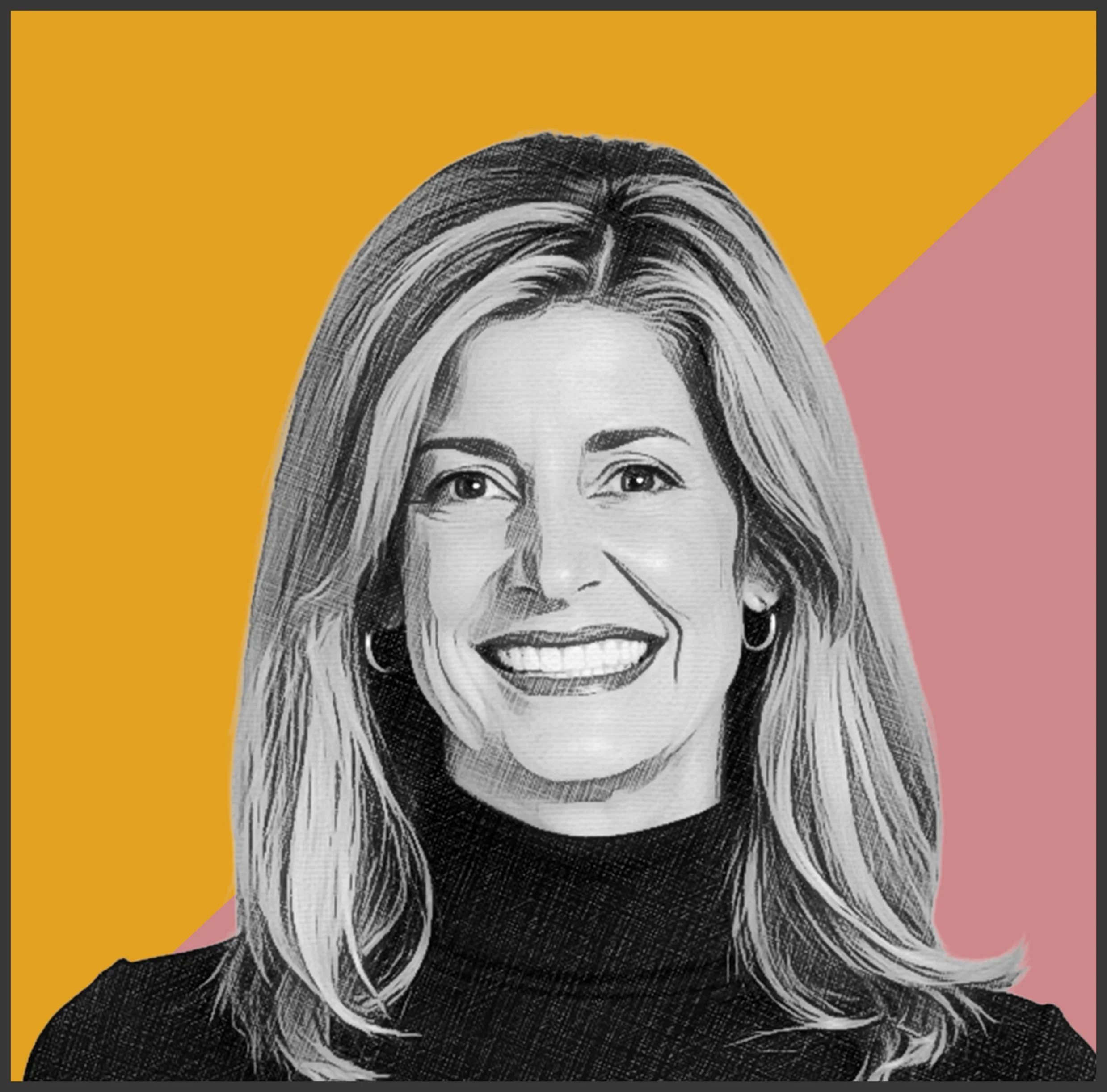
WITH KERRY BURNIGHT, MD
A gerontologist and New York Times best-selling author plots a path toward more joyful aging — one rich with renewal, connection, and purpose.
Listen Now
Many of us quietly accept the idea that our best self lives somewhere in the past — that youth is the ideal and aging is a slow erosion of who we really are. But what if getting older isn’t about losing our identity, but deepening it? What if the second half of life could be defined not by decline, but by “joyspan”—our capacity for meaning, connection, and contentment as we age?
Our guest on this episode is gerontologist and author Kerry Burnight, PhD. As a professor at the University of California, Irvine School of Medicine, Dr. Burnight spent 16 years caring for older adults suffering neglect and abuse. She co-founded the nation’s first Elder Abuse Forensic Center, bringing together medicine, adult protective services, and law enforcement to protect vulnerable older adults. Her search for how to help people not just avoid harm, but truly thrive into their later decades led to her work on joyspan, culminating in her New York Times best-selling book Joyspan: The Art and Science of Thriving in Life’s Second Half (2025). Her work has been featured in outlets including The New York Times, The Guardian, BBC News, and Forbes Health.
Over the course of our conversation, Dr. Burnight details the experience of working with older adults suffering from neglect and abuse, the importance of team camaraderie for getting through dark moments, and the need to humanize people going through dehumanizing situations. We discuss joyspan as well-being and fulfillment combined with longevity; how focusing on growing, connecting, adapting, and giving can increase joyspan; how the internalized belief that we have less to offer as we age threatens joyspan; and how older adults are uniquely positioned to contribute to society. Dr. Burnight reminds us that joyspan is a health habit, and the best time to start focusing on this health habit is today.
-
Kerry Burnight is a gerontologist, researcher, speaker and author of the book Joyspan: The Art and Science of Thriving. She founded The Gerontologist to help companies, families and individuals optimize their lifespan, healthspan, and joyspan. She was a professor in geriatric medicine and gerontology for 18 years at the University of California, Irvine and co-founded the nation’s first Elder Abuse Forensic Center. She is also the founder and chair of the Ageless Alliance: United Against Elder Abuse, co-founder and member of the Orange County Elder Death Review Team and director of the Vulnerable Adult Specialist Team in Orange County, California.
Her work has been featured on CBS News, “The Doctors,” “Money Matters,” “The Dr. Phil Show,” and at the U.S. Department of Justice, and U.S. Whitehouse.
-
In this episode, you’ll hear about:
3:00 - The story behind the first Elder Abuse Forensics Center
11:45 - Dr. Burnight’s advice for frontline workers navigating cases of elder abuse
15:05 - How social connection improves health outcomes
24:00 - Defining joy and how joy can coexist with aging
33:15 - How our personal outlook on aging can impact our aging experience
44:30 - The four elements of joyspan
48:30 - Ways to build meaning into your life
-
Henry Bair: [00:00:01] Hi, I'm Henry Bair.
Tyler Johnson: [00:00:03] And I'm Tyler Johnson.
Henry Bair: [00:00:04] And you're listening to The Doctor's Art, a podcast that explores meaning in medicine. Throughout our medical training and career, we have pondered what makes medicine meaningful. Can a stronger understanding of this meaning create better doctors? How can we build healthcare institutions that nurture the doctor patient connection? What can we learn about the human condition from accompanying our patients in times of suffering?
Tyler Johnson: [00:00:27] In seeking answers to these questions, we meet with deep thinkers working across healthcare, from doctors and nurses to patients and healthcare executives those who have collected a career's worth of hard earned wisdom probing the moral heart that beats at the core of medicine, we will hear stories that are by turns heartbreaking, amusing, inspiring, challenging, and enlightening. We welcome anyone curious about why doctors do what they do. Join us as we think out loud about what illness and healing can teach us about some of life's biggest questions.
Tyler Johnson: [00:01:02] Many of us quietly accept the idea that our best self lives somewhere in the past, that youth is the ideal, and aging is a slow erosion of who we really are. But what if getting older isn't about losing our identity but deepening it? What if the second half of life could be defined not by decline, but by joy span? Our capacity for meaning, connection, and contentment as we age? Our guest on this episode is gerontologist and author Dr. Kerry Burnight. As a professor at the University of California, Irvine School of Medicine, Doctor Burnight spent 16 years caring for older adults suffering neglect and abuse. She co-founded the nation's first Elder Abuse Forensic Center, bringing together medicine, adult protective services and law enforcement to protect vulnerable older adults. Her search for how to help people not just avoid harm, but truly thrive into their later decades led to her work on Joy span, culminating in her New York Times best selling book, Joy Span The Art and Science of Thriving in Life's Second Half. Her work has been featured in outlets including The New York Times, The Guardian, BBC News and Forbes Health. Over the course of our conversation, Dr. Burnight details the experience of working with older adults suffering from neglect and abuse, the importance of team camaraderie for getting through dark moments, and the need to humanize people going through dehumanizing situations. We discussed joy span as well-being and fulfillment into longevity, and how focusing on growing, connecting, adapting, and giving can increase joy span. We take a look at how the internalized belief that we have less to give as we age threatens joy span, and how older adults are uniquely positioned to contribute to society. Dr. Burnight reminds us that Joy span is a health habit and the best time to start focusing on those habits is today.
Tyler Johnson: [00:03:00] Doctor Burnight, thanks so much for joining us, and welcome to the show.
Dr. Kerry Burnight: [00:03:04] I'm delighted.
Henry Bair: [00:03:06] I first came across your book, Joy Span, when I was browsing in a bookstore. And of course, we've had these conversations with leading thinkers, geriatricians, gerontologists about aging in contemporary society. And so we could not pass up the chance to invite you. So thank you so much for taking the time to join us. I was wondering if you could open up by telling us how you got to where you are in terms of this area of research, what got you interested in it?
Dr. Kerry Burnight: [00:03:34] I got interested in this area of research by starting out on the exact opposite side. And so for 16 years, I worked exclusively with older adults who had endured elder abuse, neglect, self-neglect, financial exploitation, Psychological abuse in geriatric medicine at UCI. Laura mosqueda, who was my mentor and I created the nation's first elder abuse forensic center. And in working with thousands of adults who had undergone excruciating suffering and unnecessary humiliation, I started to think, if only we had gotten these beautiful humans on a different path and not ended up like this. And so really, from over a decade of crying on my way home from work most days, I really thought, is it possible to fortify people for these 100 year lives in a way that maybe would make their outcome different?
Henry Bair: [00:04:49] Well, go even before that then. Elder abuse. That's just something that's so. It's not something I want to think about. It's not something that anyone wants to think about. It's taboo. It's not something that we encounter. Hopefully not encounter in our daily lives. And we don't talk about it in daily discourse. I imagine there must be some sort of story that led you to that initially. Was there a personal experience? Was there an encounter that you can think of that really pushed you in that direction?
Dr. Kerry Burnight: [00:05:16] Yes. So my first year as a university professor, we received because we were geriatric medicine, we received a pile of elder abuse case files on our desks and said, there's a lot of medical stuff in here. And we, as law enforcement and as adult Protective Services could use a little help. And there isn't funding or expertise to look at these things. Could you in geriatric medicine take a look. And so of course we said yes. And as we started flipping through, it was both the severity of the situations and also how common it was. And so we were in our county, which is Orange County, California, having thousands of new reports every month. And unlike the common thought that is just other, you know, monsters doing this, oftentimes it was family members who either knowingly or unknowingly, were really taking paths that resulted in people losing their life savings. You know, I had early on, it was a case of a woman who, as a result of a neglect situation, burned to death in her home. And immediately we thought, what in the world? We didn't know the extent of this. And so then we wrote a series of grants to fund this elder abuse forensic center. And then many forensic centers were then modeled off of it.
Henry Bair: [00:06:55] So what was the work like? Okay, so you get these I assume. So law enforcement, you would be notified by law enforcement for these cases. And then what would you do with this information.
Dr. Kerry Burnight: [00:07:05] So what we created was a place we could all come together. So Adult Protective Services, we just took a room and we had law enforcement, public guardian, the medical community, the district attorney. We had the ombudsmen from nursing homes, and we would just come together. And what we found is that we had very different, even terminology. You know, we would say patient, resident, victim, you know, just coming together. And our cultures were so different as well. So in medicine, you know, you ask pointed questions. Whereas in adult protective services it was more qualitative. And they would go through a lot of details. And then law enforcement was very hierarchical. So it was this cultural melting pot that we were coming together to say, we all see that something needs to change here. What can we do together to address these cases? And I had this epiphany. We received an award from then Attorney General Eric Holder. And so we were on the flight home. And you would think that we would be like, happy that we got an award about victim services. But instead, I was sitting there and I had this really strong imagery. It was as if I was at the bottom of a skateboard ramp. People would come off the ramp and get injured, and we were down there putting the Band-Aids on and trying to address these lost money, shame, all these terrible outcomes. When we could get to the top of the skateboard ramp to prevent a lot of these situations before they got there. And that's when I really thought, how can we dig into the literature to see what is known about the risk factors, about why some people are able to thrive in longevity, and other people that are so much suffering?
Henry Bair: [00:09:04] Are you still involved in the elder abuse work or have you sort of transitioned?
Dr. Kerry Burnight: [00:09:08] I did it for 16 years. I was the director and then it went to somebody else. But my partner, my co-founder Laura mosqueda, she is at USC now and at USC, they now run the National Center on Elder Abuse, which is a grant that we got first at UCI and then it moved to USC with Doctor Mosqueda. And so it's the work still continues and is, you know, more important than ever. And I point people to the National Center on Elder Abuse. If you would like to learn more about reporting requirements and signs and types of mistreatment and also how common it still is.
Henry Bair: [00:09:49] So 16 years is a really, really long time. And I imagine during those 16 years you probably encountered a lot of dark stories, and maybe there were days when maybe you couldn't imagine pushing through. Or can you imagine working on these cases and and yet you did clearly. Are there stories you can share of these moments where amidst the worst of what you were seeing, you found something that kept you going? What were those things?
Dr. Kerry Burnight: [00:10:16] That's a great question. I think the camaraderie of having other people on our team, I would be not strong one day and feel defeated, and then someone else would have had a good night's sleep and could come in fresh, and then maybe the next day it would be opposite. So having peers and colleagues and being together as a group, that was very helpful. And then, you know, we sometimes we were successful in stopping a bad situation and that would really feed us. And we were not only with older adults, but also adults with disabilities. And I remember a particularly difficult case for me was a bus driver who drove. I think there were usually around seven people on his bus route, and what we learned was that he was sexually abusing whoever was last off of the bus, and we were able to make a conviction, which is not easy. And, you know, when that stopped and those people were safely able to ride the bus again. I remember, I mean, it was in the newspaper and I remember sitting there thinking, it is worth all the heartbreak because it requires people to keep showing up, even on days that you think, are we even making a difference?
Henry Bair: [00:11:48] Yeah. So I work in ophthalmology now, but during my first year of residency, I was working in internal medicine. As part of that rotation, I spent a month, six weeks in the emergency room. And as you probably know, it is the front line of healthcare. You see the worst of it, of all of it, um, you see the worst of elder abuse. And unfortunately, one of the insidious things by its nature is it can be very hard to parse out what is happening, you know, because you don't have a person's medical record. Someone shows up from their home, from a facility, an 80 year old person. They might not be able to communicate properly. You have no medical records. They're disoriented. They have bruises on their arms. You don't know what's going on. You know, you don't know what. You don't know what medications you're supposed to be on. Have they been on those medications? All you know is that they're disoriented and they seem to be uncomfortable. And I don't have an answer for this, but I'm just as you're mentioning your experiences, I'm just thinking of flashing through my mind as all these images of these patients I've encountered where we are able to temporize, we're able to address, oh, they they seem to be a little dehydrated. Okay. So then we give them some fluids and they feel a little bit better, or oh, they have a little bit of a fever and maybe they have some sepsis. So we admit them to be treated for sepsis. And when you're working in that fast paced environment and you're seeing this high volume of older people who are ill, I don't know if it's so much that we don't have the time to really dig into the chain of events that led to this, or if it's we don't want to because we have there's never ending streams of patients. What advice do you have for us, either from a practical perspective or maybe from a more philosophical approach, like how do we how do we think about these situations?
Dr. Kerry Burnight: [00:13:30] I love that question because I think too often we just don't think about it. Right. You just okay, on to the next patient. Every little human dignity matters. You know, taking the time to that, the patient feels seen and loved and not judged, and that you're not looking away. The, you know, ability to hold a person's hand or the ability to say to a grieving, upset loved one that we are here and we're going to do what we can to help. All of it matters. And it never feels like enough. But recognizing that the little tiny parts of humanizing a dehumanized situation does make a difference, and consciously telling yourself that so many days when I would drive home after seeing some really horrible things, my first reaction was, we're not doing enough. This isn't making a difference. There are too many people we are not addressing. It's just so easy to say what we're not doing And to survive, I started to consciously counter like sort of cognitive behavioral therapy to myself on the way home by consciously saying, you did. You held somebody's hand, you saw them, you asked a question, you dug into it. And that is better than nothing. A lot of things that we can't quantify are the most important things.
Henry Bair: [00:15:06] Well, you know, for those moments that, uh, that we on the frontline are not as capable of addressing either for time constraints or resource constraints. We're glad that you created this center and this model, this national model for resources to support elder abuse. So transitioning a little bit, you alluded to having this epiphany at some point where it's like, well, why don't we just figure out what is going on upstream and try to try to prevent people from ending where they are in the first place? Okay. So you have this epiphany. What's next? What steps do you take to explore what the risk factors are?
Dr. Kerry Burnight: [00:15:40] What we all do, right? As providers, as you think, what research is out there? Like what do we really know? And so we just did a lot of digging. And the first one that became apparent was one that you all listeners know, which is connection, right. So the risk factor of loneliness and social isolation, where a lot of times perpetrators prey upon people who don't have other people in their lives. And so, you know, you see this, for example, with the billion dollar financial exploitation industry, is that it does prey upon people who don't have someone to say, no, you know, don't go and buy gift cards or don't send your money to that without knowing what it is. So recognizing, wow, if we could promote and assist and put adequate value on social connection, could we sort of fortify people in their lives? And happily, social connection doesn't just protect you against people who would do you harm, but it also is, you know, people live longer, people have lower inflammation. It's incredible what social connection does. And I know that 85 year long longitudinal study, the Harvard study that, you know, really highlighted what social connection does. And the definition that I use is UCLA loneliness scale definition of essentially wanting more social interaction than you currently have. And the reason I like that is it's different for different people. And you can be even married, or you can be around people and still feel lonely and that is still detrimental. So there's so much emphasis on how long we live, lifespan and then more recently, how long we live enjoying good health.
Dr. Kerry Burnight: [00:17:35] Healthspan. But a long life, even a long life and good health doesn't mean as much if you don't like your life. And so I was trying to think, what is that in this world of quantity? What about the quality of life? And how do you fortify yourself internally for these 100 year lives? And so the analogy I use is with your physical health, we know that cardiovascular health and strength training flexibility and agility these four areas, the earlier you start the better they all matter. It's all incremental. So then with our emotional or internal strength, are there things that we could be proactively doing and what the research says is yes. So there are four areas that they grouped into. And so one of those we already went over, which is connection, which is proactively recognizing that just as we diversify our financial portfolio, we need to kind of take inventory of our social portfolio, and that's going to be different for everyone. Some of us have family nearby, some of us do not. And when we live long enough, you often outlive your friends. So also investing your portfolio into people who are of different ages and, you know, recognizing my next door neighbor, my doctor, the person I see every day at coffee, somebody I volunteer with all of these. It's not just family. It's being a bit intentional and a bit proactive about one of the areas, which is connection. And then there are three other areas that kind of group that we can talk about as well.
Henry Bair: [00:19:16] Are there any case studies that you love sharing that really illustrate tangibly how connection improves health outcomes?
Dr. Kerry Burnight: [00:19:25] Yes. Okay. So I'm going to give a story. And since we started with talking about elder abuse I'm going to this is his name is Harry, and he not only allowed me to share his story, but he encouraged me to. He has passed away now, but that was one of the gifts that he gave me, is he said, I'd love for you to share my story and you're welcome to use the pictures. So when I give lectures to medical students, I get to share Harry's pictures. So Harry was a Green Beret. He attended Stanford University. He had a successful financial career, a long marriage, took care of his wife, who lived with Alzheimer's disease until her passing when she passed away. He lived in his home alone and was quite isolated, and first, a woman that he met somewhere pretended that she was interested in him romantically and then drained all his like incredible amount of money and then left, and with a small amount of money he had left. He then was getting phone calls, and the phone calls were from fake charitable organizations. And so over the course of 18 months, Harry lost over $600,000. And when I met him in my role as the elder Abuse Forensic Center director, he his home was being foreclosed upon. So he it was such a really rough situation, and it could have so easily.
Dr. Kerry Burnight: [00:21:08] The day that I met him, he was in the hospital with dehydration and malnutrition. And yet, when you dig underneath, why that was it was a it was the circumstance. But here's the power of connection. So we connected Harry with a board and care home that really was not much to look at, but was really filled with loving caregivers and we had some volunteers come in. He then started taking guitar. He then started teaching because he was really a skilled person who does calligraphy. And so he started teaching a little calligraphy course within this board and care. And I have a picture of him in the hospital that day that we met, and then a picture eight months later. And it really was a case of almost like coming back to life as a result of largely this social connection and what he needed all along. And so I do think about that. I think, gosh, if this was a pill, we would be clamoring for it. And yet it's something that we can start. And people ask me with this concept of joy span, that is. And the way that I define joy is the same as the American Psychological Association, which is well-being and satisfaction. So I'm not talking.
Dr. Kerry Burnight: [00:22:33] Just think everybody should be in. Smiley. Smiley. Ecstasy. Happy face. No. And I also love the differentiation that, for example, in the book of Joy, which is the Dalai Lama and Archbishop Desmond Tutu coming together, they talk about how happiness is often up and down because it's circumstantially impacted, whereas joy is more of an inside out kind of a job, and it's something that can be cultivated, which makes it great for longevity. Because the one thing I know from being a gerontologist is that there are challenges in long lives. And when people say, oh, I just hope that I can just age gracefully, I say, I don't know anyone who has lived a long life where it's been all graceful. It's really not a terribly graceful kind of process. And yet how we address the challenges that invariably Arise is very varied, and I have had this front row seat of watching thousands of people on their aging journeys. And you can have the same objective circumstances, the same chronic conditions, the same acute, the same socioeconomic status, the same kind of resources, and yet a very different lived experience. And when I think, why is that why this is so fascinating, why that's what really prompted me to dig into the research to try to understand this better.
Henry Bair: [00:24:00] Yeah. I mean, I think the distinction there of like, what joy really means is really important because when we think about happiness, I think society generally wants to be happy. And I don't know if we would go as far as to characterize this as living in a hedonistic society. But I think certainly we live in an increasingly there's this whole experiential economy, this concept where people are paying to enjoy good experiences rather than having good things. Certainly amongst younger people, I've often thought about is that the kind of happiness that we want, these experiential things, you know, um, whether that's going out partying, whether that's playing video games, whether that's going on a luxury trip, whether that's using certain substances that alter our brain chemicals to make us feel happy. Yeah. I mean, like all of them in some ways could make us happy. But I think the way that you define wellness and joy definitely, uh, sets that apart.
Dr. Kerry Burnight: [00:24:56] And happily, it isn't. It's the oldest. It's the oldest trick in the book to to differentiate like eudaimonia, where it comes from meaning, which is very different kind of lens. And actually, that's what the research says that it is meaning. And so it's more like contentment. And so when I was toying with the word okay, lifespan healthspan what is this thing that gets at quality of life? You could call it well-being span, but it's not very catchy. And then I tried well, span and people thought I was saying wealth span, which. But when I landed upon joy, if we understand that it is the opposite of toxic positivity, but it is in fact more akin to contentment than ecstasy, and that it is achievable. And sometimes our collective ageism shows in people's response because they'll say, oh, there's no joy in aging, you've got it wrong. And so then I go, okay, let's, let's unpack that a little bit. Do you think it is not a goal that we should have to try to have well-being throughout our life? And people go, no, well, that would be okay. So it is a little bit definitional. But I do think Joy span is a little catchy, and I think it helped getting the word out.
Tyler Johnson: [00:26:14] So can I ask a question? Henry might smile and roll his eyes because he's heard me refer to the thing I'm going to refer to so many times over the years that we've been doing this podcast, but I'm doing it anyway because I think it's so important. One of our very earliest interviews was with this psychiatrist at Stanford, who wrote a book about how much of modern life has devolved into a constant quest for dopamine hits. Right. That we have sort of become like rats in a cage who have these dopamine dispensers on the wall. And it's gotten to the point where for many of us, we just kind of spend our lives tapping at the button that is supposed to really release dopamine hit. Right. And and that can come in all sorts of guises, right? That can look like calorie dense foods which are readily available at, you know, everywhere. It can look like online pornography. It can look like likes on social media. It can look like quote unquote friends online. It can look like all sorts of things. But the issue is that whereas just the way that the economy and reality were ordered even a hundred years ago, dopamine was really hard to come by. Now it's just available everywhere, right? And one of the things that I hear you saying is that, paradoxically, as you make this kind of differentiation, it seems that and this is what Anna Lemke also argues, but it seems that part of the decision to try to find joy actually involves abandoning the never ending quest for one dopamine hit after another. But what does that actually look like in practice? Right? Like, I feel like that's easy enough for us to articulate as a vague goal, but how does a person actually do that?
Dr. Kerry Burnight: [00:28:05] Yes, I love this. And so I think, you know, when you're dieting and if you think, oh, I can't have that, I can't have that, it's really hard. But if you go, I'm just going to focus on all the many things that there are. That's an easier way. And so with the approach that I'm working with. It isn't so much like, stop this, stop this, don't do this, don't do this. It's like those things become less alluring and we're less hungry for those dopamine hits when we're getting going about it this other way. And so there are four areas of the joy span matrix, which we talked a little bit about connect, connecting and the proactive human to human effort that that takes to be a friend to people and therefore to have friends throughout the 100 years and the others, for example, the literature really shows that giving giving it fuels not only the givers high, but it then prompts other ways. And I think sometimes when we get into this and we need to put aside our internalized ageism, that tells us erroneously that we have less to give. But once you like, I watch patients who recognize like, man, I've been around for a bit. I have more emotional regulation. I have good problem solving. I have greater humility, greater propensity for spirituality, appreciation of music, art. And I can give that. And by leaning into giving that, that does feel good and that does like one thing lead to another. And I think then by leaning into some of these research based, I don't know if you'd even call them dopamine hits. But these research based ways to experience positive feelings, it becomes less alluring to be like, ah, just give me a drink and a chocolate bar and let me watch puppies for five more hours, which is something I do when I'm not right.
Tyler Johnson: [00:30:13] When I hear you talk about those different domains, it reminds me of this. Uh, there was a woman I knew growing up who went to church with me, who was one of the wisest people I have ever known. And I just when you were talking about the power of giving, it reminded me that when she turned like 90 years old, she decided that she was close to dying, and she decided that she she wanted to think about what could she do that would improve the lives of the people that she knew. And so I think it was for her 90th birthday, she sent out these funny kind of reverse birthday cards to everybody that she knew. And she was a poet and a literary figure and, and a kind of an intellectual. So she invited everyone to come over to her house, and then she opened her library and said, you can choose any book from my library that you want to take home with you. And then I will inscribe it for you. And so people would choose a book, and then they would take it over to her. And she was just kind of sitting in her chair there. And then she would inscribe the book. And I still have the book. And it's this beautiful, personalized, deep, rich inscription. Right? And I feel like that's such a beautiful and knowing thing to do. Right. It's like a very concrete symbol of her understanding that her life grew richer and deeper, literally, by giving more stuff away. Right? Like the more she got rid of in effect, the more she had.
Dr. Kerry Burnight: [00:31:51] What a beautiful example. 100%, yes, I love that and I'd like to do that. And I have a lot of patients with iterations of that. And I have one beautiful woman who is now in a nursing home, and she has lost the ability to speak, and she's rather contracted. But her giving for the past few years and maybe her whole life, I've only known her a few years, but she's an incredible listener when you're talking to her. Her eyes are bright, and every time I go, I have to, like, practically get in line to get to her because people are there. People who work there and friends and everyone is there. And I really noticed it because I thought if I at some point am unable to speak or am quite contracted or confined to bed, if I would put my emphasis in the ability to listen, and I will need to improve my ability to listen, to be at her level, then that's a lifelong something that you could give. And when we turn down the noise of anti aging and ageism and recognize what gets what has the potential of getting better as you get older, I think that is tied to our ability to give, because we recognize it in ourselves that we have so much to give.
Henry Bair: [00:33:13] I just want to note that, you know, you've used the word ageism several times. But, you know, we have talked about ageism in society. But curiously, both times I believe, correct me if I'm wrong. Both times you've mentioned ageism. It's almost like self-directed ageism, as in I am getting old. Therefore I have nothing to give anymore, therefore I have. I'm losing out on life and yet seems to be. What you're saying is to best the strategies you've outlined for us to increase joy span requires us to overcome ageism we have towards our own aging bodies.
Dr. Kerry Burnight: [00:33:50] Yes, I call it internalized ageism, and I would argue that we all have it, myself included. And we live in a society that when we were little children, you know, our parents may have told us stories where it's always an old woman with warts on her nose, and she might come with her claws and she might eat you like Hansel and Gretel. You know, that was like our introduction. And then from there came this multibillion dollar anti-aging industry that is fueled by fear and by promoting the idea that it's not okay, that it's ugly, that it's shameful, that we must somehow hold on to our youth. And so this messaging, it impacts us and we're carrying it. And I think the pervasive, like the most common default mindset these days is what I call the decline aging mindset, which is damn, which I think is great. So with the damn mindset, like we're just thinking, oh, everything is all decline. I'm just waiting for the other shoe. But when you dig into the literature, much of which has been done at Stanford and talking about, for example, emotional regulation gets better. Can get better as we get older. And a lot of very important things when you recognize that, you kind of free yourself.
Dr. Kerry Burnight: [00:35:16] And when a thought comes in. So, for example, I was with somebody a few days ago and she goes, oh, I just can't think of that name. I'm having such a senior moment. And I said, did you ever forget things when you were in your 20s? Well, yes. So, you know, I think it's not necessarily a function of the fact that you're 62. I think humans forget stuff all the time. So attuning ourself to our internalized ageism and then almost like with cognitive behavioral therapy, giving ourself a replacement sentence to counter it. And people who I'm sure you're familiar with, there's Becca Levy at Yale University did a study. And those who had age beliefs that were all decline and everything going to hell in a handbasket lived, on average, 7.5 years Shorter, all variables controlled than those who endorsed more growth minded age beliefs. So it's powerful. And thinking about how admitting I have ageist beliefs and internalized age beliefs and how we show up for our patients. Because when we bring that you are less than thinking to our patients, we're getting in our own way. And it's also not accurate, like it is simply not accurate that everything declines.
Henry Bair: [00:36:49] So as an ophthalmologist, a lot of eye problems have age as a risk factor for cataracts, glaucoma, macular degeneration.
Dr. Kerry Burnight: [00:36:57] Retinal detachment which I had.
Henry Bair: [00:36:59] All well or did it get taken care of?
Dr. Kerry Burnight: [00:37:02] Yeah, I had a full macula off.
Henry Bair: [00:37:04] No way. And it got restored in time.
Dr. Kerry Burnight: [00:37:06] Yes, well, not in time. It was all the way off. But yes, in time that I was able to like, I can see out of it. And then the other one is latticing right now too. So my eyes are not my strong suit.
Henry Bair: [00:37:17] Well, good that you know that. What's happening in the right eye. So you get a routine screenings. But I have the same conversation. Patients are always asking, oh, what makes cataracts worse? What makes glaucoma worse? And I want to say aging. It's your eyes are getting older, but I always have to catch myself. How is that going to land on the patient, you know, how's that landing on myself when I'm saying that to patients? Like, every single time I'm saying it's aging as the eye ages, you know, the jelly in the eye gets less and less perfect, which pulls on the back of the eye, which, you know, whatever causes some more floaters and flashes. Every time I say those things, I'm cementing more and more of those ages beliefs in my own brain, and I'm sure it's coming across in some ways to my patients. So I'm always trying to be mindful of that. But to your point, it's like it's this kind of ageist attitude. It's like it permeates all of medicine.
Dr. Kerry Burnight: [00:38:04] Yes. And that's an interesting case because it is the case. It is age related changes that causes it. And so that's okay. But you can just say yes as you can't physically see as well. Happily, a lot of times older adults can see in terms of perspective better. So I think about that for myself. Like I can't see very well, but man, I can see in a different way a lot better. I can see right through people who are inauthentic. I can see solutions, I can. So yeah, physically there is decline and there isn't any way about it. Physically we're not. And like I teach an undergraduate class where I start and I say, you know what? Let's start right out with talk about the mortality rate. And then behind me behind the lectern, I just have a huge red circle that's all the way filled in like it's 100%. And so I think it's a good starting point to say that dying isn't defeat. And we didn't do it wrong. It's what humans do, and it's it's as normal and natural and okay as being born. And before you die, you generally will have some changes and they will generally be some chronic conditions.
Dr. Kerry Burnight: [00:39:27] And I work with a lot, a lot, a lot, a lot of people whose spouses have passed away. And people will say, I can't believe it. I just can't believe that my husband passed away. And on the one hand, I understand it and I am, of course, I am empathetic, but I also think it would be good for people to recognize that unless you die on the same day, which doesn't happen very often, and that is its own kind of tragedy, you, especially as women that were likely to lose our partner and we often will have ten, 20, 30 years in this new phase and that it's okay to think about. It's okay to talk about. And that's one of the parts of the joy span matrix. So we already talked about connection. We talked about giving and adapting. So like proactively going yeah don't put your head in the sand. Pull it out and go yes. There's going to be some changes in how I adapt will profoundly impact the quality of my life.
Tyler Johnson: [00:40:33] Yeah. You know, it is interesting because unlike in many eastern cultures, I think in the United States we have this funny intersection between the culture of medicine and the broader popular culture that creates a really strange belief. Right? Because on the one hand, we have popular culture which relentlessly pounds into our brains the idea that the platonic ideal of a human is a 20 year old in a bathing suit drinking beer. Right. And like, to the degree that a human deviates from that, they are therefore flawed and in effect, they need things, usually that they want you to pay them to get to get back closer to that platonic ideal. Right. So that's on the one hand. And then on the other hand, we have a, a medical culture that largely treats any change that happens with age as a failure. Right. And in effect, medical culture says, without saying it out loud, that to the degree a body is getting older, that it also is sort of maturing away from its perfect platonic state and that it needs doctors to return it, whether that's in a more subtle way, a la someone starting a medication or, you know, getting a surgery for, for whatever thing, or whether it's a more explicit way a la plastic surgery or whatever to, you know, change a person's face or whatever the thing is.
Tyler Johnson: [00:42:09] It's just so interesting because in that, what seems to get lost is precisely what you were referring to earlier, which is that actually the much more intuitive in many ways, the much more intuitive idea would be that people who have been here for a long time should be looked at as paragons of wisdom, right? They are the yodas of the human race, and we should be looking to them for solutions to our problems and perspective that otherwise eludes us. And and for lessons in how to be compassionate and open minded and all the rest of it. And yet, we largely don't do that because we seem to have both within the medical culture and the broader popular culture, seem to have effectively convinced ourselves that aging in and of itself is something to be afraid of.
Dr. Kerry Burnight: [00:42:58] Yes. And I think, like the paradigm shift of how not to age. And what I'm pushing is how to age with vitality and gratitude and intellectual curiosity and connection. And I think it is possible, but it's not going to come from a younger generation having an epiphany like, oh, I think it has to come from us. And when I say us, that means our own self leaning into it and saying so when someone says, oh, you don't even look 75 and they mean that as a compliment, to be able to say, this is what 75 looks like. Or when somebody says, oh, well, you look good for your age to say you could just stop by. You look good. I don't I don't need to be younger, I already was. And also like to pull apart looking good with looking young. I don't think there's anything wrong with wanting to look. Whatever Good is. But to tie it to just young. So I am so fortunate to have role models who precede me, who are cool glasses. And I know I have a guy who has a neat, crazy, almost like a mohawk kind of thing, and just people like being authentically themselves to me, like, looks really good and really aspirational about how I want to be. But it isn't young because I already was young.
Henry Bair: [00:44:32] So, you know, you talked about, uh, the four things, the four elements of Joy span. We I think you explicitly talked about two of them so far. Um, can you round it out for us?
Dr. Kerry Burnight: [00:44:41] Yes. A bane of my existence is that I couldn't coerce those domains into a beautiful acronym. So I had to just concede, like, these are the words that the literature supports. So the one way for people, listeners to remember them is that it does start and end with G. G on the beginning, G at the end, and the middle is CA. For me, I'm from California, so it kind of works. But we started we talked about growing. Continuing to do hard things and recognize that a growth mindset really impacts how you experience longevity. Then we talked about connection. Next we talked a bit about adapting and adapting ties to the coping literature and the internal and external tools and mechanisms and toolbox that we have for the very real challenges of aging, and that lamenting what we lose is a rough way to go when we can teach ourselves how to focus on what remains. And then the last is and ends with a G is the giving and that purpose literature. And I suspect you're familiar with Steven Cole's work at UCLA. He's an epigeneticist who Looked at inflammation and antiviral load. And he had a lot of predictors, as you would imagine, in his multinomial logistic regression, and one that I suspect that he kind of just threw in there when he was putting these variables was purpose. And what he found was that using this well documented measure of purpose, that it, even with the other variables, controlled, that it significantly impacted inflammation and antiviral load. That feeling like you have something to give impacts how you live your life and how your body experiences life. And I thought that was so interesting. And I first read about it not in the academic journal it was published in, but in The New York Times.
Dr. Kerry Burnight: [00:46:51] And it was one of those articles that sort of stopped me in my tracks and I thought, aha, I knew it, but I didn't know how to quantify it. And then when I went to the article itself, it was it's quite rigorous. And it another point that I wanted to make was Peter Attia's very fine work in his book outlive called it outlive, but it could be healthspan. It was all these things that maximize healthspan. But he then, even after a whole bestseller book about Healthspan at the end, said, all of this stuff doesn't mean much if your wife hates you and you don't have a relationship with your kids. And so he was pointing toward quality of life and how we haven't acted as if that is sufficiently academically rigorous enough to study or important. And that's what I remember, outlining that sentence and thinking, it does matter. And we do need a vocabulary. We do need to tie it to academic and rigorous research so that we don't end up with people who have Unnecessary suffering. We could fortify people for these long journeys by starting as young as possible. And so when people say like how old? Like for joy span. Like, when should I start that? And I say, ask the same question about cardiovascular health or strength training or flexibility or agility as early as possible. And it's also never too late. Like, we can make these small adjustments that are going to improve the quality of our lives. You could start, you know, at any age because they're little daily practices.
Tyler Johnson: [00:48:32] So you have talked in the last little while about the and throughout the interview about the importance of meaning specifically. You know, I have read books by a number of authors who with slightly different nuances to the way that they sort of discuss things, have made the the argument that in the 21st century, at least in the Western world in particular, we have largely traded meaning for money or for some, some kind of material comfort or security or, you know, GDP or however you want to quantify it. And I think that there is a pretty well recognized dearth of meaning and that, you know, some people feel like that is sort of the crisis of the Western world in the 21st century is precisely that lack of meaning. And so on the one hand, it is intuitive to me that you would argue that one of the most important elements of aging well is to center your life on meaning. But I can also imagine if we have, you know, so a lot of our listeners are healthcare practitioners, and I could imagine someone who's just finishing up their training, their medical training, whether that's a residency or a fellowship or what have you, or an attending who has been in their attending hood for a few years, or for that matter, a nurse or anybody else who happens to be listening to the program. And they might say, okay, sure. Uh-uh, a life full of meaning. Sign me up. That's what I want 100%. And then they say, okay, but like, how's that supposed to happen? You just like, go to Walmart and buy some or like, so if someone feels that their life lacks meaning and they want to build meaning into their life, how do they do that with intention.
Dr. Kerry Burnight: [00:50:26] So if one has that thought, it's a very good sign. And so you would think about as a gerontologist, part of what I do for the past 30 years is I go to a lot of funerals. So I get to listen and I get to I really, actually have gotten to I really like to go because I learned so much every time. And you think you never get up there and say, this guy had such an amazing V0 to VO2 max. We never get up there and say, wow, that guy was just rich. He was so rich and he had such a killer car. And you know, that woman was just man. Her skin was tight and nice on her cheeks, right? So but they do talk about they do talk like I went to one a week ago where this person was sharing how when he went to this gentleman 30 years ago, he was interviewing for a job, and the person who had passed away said to him, I'm sorry that you're not a fit for this job. And also the suit that you're wearing is really stained.
Dr. Kerry Burnight: [00:51:39] And right now you and I are going to go and buy a suit. It's on me and don't tell anybody about it. I just this is something I'm going to do. So he walked all these years and his kids didn't know that the father had done this, but it was so profound and we all like tears were coming down. Because even in our busy schedules, even as physicians who have a full caseload and children and parents and all the stuff that life comes with, it is these little moments of seeing your patient as a human or putting on some music at end of life. Maybe that has emotional salience for the person, or even letting somebody go in front of you in traffic, like there are all these opportunities for little meaning. That adds up to be quite a lot. And it's not Pollyanna to think that kindness matters, and it's not overly mushy brained to say that there is an opportunity tens of thousands of times of day to pick little differences that do add up over time.
Henry Bair: [00:52:49] Well, I think that is a beautiful way to end this conversation, and we want to thank you so much for taking the time to join us, and for talking about your work, for sharing all these beautiful stories. Thank you for joining our conversation on this week's episode of The Doctor's Art. You can find program notes and transcripts of all episodes at the Doctor's Art.com. If you enjoyed the episode, please subscribe, rate, and review our show available for free on Spotify, Apple Podcasts, or wherever you get your podcasts.
Tyler Johnson: [00:53:23] We also encourage you to share the podcast with any friends or colleagues who you think might enjoy the program. And if you know of a doctor, patient, or anyone working in healthcare who would love to explore meaning in medicine with us on the show, feel free to leave a suggestion in the comments.
Henry Bair: [00:53:37] I'm Henry Bair.
Tyler Johnson: [00:53:38] And I'm Tyler Johnson. We hope you can join us next time. Until then, be well.
You Might Also Like


LINKS
Visit Dr. Burnight’s website and learn more about her book Joyspan here.
Learn about the National Center on Elder Abuse here.
Discover the International Federation on Aging.