EP. 168: HEALING THE HEALERS
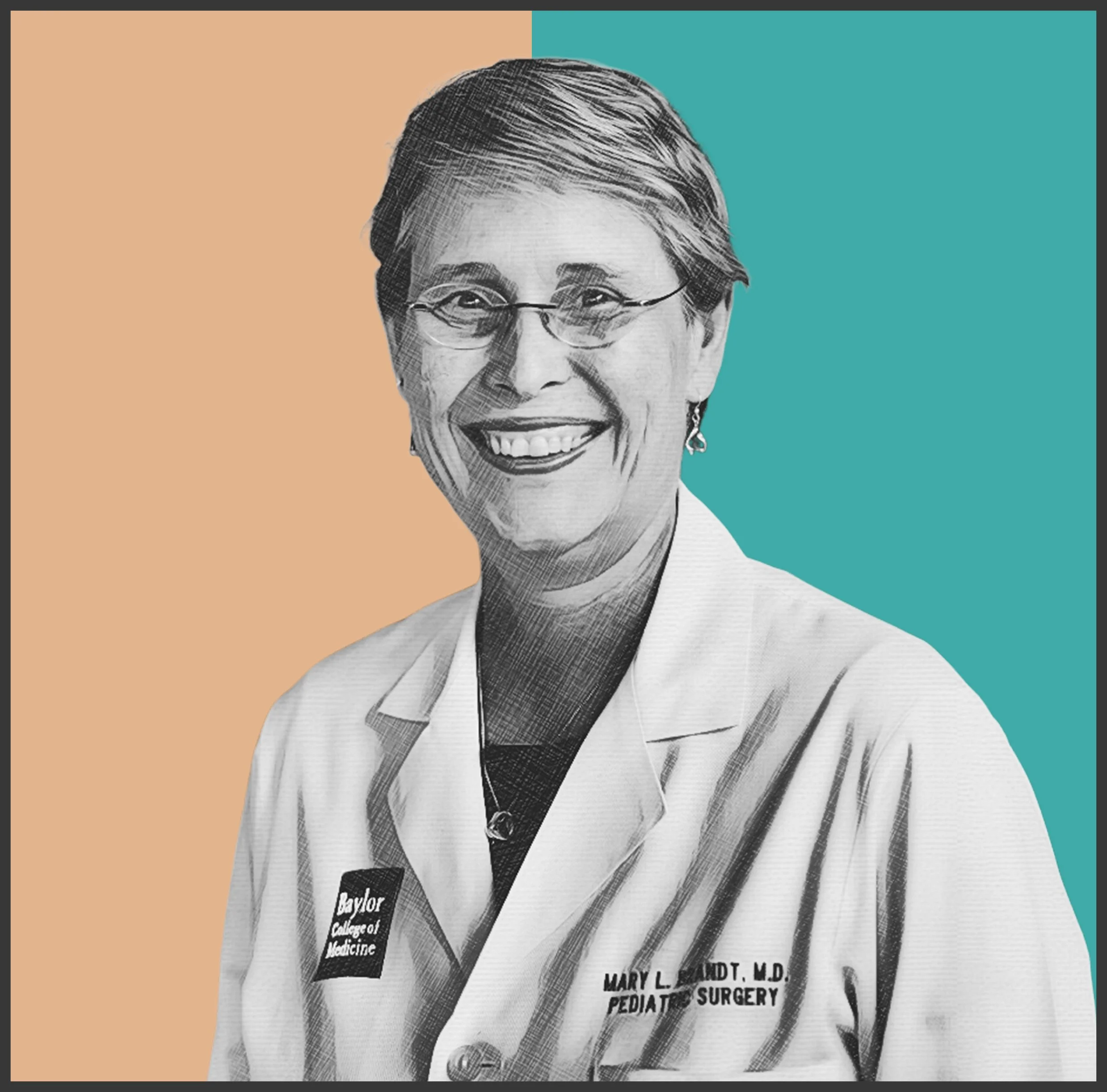
WITH MARY BRANDT, MD
A retired pediatric surgeon and physician-advocate explains why neither the healthcare system nor patients can afford burned out doctors — and calls for a grassroots revolution.
Listen Now
The epidemic of physician burnout isn’t just a personal problem. Burned out doctors are more likely to make mistakes, less likely to follow preventative care guidelines, and more likely to have dissatisfied patients. When a burned out physician leaves an institution or quits all together, it can cost north of a million dollars to replace them. Unwell doctors lead to unwell patients — and an unwell health care system. The toll that the burnout epidemic has taken on physicians, patients, and even the bottom-line requires more than individual adaptation on the part of physicians. It requires a grass-roots movement to heal the healers.
Our guest on this episode is Mary Brandt, MD — pediatric surgeon and Distinguished Emeritus Professor of Surgery, Pediatrics, and Medical Ethics at Baylor College of Medicine. Over the course of her clinical career, Dr. Brandt published over 245 peer reviewed publications, 26 chapters, and 2 books. She became particularly attuned to the suffering of trainees and physicians while serving as General Surgery Program Director and Dean of Student Affairs at Baylor, and she subsequently obtained a Master of Divinity Degree to better understand and articulate what she was observing. Dr. Brandt is a persistent advocate for physician wellness and correcting systemic issues in medicine.
Over the course of our conversation, Dr. Brandt describes the moment she felt called to surgery, her fruitless efforts to resist this calling, and how the combination of competence and humility allowed her to manage the pressure of operating on children. We explore the evolution of the physician-wellness movement and why the health care system cannot afford to ignore the wellness of its physicians. Finally, Dr. Brandt posits that the hard work of compassion is what can sustain physicians long term.
-
Mary L. Brandt, MD, MDiv serves as Distinguished Emeritus Professor of Surgery, Pediatrics, and Medical Ethics at Baylor College of Medicine in the Center for Medical Ethics and Health Policy. During her long career as a pediatric surgeon she cared for the full spectrum of surgical problems in children, with particular expertise in caring for children with biliary atresia, achalasia, necrotizing enterocolitis, and pediatric dialysis access. An established and successful clinical researcher, Dr. Brandt has published more than 245 peer reviewed publications, 26 chapters and 2 books. Dr. Brandt is also known nationally and internationally as an educator and mentor and has received numerous teaching and leadership awards. Among her many roles in education, she served as a General Surgery Program Director and Dean of Student Affairs at Baylor College of Medicine. This work led to her growing expertise in belonging and the epidemic of healer distress in our country and around the world. To better understand and write about these issues, she pursued a Master of Divinity degree, graduating in June 2021 from Iliff School of Theology. As a result, Dr. Brandt speaks and writes regularly on identifying and correcting systemic issues in medicine and the importance of meaning to heal those who heal others. In recognition of her leadership and contributions, in 2023 she was awarded the Ladd Medal, the most prestigious award in American pediatric surgery.
-
In this episode, you’ll hear about:
3:00 - Dr. Brandt’s unexpected path to becoming a pediatric surgeon
11:00 - Dr. Brandt’s mental approach to the high stakes work of pediatric surgery
27:49 - The disconnect between the work of healing and the business side of medicine
38:15 - How Dr. Brandt’s studies in liberation theology have influenced her vision for the healthcare system and medical practice
42:00 - The three shifts healers can make to collectively change medicine
48:20 - The ‘practice’ of compassion and how it can protect physicians from burnout
-
TDA 168 final1.mp3
Henry Bair: [00:00:01] Hi, I'm Henry Bair.
Tyler Johnson: [00:00:03] And I'm Tyler Johnson.
Henry Bair: [00:00:04] And you're listening to The Doctor's Art, a podcast that explores meaning in medicine. Throughout our medical training and career, we have pondered what makes medicine meaningful. Can a stronger understanding of this meaning create better doctors? How can we build healthcare institutions that nurture the doctor patient connection? What can we learn about the human condition from accompanying our patients in times of suffering?
Tyler Johnson: [00:00:27] In seeking answers to these questions, we meet with deep thinkers working across healthcare, from doctors and nurses to patients and healthcare executives, those who have collected a career's worth of hard earned wisdom, probing the moral heart that beats at the core of medicine. We will hear stories that are by turns heartbreaking, amusing, inspiring, challenging, and enlightening. We welcome anyone curious about why doctors do what they do. Join us as we think out loud about what illness and healing can teach us about some of life's biggest questions.
Tyler Johnson: [00:01:02] The epidemic of physician burnout isn't just a personal problem. Burned out doctors are more likely to make mistakes, less likely to follow preventative care guidelines, and more likely to have dissatisfied patients. When a burned out physician leaves an institution or quits altogether, it can cost north of $1 million to replace them. Unwell doctors lead to unwell patients and an unwell healthcare system. The toll that burnout epidemic has taken on physicians, patients and even the bottom line, requires more than the individual adaptation on the part of physicians that is often discussed. It requires a grassroots movement to heal the healers. Our guest on this episode is Doctor Mary Brandt, pediatric surgeon and distinguished emeritus professor of surgery, pediatrics and medical ethics at Baylor College of Medicine. Over the course of her clinical career, Doctor Brandt published over 245 peer reviewed publications, 26 chapters and two books. She became particularly attuned to the suffering of trainees and physicians while serving as general surgery program director and dean of student affairs at Baylor, and she subsequently obtained a Master of Divinity degree to better understand and articulate what she was observing. Doctor Brandt is a persistent advocate for physician wellness and correcting systemic issues in medicine. Over the course of our conversation, Doctor Brandt describes the moment she felt called to surgery, her fruitless efforts to resist this calling, and how the combination of competence and humility allowed her to manage the pressure of operating on children. We explore the evolution of the physician wellness movement and why the healthcare system cannot afford to ignore the wellness of its physicians. Finally, Doctor Brandt posits that the hard work of compassion is what can sustain physicians long term. Doctor Brandt, thanks so much for being here and welcome to the show.
Dr. Mary Brandt: [00:03:04] Thanks so much for having me.
Tyler Johnson: [00:03:06] So I was put on to you and your work by Brewer Eberle, who was a recent guest of ours who speaks very highly of you. But I was hoping that before we get to some of your ideas and and some of the things that you have come to sort of later in your life and later in your career. I was hoping you could give us your origin story. How did you end up in medicine? What did your path look like?
Dr. Mary Brandt: [00:03:27] You know, I have a good friend that says you often can't connect the dots until you look back. And I think that that was actually true for me because, um, for a long time I said, you know, medicine chose me. I didn't really have an understanding of how I ended up there. I think the origin story probably starts with the fact that I was a premature baby and was taken care of by T Berry Brazelton in Boston, where my dad was in graduate school, who was a pediatrician who developed a whole set of how babies develop. Anyway, he's fairly well known and I ended up corresponding with him throughout. Up until high school and, you know, had no idea really who he was, but he wrote me back. So there was this initial tie of someone that my parents saw as a hero for saving me. And then who cared afterwards. And so I think that was probably the first part. The second part is this feeling of wanting to do something. I don't know if I could have articulated it well at the time, but, you know, I wanted a career with meaning and I wanted a career. I don't think I would have labeled it as ministry at that point, but that served. And so I think that kind of all evolved to lead me to medicine.
Tyler Johnson: [00:04:45] Walk us through a little bit then. So you make the decision to go into medicine. And then what did it look like once you got inside? How did you decide exactly what it was you wanted to do. And what did you do for your your day job?
Dr. Mary Brandt: [00:04:58] Sure. So first of all, I went to the University of Texas, where I was a plan two major, which is basically an interdisciplinary liberal arts degree. So did a lot of writing and critical thinking and all that art history and along with the pre-med requirements, and then went to Baylor College of Medicine in Houston for medical school. And I started medical school, I think veering towards pediatrics or internal medicine. I wasn't sure those were the only doctors I'd ever seen in my life. So I think that's probably what gave me that idea. And I did my surgery rotation first to get it out of the way, because I was never going to be a surgeon, a psychiatrist, or a pathologist. So I came out of basic sciences with with that idea. And I have described this to a lot of people because it really was one of those revelations in your life. My first attending on my first rotation was David Feliciano, who is an icon, mentor in surgery and just astounding clinician. We lost him a couple of years ago to a stroke, but he by far was the most important factor in why I went into surgery. And the first day I get there. And, you know, in basic sciences, you learn pretty much that you only call the surgeons if you actually have to.
Dr. Mary Brandt: [00:06:19] And, and generally you have to tell them what to do. So you have this impression going in that it's these obnoxious jerks that really aren't that smart. And Dave Feliciano was absolutely the opposite of that. Absolutely. Incredibly compassionate. To this day, probably the smartest physician I've ever met. And so the first day we're making rounds and it's like, here's this compassionate human being who's dynamic and cares and knows more stuff than anyone who's been lecturing me. And so I'm confused. And it was like the third day of the rotation where I was assigned to the operating room and I walked in, popped on the gloves and went, oh, no, this is what I'm going to do the rest of my life. I mean, I, I still viscerally remember that moment. And then it was like, oh, no, I'm not going to do that because. So I spent like all the rest of medical school trying to find anything else other than surgery that I'd get that same message. Right. And it didn't happen. And so I, you know, you get to the point where you go, well, I'm either going to pay attention to this thing that is so clear or I'm going to regret it the rest of my life. And so I applied and matched in surgery. So that's how I got to surgery.
Tyler Johnson: [00:07:42] I'm feeling validated and vindicated. I do a lot of mentoring to medical students. One of the key questions, right? When you're a medical student is deciding what you want to do when you grow up, and in particular which residency you want to apply to. And whenever I have people who come to me and they're talking about whether they want to go into surgery, one of the things that I often say is, look, you need to understand that one surgery, as are all aspects of medicine, but I think surgery in particular is a long, tough road. And most of the people that I know who go on to become wonderful, fulfilled, happy surgeons, it's because they walk into the operating room for the first time, and it's like this tingle runs through their fingers and up their arms and they're like, this is my calling. This is the thing I am put on this earth to do. And if you didn't have that experience, not that you can't go into surgery if you don't have that experience, but you should probably think really hard about whether all the years of training and all the long nights and everything else are going to be worth it if you didn't have that sort of like, you know, almost a spiritual sense that it was the right thing to do. So it's, it's funny to hear you. You tell that experience. Okay, so you decide to be a surgeon and then as you were making your way through your surgical training, and then once you got into your, you know, full fledged independent day job, what exactly did you do? What kinds of surgeries for what kinds of patients?
Dr. Mary Brandt: [00:09:10] I did pediatric surgery, which the year I applied, there were 17 positions in North America at Baylor at least, which was very, very cardiac driven. Right. Michael DeBakey was the chief. I was in a group of five residents. We initially we were supposed to graduate eight. We started with 11. It was a pyramidal program. We were supposed to graduate. Eight Doctor DeBakey ended up firing three of the eight. So there were only five of us that finished and the other four went into cardiac surgery. And so it was the same sort of thing I was absolutely drawn to. Again, this is in retrospect, I'm not sure I would have articulated it this way at the time, because it was just sort of the path I was supposed to take. But the beauty of children on both a physical and an emotional level, and this feeling I had, and I actually still remember, I think I was a third or fourth year resident, and I had a group of patients who all had alcoholic cirrhosis, and I had lost a lot of shoes to taking care of them in the ICU. I won't go into a lot of details if.
Tyler Johnson: [00:10:19] You know, you know, as they say.
Dr. Mary Brandt: [00:10:22] But I realized that I would never resent getting up at two in the morning for a kid, ever. It was never the child's fault. And even though I view myself as a very compassionate person and I. I hope I never resented getting up for any patient. It felt like it was something that would set me up to become the kind of person I wanted to be. If I was taking care of a population that it was never their fault. So I think that was part of it. That and the beauty. And I think pediatric surgery then and now has the lowest jerk quotient of any subspecialty in surgery.
Tyler Johnson: [00:11:03] No shade to any other segment of the population. Oh, but okay, we'll just leave. Leave that alone. So on the one hand, we I don't know if you have met or interacted with J. Wellens, who is a pediatric neurosurgeon who wrote a book called All That Moves Us. But we had him on the show. We've had him on actually a couple of times. And one of the things that I told him is, on the one hand, sure, I remember when I was a medical student myself, actually, I went to a panel discussion one night and there were, you know, various people on the panel from various different medical subspecialties who were talking about how they decided to go into what they went into. And one of them was a pediatrician and he said, you know, the thing about pediatrics is that your patients never smell bad. I remember thinking, well, okay, I guess there's something to that anyway. But so on the one hand.
Dr. Mary Brandt: [00:11:58] They smell bad differently.
Tyler Johnson: [00:12:01] Okay, fair. But so on the one hand, I sort of get what you're getting at and what he's getting at. But on the other hand, I have to say that I mean, I've said many times on the show before that the thing that I can just never quite get my arms around, you know, it's funny when you said that you did surgery first because you knew you didn't want to do it. I did surgery first on my year of clinical rotations because I knew I didn't want to do it. And then I did surgery and knew even more that I didn't want to do it. And the reason but but largely the reason that I knew that I didn't want to do it is because I feel like my personal saving grace as a physician, as a medical oncologist, is that it's not like I don't do dangerous things. I mean, chemotherapy is poison, right? I mean, there's, there's no question that it's a dangerous thing, and there's no question that it can have really serious effects on people's lives that are not just theoretical. Right. I've seen. I mean, I could tell stories, but I've seen all kinds of all kinds of things along those lines. But the difference is that I always have a little bit of a remove of space and time, right? I can think about my decision. I can reach out to colleagues. I can present the case to tumor board. I can, you know, look up an article if I need to, I whatever.
Tyler Johnson: [00:13:19] Right? Whereas if you're a surgeon and you're operating and of course I know that you can always, you know, call someone who's more experienced or ask for an assist for, you know, a specialist or, you know, refer to somebody else or whatever. But, but if you're in the middle of the surgery and something is bleeding and you can't find it, I mean, it is what it is till you fix it. And if you don't fix it, the person can die, right? Or lose a limb or lose function or, you know, whatever the thing is. And so I guess I, I wonder as a pediatric surgeon in particular, so now you're, you're taking care of people whose entire lives are ahead of them. And of course, on the one hand, what a privilege and an honor and how exciting, right? To have the ability to intervene at a place where maybe you fix a thing that then equips a person to go on and live a life in a way that otherwise would not have been possible. But at the same time, if something goes wrong, as it inevitably does, both because entropy rules creation and because all of us are human, then you also have to deal with the repercussions in somebody else's life of whatever went wrong. How as a surgeon who whose work has now spanned an entire career, how did you think about an approach, that aspect of your work?
Dr. Mary Brandt: [00:14:39] You know, it's a very good question. So let me answer a couple ways. One is technically okay, that one of the very important parts of training surgeons is trauma. And the reason I say that, you know, I often liken training surgery is like training pilots in some ways, not in others. I think that analogy has been pushed too far. But where it is true is that when you're a trauma surgeon and if you do that full time, you are a fighter pilot, right? It is instant response. It is, you know, it's body memory, it's muscle memory. You just you're not practically, not even thinking because you have done this this way so many times under this stress that you learn how to do it. Other surgery like pediatric surgery and other subspecialties in general, surgery is really more like being a really good 707 pilot or 737 if you get into the really, you know, cardiac surgery, pediatric surgery, kind of the, the more technically precise fields. And I do not mean that in a judgmental way at all. If you're a surgeon listening to this, that's more like 747. It's just a little more complicated, but it's still basically the same airplane. But every 747 pilot when they're flying across the Atlantic Ocean, if something goes wrong, you want them to respond like a like a fighter pilot. And so that training originally becomes that muscle memory of what to do in that moment. So that's the first part. That's the technical part. The other part, honestly, is humility, because you're absolutely right. You will never be 100% perfect. What you're doing, though, is stepping up to try to take care of of this very precious human life as humbly as you can and as best you can. And as long as you're showing up as best you can, I think all of us learn how to get through those rougher moments.
Tyler Johnson: [00:16:39] Okay. But if if I can press a minute. Okay. Let me tell a personal story. I'm not sure I've ever told this on the podcast. I may have a long time ago, but so I did one year working as a, an internal medicine hospitalist, in effect. Now I'm an oncologist, but I did one year working as an attending hospitalist here. And I remember vividly I was working at the VA hospital and we had this patient who was clearly very ill, and it was entirely unclear what was going on. He had some known health problems. To be clear, he had a little bit of COPD and reportedly a little bit of heart failure and a little bit of a lot of things. But he was entirely debilitated in a way that did not add up. It was sort of like doing a math equation and getting one plus one plus one equals 17, and it just wasn't clear what the other 14 points were right, and he had become progressively debilitated over the course of months at home, to the point where he was nearly bedbound. But he had been to a bunch of doctors and then eventually got him into the hospital, and nobody could really put their finger on what was really wrong, because none of the things the COPD, the heart failure, whatever, none of those things explained his debilitated state. Right.
Tyler Johnson: [00:17:57] We saw patients like that at the VA all the time who had those problems in much worse versions of those problems, and were not anywhere near as debilitated as he was. So in light of this kind of mysterious situation, we were doing all these things to look into it and try to figure out what was going on. And then he started to get even sicker in the hospital. And so we had a discussion with his family about what they would want in the event of him getting even sicker. And they said that they would not want him to be intubated, they would not want him to have CPR. And in fact, they would not want him to have aggressive and invasive measures a la the ICU, whatever. And so one evening he started to become sick. Probably some version of sepsis, and he was initially moved to the intermediate ICU. They did some kind of preliminary, you know, stuff, started antibiotics and whatever. But then as his condition started to worsen, I was not there at this particular moment. But the team confirmed with the patient's family what his wishes were from the discussions that we had had before. And then instead of doing all of the aggressive, invasive stuff that we do to take someone to the ICU, line them up and all those things, they started to focus on making him comfortable and within, you know, overnight that night, he died.
Tyler Johnson: [00:19:11] And I remember when I got to the hospital the next morning and found out that he had died overnight. I was beside myself. It's not that I had never had a patient die, but most of the time when a patient on my service died, I could affix a label to it, right? I could say, well, this person had end stage lung cancer or this person had end stage renal disease or fulminant liver failure or whatever the thing was. Right. And what I found is that if you can put a label on it, and if you know that the thing that you have labeled is a thing that can kill a person, then it, it makes it feel sort of okay, like you, you know, that's just a thing that happens. But in this patient who we didn't know what was going on, I was just plagued by this sense that maybe if I had done more, maybe if I were a better diagnostician, maybe if I had consulted more people, maybe if I had pored over more books, maybe even though we had spent a lot of time trying to get to the bottom of this. And then I remember very vividly, I was at the VA late one Friday night, because at the VA at the time, we had no remote access.
Tyler Johnson: [00:20:14] So the only way that you could access medical records was to do it there on campus. So I was working in CPRS, which is the VA, EMR since, you know, 1972 or something. I was on CPRS and I had to write a note talking about the patient's death And I'm sure that it still exists in the CPRS, out in the ether somewhere. I wrote this thing that ended up being this like ten page, in effect defense to myself against myself about why I had tried really hard and it was not my fault, in effect, that this patient had died. But clearly, you know, even in retrospect, and I'm sure that any, you know, more senior physician who had seen the note would have said, oh, this is you grappling with the fact that you were taking care of a patient who died, and you don't have an explanation for what happened and trying to come to peace with that? And so the reason I'm bringing this up is to say, you mentioned that every person who does the kind of work that you do has to find a way to make peace with both our own imperfections and just the imperfection of the biological world, right? And the human organism. But for you personally, what has that process of making peace with those facts looked like. Like, how did you actually do that?
Dr. Mary Brandt: [00:21:33] You know, it's listening to your story. I couldn't help but be reminded that we often say that on the medical side of the equation, we worry about errors of omission. And on the surgical side of the equation, we tend to worry more about errors of commission. And both sides have both, by the way. Right. Because it's like like most things in the entire universe, there's never a clear binary. So I think part of the error of commission is that you, you have to come to a point where you are weighing the risk of doing something versus the risk of not doing it. And that's the way I always approached informed consent with my patients, too. You know, you're always going to be afraid. Are you going to be more afraid to do this or more afraid not to do this? And do you see the risk is greater to do it or not to do it? And once we together come to a decision that we can tolerate the amount of risk to do the operation, and we've decided to do this. Then you have decided and you move forward and things can happen after that. But it's that big decision at the beginning. To me, that is the one that has the most weight. But having decided that and moving forward, then you take things as they come.
Tyler Johnson: [00:22:54] You know, that resonates with me in the sense that, you know, we have a big discussion, usually on the first or second visit when I'm meeting a new patient that has to do usually with making the decision to get started on chemotherapy. Right. And similar, actually, there's a lot of parallels in a lot of ways between surgery and chemotherapy, in the sense that there is always going to be a known, quantifiable, concrete set of potential risks involved, and it is impossible to eliminate the risks. The only thing that you can do, you can minimize them. You can be candid about them, but ultimately you have to accept them and move forward. Right? And it's different in one sense. I mean, I think, you know, there is a part of me that feels almost like I deceive myself in a sense, because the the reason I think that I feel more comfortable being a medical oncologist than being a surgeon is precisely the remove. Even if I sign the orders for the medications and then the medications make someone really sick, it still feels like, oh, well, the medication made someone really sick, right? As opposed to if I were a surgeon, I think it would be harder for me to create that psychological space and to say, oh, well, that wasn't me.
Tyler Johnson: [00:24:15] That was, I don't know, the scalpel or. Right. Like, it just it feels to me as an outsider, like it would be so much more up close and intimate, right. Because you are there in the anatomical space doing the thing. All of this is just by mostly by way of admiration, saying that it is remarkable to me. You know, because I work with surgeons, of course, every day. Surgeons are my closest colleagues, surgeons and radiation oncologists. And it's remarkable to me that surgeons who do these incredibly complicated. Right. I'm a GI oncologist, so I work with surgeons who do whipples and partial hepatectomies and these very complicated, very nuanced, refined sorts of surgeries that they can do that and that sometimes things don't go the way they want, and yet they keep having the grace and space to show up every day and keep going is, to me, in its own way, sort of a remarkable testament to human resilience and the sort of ongoing quest to help, even in the face of knowing that things don't always come out the way you want them to.
Dr. Mary Brandt: [00:25:17] I actually have a story, I think that maybe will help here because, you know, sometimes our biggest truths are in stories. So I one of one of of the great blessings in my life is that my best friend is an astronaut, and I say that I operated on her son when he was a baby, and we got to know each other as a professional relationship. When she checked out of the hospital, you know, she was like, I have a question for you. And I'm like, okay. She goes, can we be friends? And I'm like, oh yeah, definitely. We can be. You know, she was very cool. But I, you know, I did do the professional thing and say, well, let's get through the post-operative recovery and then we'll talk. Sure. But I had known her for quite a while. She had flown twice on the shuttle missions at that point, and I was over at her house for dinner. And I finally got up the nerve and I said, what's it really like? You know, they they take you out in this van, they put you on this elevator, you go up to the top, they strap you into the shuttle, close the door, and you sit there for like two, three, four hours, sometimes longer, depending on the delays. What's that time like? You know? What do you do? And she said, well, the first time I flew, I was a rookie.
Dr. Mary Brandt: [00:26:33] So I just kept looking over my checklist to make sure I wouldn't screw up. And she said, the second time I went to sleep, I looked at her and I said, you're strapped in on top of a frigging bomb. And you went to sleep. And she just looked at me kind of matter of fact, and said, I was the night shift. I had to be rested. So she and I ended up giving a couple talks together called The Inner and Outer Space Finding on Your Work. But when I gave the talk, I would put up a photo of a really complex GI anomaly in a baby in the operating room. So the actual picture, and I would just say I was the night shift when this came in. Yeah, it really helped me realize that things that we do over and over and over again and are trained to do. They don't ever become ordinary. And that was one of the other great blessings of being a surgeon. I never cease to be amazed and in awe of the anatomy and the resilience of children and their families. And but we do get to a point where that combination of competency and humility lets you fall asleep on top of the rocket.
Tyler Johnson: [00:27:49] That is a fantastic analogy. That is a great tagline. Let me shift gears a little bit. So you, to be clear, have had a long and distinguished career as a surgeon, a pediatric surgeon, and yet towards more recent times, towards the the latter part of your career, you've kind of turned your attention, right? And you have become, let's say, more philosophical about things and have started to not that you weren't before, but in addition to being a fantastic surgeon, you have started to focus on sort of a critique of the way that medicine works right now, and also the way that we train physicians right now in many cases, and also have tried to paint a vision of what it might look like. You've called it healthcare 3.0, but what it might look like to practice both to train doctors, to practice, and to practice with a greater amount of grace. You even have an acronym based on grace, which we can talk about in a second. But so I want to talk a little bit about both your critique and your vision for a better tomorrow. So first off, if you could outline for us both, what is your critique of the way that the healthcare system works right now, and also of the way that we sort of how that inflects the way that we train doctors?
Dr. Mary Brandt: [00:29:19] I think I'm actually going to start with a little bit more story and a little bit more about my path because it's the beginning of this. So I also had some educational roles. And when you were talking earlier about advising students, I was grinning because I was a program director in general surgery. And then I also was dean of student affairs at Baylor. So my role was mentoring and counseling students along with the I mean, a lot of patting on the back and an occasional you need to do better. Sure. Like all of those roles. But, um, what ended up happening in that? And I think it probably, I should probably start even by saying, you know, I started my surgical career as pretty much a classic academic surgeon with research and teaching and all of that. And, and, and there was a pivot point where this educational piece happened that was kind of out of my control. It was an event, one of those dots you connect afterwards, right?
Tyler Johnson: [00:30:13] Sure.
Dr. Mary Brandt: [00:30:14] But one of the really important things about that, other than the fact that I absolutely loved. It was I kept watching these astounding young physicians and students who would derail. And it wasn't what they knew, wasn't how smart they were. It wasn't their character. Something was going on where all of a sudden there were divorces, there was drinking, there was, you know, suicides. And it was like, I don't understand what's going on. There's this amount of suffering that's going on in these people that I'm responsible for, that I don't understand. And so this was probably about 25 years ago. And so I was doing research first basic science and then clinical research. And I said, what would it take for me to solve this and figure out what this disease is? Right. That's affecting a significant percentage. I mean, you look at the data that people started talking about, about burnout being 50% of the population, what disease do we have that causes that much suffering and is potentially life threatening in 50% of a population that we don't study or try to make better, right? So that's where I started. And, you know, in Tait Shanafelt, who's framework has been one that I've totally adopted and understanding the two decades I've been doing this. You know, we started off in wellness 1.0, which I refer to as do more yoga and put bananas in the surgeon's lounge. You know, we basically said, oh, we just need to take care of ourselves better. We need to sleep more. We need to be emotionally open. We need, you know, all this stuff.
Tyler Johnson: [00:31:56] Your lack of wellness is your fault. Work harder.
Dr. Mary Brandt: [00:31:59] Well, then then it goes into what I kind of call 1.5, because then it got weaponized against us, right? You're not resilient enough.
Tyler Johnson: [00:32:09] Grit.
Dr. Mary Brandt: [00:32:10] Yeah. We talked about grit. We talked about resilience. We had mandatory resilience training in almost every hospital I know about.
Tyler Johnson: [00:32:19] Watch this video that will tell you you need to sleep more, right?
Dr. Mary Brandt: [00:32:22] And it's like in all of the other things. I had one one friend that said, if I have to spend another hour listening to a mandatory wellness thing, I'm just going to shoot myself. It's like, you know. So it was very clear that for the places we worked, it was like, okay, there's a problem, but it's not us. It's individual lack on the part of the clinicians and what I now actually call healers. And we can, we can go into that too, as to why I'm changing the plural for people that are trying to take care of other human beings as being healers. Wellness 2.0 then, which is what Tait Shanafelt says, let's get there. Let's let's start working with administrators and organizations to together begin to realize that healers are human beings. They have requirements, physical requirements, emotional requirements that if we don't meet them, the whole system isn't going to work well. And there's tons of data that shows that that's completely true, and not just in our vocabulary, in the vocabulary of the administrators. If you look at the financial part of this, to take care of the healers in your organization is profitable, right? That's been clearly shown over and over again.
Dr. Mary Brandt: [00:33:40] If someone leaves, dies, whatever, because they have flamed out in their career, they've derailed. It's millions of dollars of lost revenue and replacing them. And so it doesn't take a lot of math to say, you guys, here's, here's what you care about or say you care about. Let's do something. So that's, that's the ideal. That's wellness 2.0. What I began to realize is that it's not just that we don't speak the same language. It is an entirely different worldview, and that as medicine in my lifetime first got taken to the market. So the marketization of medicine where you can make money in the market for shareholders, followed by corporatization and now all the way up to private equity, that's business. And by law, business for profit has to work for the shareholders. It has to work to make a profit. It's not that these are evil people coming in to try to burn out healers. It's that that's what their job is, is to make profit.
Tyler Johnson: [00:34:56] Sure.
Dr. Mary Brandt: [00:34:57] And so the problem is that there's this big disconnect right now, right? Because when profit on the one side is a motivation. But for people who are in the healing profession, that's not the primary goal. You have this huge disconnect on a moral and spiritual level, I think.
Tyler Johnson: [00:35:18] Yeah. We have often quoted, and I still think one of the best op ed or essays I've ever read about this whole problem is Daniel offers the business of healthcare depends on exploiting doctors and nurses, which was published in the New York Times probably 6 or 7 years ago. And to your point, you don't have to believe that healthcare executives are evil, or even that they are clueless or poorly intentioned. To believe that if your primary job is to turn a profit, and if the way that you turn a profit is to try to make the people who are working in your system more efficient. And if you believe, even if it's a short sighted belief, that the way to do that is to just have them do more and more for less and less. Because that's how in a lot of ways, I mean, at least at a simple, you know, 1.0, as you put it, level, that would seem to be the the recipe for greater quote unquote, efficiency in the health care system. It's an understandable misalignment of incentives and infrastructural flaw that makes it unsurprising that you would keep coming around to this same set of outcomes when you put in the same set of inputs.
Dr. Mary Brandt: [00:36:27] Absolutely. And the other big thing, I think that contributes to this, and, you know, as medicine became this mega industry, you know, I don't know if you read Ricardo Nwilliams book, The People's Hospital, but he calls it Medicine Inc. and it's this whole phenomenon that's happened of, you know, whether it's like this health care industrial complex, right, that has taken on this huge financial life of its own because it's so huge. The end result of understanding medicine solely as a business is that you create this hierarchy where at the bottom you have at every level, but particularly if you start at the bottom, there's a spreadsheet that they're responsible for. Yeah. And there's a spreadsheet that they're responsible to keep in the black. And so you have an administrator in a division who reports to an administrator and a department who reports to vice president. It goes up and up and up and up. But what counts is not the ten year vision or the lifetime vision or the community vision. It's the month or the quarter. And so if you're in the red for a quarter during Covid, because your income is down, you lay off a third of your people that have worked for you for 20 or 30 years. And then when the surge comes back and you say, oh, we want you back, you're shocked. They don't want to come work for you again. You know, I mean, that's a true story. So yeah, it's this, it's this disconnect of trying to apply a business model that I think probably works pretty well if you're building computers or cars, but not if you're healing people.
Tyler Johnson: [00:38:13] So we have talked about many aspects of that bureaucratization and corporatization and everything of medicine, and we completely agree about the deeply seated and widespread systematic problems that are in the health care infrastructure. At the same time, though, I think for many physicians, that analysis can feel inherently disempowering, right? Because it's like, well, okay, sure. Yeah, I agree. And therefore what? Right. I mean, I can spend my career crusading against the inequities or the poor motivations or the systematic flaws of the health care system. But unless I happen to be a, you know, professor of healthcare economics at, you know, a business school or something, like, nobody's going to pay me to do that stuff, right? I got to go show up and still be a doctor every day if I'm a physician. And I think that, you know, some of your latest work has focused on what, for lack of a better word, is sort of a, a way of saying, okay, let's understand on the one hand that there are these systematic corporate level, whatever problems, but then also even within the constrained sphere of an individual doctor working within the largely out of their control parameters of their health care system. You have offered up some ideas about how we can reinfuse reinfuse a spirit of grace or a spiritual sense into the daily practice of medicine. Talk to us a little bit about what your ideas about that are. What can that look like for a person who is there working on the ground as a health care professional?
Dr. Mary Brandt: [00:40:00] I'm going to push back just a little bit because what I please that I'm not. There's so many people that are like, oh, you can't change the system. So just change yourself. Just become more spiritual. Just, you know, find the root of why you're doing that is not what I'm talking about. I have, I have told many people that my role in this part of my career is to start a revolution in medicine, a grassroots revolution. Yeah. And here's where that came from. So as I went through taking care of people and understanding how many people were derailing and flaming out in medicine, I realized I did not have the understanding at a very deep level of how a human being could do that. Right? Which is why I went back to graduate school. I've always loved writing. I've always loved theology. This was not a burden, right? But I realized if I went back to seminary and got a new vocabulary and a new way to think about this, that maybe it could help me shift and think about how I could help those people that were hurting, that I hadn't been able to do before because I was just like everyone else. I was going to the committee meetings. I was being, you know, put on wellness things. I was trying to figure out how we could make it better within the system. And it was actually in a course on liberation theology that I wrote in the margin of what I was, where I was taking notes. What would this look like in medicine? Because liberation theology is really about instead of from the top down, where the power is, that you start at the bottom, where the people's needs are and make the change from there up.
Dr. Mary Brandt: [00:41:38] And so that's what started me down this road of thinking, you know, never exclude the administration, the economics, all of that. They are part of this. We must continue to work with them. They are not evil people. Open doors, committee meetings, everything. That's not going to make the change, not in this environment. Sure.
Dr. Mary Brandt: [00:42:00] And so as I thought about it and where I am now is that there's three things I think that have. Every healer does it. We will shift medicine and the first is to practice compassion and I. And that's not be compassionate, that's not empathy. And the things we learn in medical school about sitting down next to the patient and all of that, that's an actual practice of compassion. The way that Joan Halifax and Wendy Lau and great Buddhist teachers talk about it, it's work to practice compassion. But if we take that on and we all learn what that means, which is really honestly, about emotional regulation so that compassion can arise. That's the first thing. If we learn that, take that on as an absolute essential part of this. The second thing is to tell the truth, to bear witness. And this came about one day when I was in the surgeon's lounge and a group of residents came in with complaining about the 50 pages of something they had to fill out for some regulation.
Dr. Mary Brandt: [00:43:06] And I just kind of shook my head and said, that's not normal. And it wasn't too long after that, a friend came in and said, man, they just cut my clinic time from 15 minutes to 12 minutes per patient. You know, I can't possibly see complex family issues and complex disease in 12 minutes, but there's nothing I can do about it. And I looked at it and said, no, there is something you can do about it. You can say out loud to the person next to you, to whoever. That's not normal. And if you have the ability to go to the C suite and say that to them, please do, that's got more risk. But at least say it to yourself and to the person next to you to recognize this is not what practicing medicine should be like. You may not be able to change it. You may have to have 12 minute clinic visits, but you can go in every day with the agency of saying, this is not normal. And then the third thing is that we really have to decide who we work for, because who employs us is not necessarily who we work for, because I think we primarily work for our patients. Then our trainees and then each other. That's kind of my starting place, those three things. And you know, based on how cultures change, it only takes about 17% of a group of people to do a paradigm shift to completely change the culture.
Tyler Johnson: [00:44:30] So I appreciate you pushing back. And now I want to push back on a couple of things. So let's talk about the third on your list of things. The third thing first. So I'm a program director also of our hematology oncology fellowship program. And I feel like just the way I'm wired, because I have been through the process of training to become an oncologist, I feel like I can never unsee what it's like to be the trainee, right? The least powerful person on the hierarchy. And I feel like especially for trainees, right? The thing about trainees, it's not I actually don't think for most trainees that it's a question of work hours per se. I think it's more a question of disempowerment, right? It's a question of having no control and having people say, you must go here and you just have to say, okay, at what time and for how long, right? There's just no, you have no autonomy to speak of. And so especially for trainees, but even increasingly for employees or for attendings who almost all of whom now are employees. Right? It used to be that many attendings were sort of entrepreneurs or sort of, you know, members of a like a collective that kind of governed itself, but increasingly, like, I'm not that right. I've been an employee my entire life.
Tyler Johnson: [00:45:47] I'm an employee of the, the healthcare system here. So if you're an employee and even more so if you're a trainee, like when you say know who you work for. Okay, but like, what does that mean in practice? Right? Because I mean, I have to work for the place that pays my paycheck. So what if, like, if I think a lot about we've had a number of conversations on the podcast about moral injury. It feels like. Yes it is. I mean, maybe you're more aware of the moral injury, but it just still feels like you're setting yourself up for moral injury. Like if I'm a resident and I say, well, I work for my patients, but then I still have to get all my boxes checked and all my stuff done because I have to, you know, impress the people to get my like, whatever. It just feels like you're putting yourself in a situation where you may be aware of the fact that you want to be working mostly for your patients, but you still, at the end of the day, are going to have to come back around and do whatever your corporate bosses are telling you to do. So how do you square what seems to be a circle there?
Dr. Mary Brandt: [00:46:42] That's a great, great question or a great way to think about it. And to me, so I think it really is about agency almost more than autonomy, right? It's like I said, for the the minutes in the clinic, if they tell you that's what you have to do, that's what you have to do. And you go into those 12 minutes a understanding for yourself that this is a system decision that does not reflect what you think is the right thing to do for a patient. You do have to relinquish the control over that time because they employ you. But when you walk into that room, the person you're working for is the person in front of you. And it's about the mindset and the attitude and never, ever accepting as normal that these business practices that are impinging on what we're doing, they're not normal. If enough of us begin to say that, because what I find is so many people have just become kind of helpless, that and I do think your point about trainees is very important because I. I think that's a very unique part of your career where you have absolutely no autonomy. You're totally right until you're one on one with a patient, and then you get to do that. However, you can do that. So you can still say, my being, my emotional, spiritual, physical self is here with this human being trying to heal them and they cannot take that away ever.
Tyler Johnson: [00:48:20] Yeah. So I want to go back to your, the first of your three things and explore that for just a minute to finish up our time together. You know, I feel like words are so funny, right? Because one of the things that happens paradoxically with words is the more you use them, the less they mean often, right? In the sense that there are things that we just say all the time, right? It's sort of like the classic example is running into someone that you haven't seen in a long time, and they say, how are you? And you say, I'm fine, which means probably nothing. It may have no correlation with reality, right? It's just a noise that you make. And so I feel like a similar thing happens often when we throw around words like empathy and compassion and kindness and whatever, right? Like everybody in some kind of a broad, vague, and often largely meaningless sense thinks that you should, quote, be compassionate or quote, be kind or quote, have empathy or whatever towards your patients. But you were seeming to make a, first of all, a distinction between empathy and compassion. And second, you were specifying very precisely this idea of practicing compassion, right? So what does compassion mean, first of all? And what does it mean to practice compassion?
Dr. Mary Brandt: [00:49:45] So I really do have to acknowledge the teachings, as I said before, of Wendy Lau, who has written a book called The Inner Practice of Medicine, which I highly recommend. Her mentor and Roshi, the abbot of the Zen Monastery. I guess it is that she's in. So. Joan Halifax is a well-known teacher who really spent a year sabbatical trying to understand how do you practice compassion? So a lot of what I am going to say is directly from them. Yeah. The first thing is to understand very deeply the difference between sympathy, empathy and compassion. So sympathy is feeling for someone. Yeah. Okay. Empathy is our motor neurons. It's feeling with someone. It's a core wiring of human beings. It's putting yourself in those shoes. But empathy alone, if you don't take it to the next level, will burn you out. And that's really important. Compassion is not something you decide to do. It's a response to empathy. It wells up in you. It's that feeling of, now I need to act, to do something to relieve this suffering. So how do you do that? What Joan Halifax has taught and I think is just brilliant. It's really about creating the space in yourself to allow that to arise. And that's absolutely emotional regulation. It's about and the grace that you talked about is actually her mnemonic. I'll just run through it because I think it's so wonderful. And I do encourage everyone to look it up and maybe write it down and carry it with you. But the g of grace is gather your attention so you cannot allow something to arise. If you're kind of all over the place in the last room you were in, thinking about the next patient you're going to see. So you have to gather your attention.
Dr. Mary Brandt: [00:51:43] The R is recall your intention. So why did you go into medicine in the first place, you know? So you're in this very volatile situation and you're going to practice compassion with this very angry patient or whatever it is, wherever you are. You've got to get to a place where the compassion can arise. You gather your attention. You recall why you chose this in the first place. The A is attuned to yourself, so recognize that you have those emotions. You can't make them go away. You can't suppress them. You just say, here they are so and I recognize them and I recognize them in person in front of me. C is consider what will serve. And I use the example all the time that all of us have been in the clinic at one point and had a patient come in. Like for me with a wound that they're worried about and the wound looks fantastic. And so you start talking and all of a sudden you realize they've been evicted from their home, right? Considering what will serve is not what the chief complaint was under any in that circumstance at all. They need a social worker. We need to address that. And then the E of grace is engaged. So in that case, you call the social worker and then you end is the other part of the E, which is to recognize what you've done to make sure what the loose ends are. You need to tie up and to have a sense of gratitude for what just happened, so that you can move to the next situation, the next patient having sort of finished the previous one. So that's the practice of compassion in medicine.
Tyler Johnson: [00:53:17] Yeah. You know, I have also become, I think, attuned to this. I had never read those particular steps before. But one way that I have thought about it sort of in my own body is that sympathy is sort of feels to me like looking at a person and thinking, oh, that's so sad for them. I feel so bad for them. That must be really hard. Empathy is kind of like trying to occupy the same space as the person, right? Trying to enter into their psychic space, which there is, as you say, some use to that. I think as a as a human impulse, it can be beautiful, but it can also be pretty dysregulating. And depending on what kind of work you do, especially, you know, for me as an oncologist, you can only do it so much, right?
Dr. Mary Brandt: [00:54:06] Unless it moves to compassion, right? Because one of the things Joan Halifax teaches is compassion is limitless. Empathy will hurt you if you stay there, but you can never run out of compassion.
Tyler Johnson: [00:54:19] And so compassion to me in my body, if I'm imagining it, feels like being not in a person's psychic space, not looking at them, but it is being next to them and looking with them at the problem, right? And saying, in effect, how can we address this together? Right? I'm close enough to you that I can kind of feel the vibrations coming off of you, if you will. Right? I can sort of sense what it is like to be in your shoes, though of course I can never fully know that. But now I am looking together with you at the problem and we are going to. And I am committed to figuring out together with you a way to address this. I think that there is an irony, as you point out, to empathy, that boundless empathy actually hurts us. It compromises us precisely because, paradoxically, it limits the degree with which we can show up in compassion to help the person. Right. It sort of to your point about being the 747 pilot, right? You do not want the 747 pilot at the moment that they are manning the or Womaning or whatever the the airplane. You do not want them up there being with you in your psychic problems back in the, you know, wherever you're sitting in the airplane, that is not helpful, right? You need them flying the airplane all the more. So if it starts to some problem comes up, right? And so I think by putting bounds on empathy, compassion allows us to address what needs to be addressed in the way that brings to bear our expertise and all of the resources at our disposal to help the person with whatever it is that they need help with.
Dr. Mary Brandt: [00:55:57] I think that's beautiful for for me, and I think for many people, it really is also an embodied thing. It's when you have the empathy and you're in the place where your compassion can arise, it actually physically feels like it's arising and moving out of your body because the movement is to help to help relieve the suffering. And so that's why I think this practice is so important.
Tyler Johnson: [00:56:21] Well, Mary, we so appreciate your lifelong work of developing first surgical expertise and then more recently, ministerial expertise. We appreciate your call to join your grassroots revolution, to be present and to practice compassion and ultimately, hopefully, to change the face of health care. We really appreciate all of your your thoughts and thank you for being here on the show.
Dr. Mary Brandt: [00:56:47] Oh, thank you so much for having me. I've totally enjoyed the conversation.
Henry Bair: [00:56:53] Thank you for joining our conversation on this week's episode of The Doctor's Art. You can find program notes and transcripts of all episodes at The Doctor's Art.com. If you enjoyed the episode, please subscribe, rate and review our show available for free on Spotify, Apple Podcasts, or wherever you get your podcasts.
Tyler Johnson: [00:57:12] We also encourage you to share the podcast with any friends or colleagues who you think might enjoy the program. And if you know of a doctor, patient, or anyone working in health care who would love to explore meaning and medicine with us on the show, feel free to leave a suggestion in the comments.
Henry Bair: [00:57:26] I'm Henry Bair.
Tyler Johnson: [00:57:27] And I'm Tyler Johnson. We hope you can join us next time. Until then, be well.