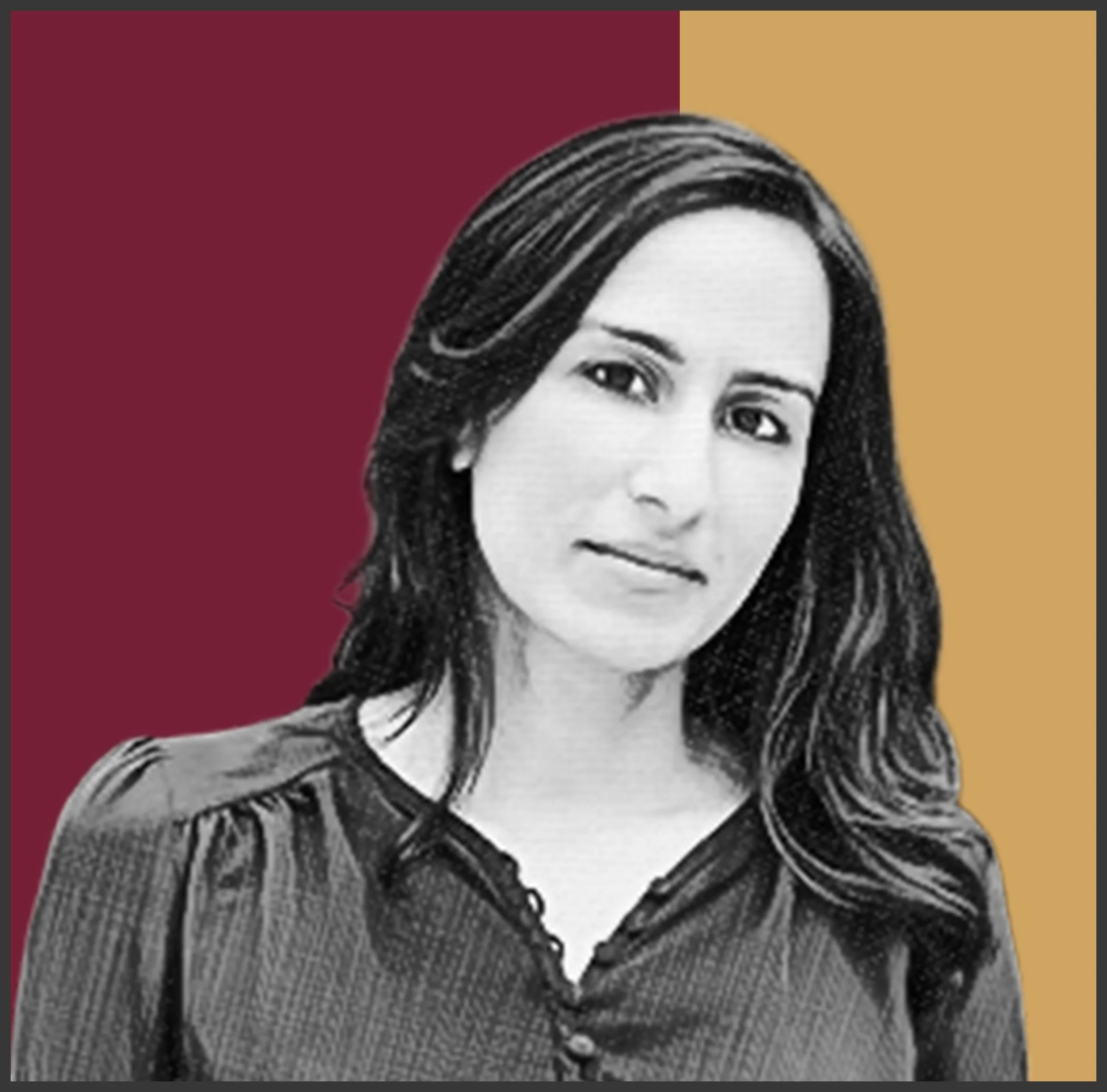
EP. 169: IMMIGRANT PHYSICIANS AND AMERICAN HEALTHCARE
WITH ERAM ALAM, PHD
A Harvard historian outlines how America became dependent on immigrant physicians and highlights the prejudice faced by the very physicians that care for some of the country’s most vulnerable patients.
Listen Now
The creation of Medicare and Medicaid in 1965 enabled millions of Americans to meaningfully access healthcare for the first time — and dramatically increased demand for doctors. The passage of the Hart-Celler Immigration and Nationality Act a few months later enabled tens of thousands of immigrant physicians to migrate to the US. Since then, immigrant physicians have comprised between 25 — 40% of the physician workforce.
Our guest on this episode is Professor Eram Alam, associate professor of history at Harvard. Alam specializes in the history of medicine, race, migration, and health during the twentieth century. In 2025, she published The Care of Foreigners: How Immigrant Physicians Changed US Healthcare.
Over the course of our conversation, Professor Alam traces the legal, economic, and geopolitical factors that led to the US depending on immigrant physicians to care for many of the country’s most vulnerable populations. We explore how American attitudes toward immigration have shifted over time and how the current state of politics has created a jarring disconnect: many patients depend on care from immigrant physicians and yet continue to view immigrants as un-American. Finally, Professor Alam reminds us how remembering everyone feels a little out of place, can help us see the person in front of us more fully.
-
Eram Alam is an associate professor of the history of science at Harvard. She specializes in the history of medicine, with a particular emphasis on globalization, race, migration, and health during the twentieth century.
Her first book, The Care of Foreigners: How Immigrant Physicians Changed US Healthcare (Johns Hopkins University Press, October 2025), explores the enduring consequences of post-colonial physician migration from Asia to the United States. Alam also co-edited a volume with Dorothy Roberts entitled Ordering the Human: Global Science and Racial Reason (Columbia University Press, 2024).
Her next project, The Logistical Body, was motivated by the pandemic and the subsequent breakdowns it made visible. The Logistical Body investigates one limit – the material remainder of the laboring body within this hypermobile regime – and excavates the strategies, techniques, and logics used to manage this disordered entity.
-
In this episode, you’ll hear about:
3:00 - Dr. Alam’s work as a professor and historian of healthcare and medicine
7:30 - The background for Dr. Alam’s book The Care of Foreigners.
13:00 - The story behind the 1965 legislation that led to the mass employment of physician immigrants in the US
22:10 - How the role of immigrant physicians in the US healthcare system complicates the idea of meritocracy in medicine
29:00 - The ways in which US immigration policy has changed the experience for foreign-born doctors over time
33:45 - Dr. Alam’s view of how current immigration crackdowns fit into the larger historical narrative of US immigration
45:36 - How dehumanizing political rhetoric surrounding immigrants can blind us to the humanity of those who care for us
53:26 - The unifying power in acknowledging discomfort in ourselves and others
-
TDA 169 final1.mp3
Henry Bair: [00:00:01] Hi, I'm Henry Bair.
Tyler Johnson: [00:00:03] And I'm Tyler Johnson.
Henry Bair: [00:00:04] And you're listening to The doctor's Art, a podcast that explores meaning in medicine throughout our medical training and career. We have pondered what makes medicine meaningful. Can a stronger understanding of this meaning create better doctors? How can we build healthcare institutions that nurture the doctor patient connection? What can we learn about the human condition from accompanying our patients in times of suffering?
Tyler Johnson: [00:00:27] In seeking answers to these questions, we meet with deep thinkers working across healthcare, from doctors and nurses to patients and healthcare executives. Those who have collected a career's worth of hard earned wisdom, probing the moral heart that beats at the core of medicine. We will hear stories that are by turns heartbreaking, amusing, inspiring, challenging, and enlightening. We welcome anyone curious about why doctors do what they do. Join us as we think out loud about what illness and healing can teach us about some of life's biggest questions.
Tyler Johnson: [00:01:02] The creation of Medicare and Medicaid in 1965 enabled millions of Americans to meaningfully access health care for the first time and dramatically increased demand for physicians. Three months after the passage of Medicare and Medicaid, the heart seller, Immigration and Nationality Act enabled tens of thousands of immigrant physicians to migrate to the U.S.. Since then, the government has relied on immigrant physicians to care for its citizens, with immigrant physicians comprising between 25 and 40% of the physician workforce to date. Our guest on this episode is Professor Eram Alam, associate professor of history at Harvard. Alam specializes in the history of medicine, race, migration, and health during the 20th century. In 2025, she published her first book, The Care of Foreigners How Immigrant physicians changed U.S. health care. When not lecturing or mentoring students, Alam spends her time writing with a current interest in the rise of medical tourism. Over the course of our conversation, Professor Alam traces the legal, economic, and geopolitical factors that led to the U.S. depending on immigrant physicians to care for many of the country's most vulnerable populations. We explore how American attitudes toward immigration have shifted over time, and how the current state of politics has created a jarring disconnect, with many patients receiving excellent care by immigrant physicians during their most vulnerable moments and yet continuing to view immigrants as un-American. Finally, Professor Alam suggests that remembering that everyone is always a little out of place can help us remember to see the person in front of us as fully a person.
Tyler Johnson: [00:02:53] Professor Alam, thanks for being here and welcome to the show.
Dr. Eram Alam: [00:02:59] Thank you. I'm really excited to be here and look forward to the conversation.
Tyler Johnson: [00:03:02] You are a little bit different than many of our guests because you are a straight up academic rather than a physician, which is what many of the people that we that we interview on the program are. So I was hoping that you could start by telling us just what is your day job? What do you do?
Dr. Eram Alam: [00:03:19] I am a PhD, which means poor hungry doctor instead of an MD, which is. The money.
Tyler Johnson: [00:03:27] I've not heard that one before.
Dr. Eram Alam: [00:03:28] So my day job is I'm a professor at Harvard, and I have the good pleasure of teaching the history of 20th century US medicine to a broad range of students, undergraduates, graduate students. And we really try to get into this question of how and why US health care is organized the way that it is now.
Tyler Johnson: [00:03:49] It's interesting. I was exposed a number of years ago to this company. They were a consulting company, but they had a very particular shtick and their particular shtick was that what they would do is, if you wanted them to help your organization to solve a problem, they would actually embed members of their consulting company inside of your organization, and they would sort of to give them an understanding, a sort of, you know, walking in your shoes, understanding of what members of your organization do all day. Right. And they had been hired by my residency program at the time to come in and try to help us figure out how to increase wellness in the residency program. But all of this is to say that to their credit, they had members of their consultancy program who came in and like embedded themselves sort of there in the trenches with us in medicine. Right. Meaning that they got there at seven in the morning for sign out. And then they went around and did all the things that the doctors did all day to try to have a sort of in their skin understanding of what it was like to be a doctor.
Tyler Johnson: [00:04:47] And I've always thought that that must have been such a strange experience for them. Right. Because as, as doctors, when you're in doctors, in training, you have this kind of graduated exposure, right? You usually start your first year or two, you might like hang out with the doctors for a day or two. And then when you're in your quote unquote, third year of medicine, whenever that actually happens, then you like start to actually take some abbreviated version of call with people, and then it sort of expands until you become an intern, and then you start doing the full fledged thing. But if you're a consultant and you've never done any of that, and you just show up one day and do the whole thing, I've always wondered how surprising that must have been. But I'm curious, sort of the inverse of that. If we as, as you put it, money doctors were to show up one day and follow you as a poor, hungry doctor around, what would we see you doing? What do you fill your time with?
Dr. Eram Alam: [00:05:34] Yeah, my time is again. It's spent lecturing. So one of the courses that I teach is Medicine and Health in America, and really trying to understand what is the relationship towards this idea of health, which is not a stable category, it's not an ahistorical category. And so to understand what are all of the components that have fed into these conceptions in the United States that have also constructed the United States as well as medicine, so that there's this related feedback relationship between these two ideas. I also spend a lot of time teaching on immigration and health, and thinking about how different kinds of bodies are incorporated into the US health care system as patients, as practitioners, which is what the book is about. But also just to play with the idea of foreignness, you know, even foreign bodies as viruses. What how do we think about those entering into US health care and how do they ripple through the system? And then I spend a lot of time, you know, reading and writing with students about their respective projects and which range from malaria eradication in Russia to thinking about forms of hybrid knowledge and treaty port China to thinking about the history of the aging scale in U.S. health care and how that changes decision making. So really, really get to think capaciously around all those things. And then when I groggily come home from that day. And, you know, managed to consume something, I turned to my own writing, which my next project is on medical tourism and the history of that and how U.S. patients are and have been going elsewhere in order to get access to health care.
Tyler Johnson: [00:07:28] You know, I think that there's many different ways of thinking about your book and sort of how it fits into the larger context, because one of the things that I think is interesting, right, is that oftentimes, I think when doctors conceptualize of health care, we tend to think of health care as being a thing that is provided to or that happens to or that is done for the patients, right? As if the people who were doing the caretaking in a funny way are almost kind of invisible, right? Because it's supposed to be all about the patients. I think that's sort of the way we would like to think about it, is that we as healthcare practitioners have just kind of ended up where we are by virtue of some sort of invisible hand that gets everybody to the right place or something. Right? I think that's sort of a comfortable way to think of it. And we can get into some of the assumptions that underlie that a little bit more in a moment. But one of the things that I think is important, just for framing the place of your book, is that you are talking a lot about how do the people who actually provide the care get to that place? How do they get to be caretakers, and then what does their place within the caretaking infrastructure or ecosystem? What does it look like? So can you talk to us just broadly speaking, first, how did you come to write this book? And if you were to give your, you know, sort of your 32nd elevator pitch to somebody about what the book is about. How would you talk about it?
Dr. Eram Alam: [00:08:55] Yeah. So I came to write this book. I was trained as a historian of medicine. U.s. history was my field of looking at medicine, and I was really interested in health disparities, especially in cities. And so I kept reading all of this literature about the fact that health disparities exist. So we know that across racial lines, across gender lines, across class lines, that these things do exist. And I felt in some ways analogous to this question that you raised at the beginning, who is actually providing care that felt invisible to me in a lot of the literature that, in fact, I kept getting, again, this information that these disparities exist. So then I started looking into who is providing care. And I was just struck by the fact that so many of these practitioners are immigrant physicians, especially in these under-resourced urban and rural communities, and not just 1 or 2, but sometimes the whole entire labor force in these areas are composed of immigrant physicians. And for me, that was just a really interesting thing to think with because it was this unexplored aspect of U.S. healthcare that's actually foundational to its operation. You know, I think so much of the ways that immigration is talked about is, oh, this is an individual person, this model minority myth who has come from elsewhere because they wanted to have a better opportunity in the United States.
Dr. Eram Alam: [00:10:26] But if you actually start to look and you unpack this a little bit more, you start to see that, well, if there have been at times between 40 to a consistent at least 25% of the U.S. labor force for the last 60 years have been immigrant physicians. This is not just a one off. Somebody came for this better opportunity kind of narrative. This is some sort of structural arrangement. And the composition of the US healthcare workforce relies on these physicians and not just, again, this one off way, but in a really, really foundational way. And so then I thought, I need to understand how that came to be. How did that route get established? How did that mobility path become something that was so well, you know, trodden and, and how did these people operate within contemporary US healthcare? You asked for the 32nd pitch. The 32nd pitch would be how did immigrant physicians become so vital to the everyday operations of US healthcare?
Tyler Johnson: [00:11:30] You know, one thing that just to highlight that you have already mentioned, but that could have, you know, slipped by if you weren't listening too closely is there is a huge percentage, right? This is, as you say, it's not an issue of a one off doctor who comes here or a doctor to be who comes here because they want training. But this is actually a huge percentage of the US healthcare workforce, in particular the trainee workforce that is recent immigrants, right. And it's also worth noting, as anybody who has been in an academic or pseudo academic medical center knows, any place that trains trainees, trainees are the lifeblood of the places that they work. Right? It is often the case. Obviously, it depends on the exact ecosystem that you're talking about, but it is often the case that a hospital system would just collapse if the trainees were not there, right? Because they are the people, by far the cheapest source of labor for the hospitals, in at least in terms of the people who can do the things that they do. Right. And they are the most elastic in the sense that for the most part, work hour restrictions and everything else notwithstanding, if program directors say, well, you need to work more shifts or you need to do more of this or more of that, in most cases, they don't have a lot of recourse to say otherwise, right? We are just starting in the last five or so years to see an increase in unionization of some trainee work staffs and whatever, but for the most part, they get paid relatively little money for what they do, and they have to do basically what they're told.
Tyler Johnson: [00:12:59] And so as a consequence, they end up constituting this sort of a very important component of the hospitals where they work. And many of them, as you point out, are immigrants. And I think I haven't even mentioned so far the name of the book to the point is The Care of Foreigners How Immigrant Physicians Change U.S. Health Care. And, you know, I think again, to my point from before, I think that often if you were to say to doctors, oh, what would a book called The Care of Foreigners be talking about? They would say, oh, it would talk about how in the U.S. we take care of people from all over the world. People come here from all over the world to get our health care because it's so advanced or whatever. But of course, the play on words that you're employing there is that, in fact, what you are, although there's some of that too. But what you are mostly talking about is the fact that the caretakers themselves are often, quote unquote, foreigners and the way that that impacts things. So in your book, you you talk a lot about the year 1965. So can you talk to us about why does 1965 matter in this whole discussion? What happened then and why is that important?
Dr. Eram Alam: [00:13:59] Yeah. So 1965 was this really important piece of immigration legislation that passed in the United States called the Hart-celler Immigration and Nationality Act, and it was one of the first pieces of legislation that tied together skilled labor entry when there was a shortage in the United States prior to this. So if you just think about this bill passed in October of 1965, in July of that same year, Medicare and Medicaid passed. And overnight, you have these high users of healthcare that are now have this federally subsidized insurance that can access care. So anywhere from 20 to 23 million people who are high users overnight are now able to enter into the medical marketplace. Three months later, you have this piece of legislation that is allowing for the expedited entry of immigrants who have a certain skill set that the United States does not have at this period. And so those two things I don't think are a mistake, but they're often not read together as being a kind of causal relationship between those pieces of legislation. So domestically, that's it. We all of a sudden have this huge need in the United States and then on a geopolitical level. So prior to 1965, the US had a very closed isolationist policy when it came to immigration. And in the middle of the Cold War, the United States was in this position as this emergent superpower and broadcasting to the rest of the world that you were this close, isolationist place was not a way of engendering goodwill.
Dr. Eram Alam: [00:15:38] So there was this fear that especially these post-colonial Asian and African nations, that they would see that as the United States not wanting to welcome them into the fold of democracy. And there's a fear that these countries would lean more towards the USSR. And so immigration at this time also is a really important geopolitical issue, because it was a way of signaling to these countries, hey, we're open to you. We want to show you how liberal democracies work. One of the ways that they work is by having these flows of immigration. And on top of that, turns out you have this skill set that we need. So we want you to come and enter into our country, especially if you are a physician, a scientist, or an engineer, because there's a shortage. So it's really these two things that come together, this domestic need and this geopolitical signaling about openness that brought together a very particular configuration of immigrant to the United States. This is where you get the physicians that are predominantly coming from India, from Pakistan, from the Philippines in large numbers. Post 1965.
Tyler Johnson: [00:16:53] It's really interesting, back when Twitter was a thing that I liked to be on. I was on Twitter once, I remember, and I heard a person who is probably 25 ish, who was talking about how hard it had been during this century, basically to be a young person. And one of the things that the person talked about was how he thought the people older than him just didn't understand what it was like to grow up under an existential threat like climate change. Now, of course, to some degree, there is truth to the fact that climate change at least, or at least the understanding of climate change was, uh, you know, much less in decades past. But I think what is easy to forget in sort of a, you know, amnesiac historical consciousness, if you're not familiar with the era, was that for really from, you know, not long after the end of World War Two, up through the end of the 1980s. While it's true that global warming and climate change were not so much on the national radar, there was this perceived existential threat of what was often called mutually assured destruction right between the US and the USSR. Right. I was very little sort of at the end of this era. So I don't really remember this myself per se. But I have read stories, right, that all of the kids, for example, of that era, knew about duck and cover drills, which was this idea that if a nuclear bomb came unannounced, that you were supposed to hide under your desk, which of course always tries to be like, what's that going to do if there's a nuclear bomb? But okay, whatever.
Tyler Johnson: [00:18:21] Right. But the point is that people who grew up in that era, it was like a felt thing. Even if you're in second grade or whatever, right, that there was always this possibility that the world could be annihilated by atomic bombs. And I think it's just to say that it's easy for us because there really isn't over the past 20 or 30 years, there's really not an international an international force that takes the place of that. Probably the closest to that, I guess, would be the things that happened around nine over 11. But even there, I think that very few people truly thought that that was like a worldwide existential threat in the way that the US versus the USSR was. And so all of that is to say that I think it's important to remember that as a backdrop, a sort of international geopolitical backdrop, as you mentioned, in terms of, you know, the way that this kind of thing was thought of. But I also wanted to ask you then, so this bill is passed in 1965 with both geopolitical and more internal aims in terms of providing the skills that we needed. What was the effect of it? How did things change in US health care because of this bill that was passed in 1965?
Dr. Eram Alam: [00:19:28] So in the first ten years after the passage of the bill, from 1965 to 1975, about 75,000 immigrant physicians came to the United States and immediately started working. And it was a very inchoate system. So in some states, we had about 46% of the US labor force at that time of the state was composed of immigrant physicians. At other places, it was a little bit lower, but there was this immediate influx. And the reason why I say it was so kind of haphazard was there wasn't a streamlined system for how to manage all of this new labor and how to interpret it, and how to understand who these people are and where they're coming from and what their skill set was. So, you know, as I'm sure your audience is familiar with, licensing for physicians happens at the state level. So there were some states that had, you know, A, B, C as a requirement. And there was there were other states that just had a as some requirement that they wanted. The federal government said, okay, we'll just expedite your entry if you'll work in. I mean, asylums were on the decline. But if you'll work in prisons, if you're an immigrant physician, you can just become a permanent resident, but you can only work in a prison. So you're kind of confined and constricted to that thing.
Dr. Eram Alam: [00:20:46] So there are all sorts of random processes and procedures that people put in just to try to get people to staff their hospitals, essentially. But the numbers were really dramatic, especially in the early part and the really working out systems of should we have tests? How many tests should we have? What exactly are we going to be testing? What is the kind of documentation and the paperwork that people should show in order to verify their credentials? How do you believe them when they say they know something? And so that was a really much a part of the first, you know, large scale migratory regime that happened. And then so once that was worked out in the first ten years, there's been this consistent flow. It's changed with sometimes adding exams, sometimes deleting them different exams for immigrant physicians. Then in 92, it was okay, everybody takes the Usmle. That's going to be some kind of equalizer that happens. But since then, we've had at least a quarter of the U.S. physician labor force been comprised of immigrant physicians, and they're often the ones that are working on the front lines there. In family medicine, they're doing pediatrics. Internal medicine tends to be huge, huge attractors for this cohort of labor.
Tyler Johnson: [00:22:09] So one alternative prism that we could use to look at this whole question is that, you know, one of the things that is strange about the people who want to go into working in health care in the United States is that you have to layer over the top of this, the discussion that comes with talking about how do we do quote unquote, admissions to any competitive thing in the United States? Right. And so as everybody is aware, over the last 5 or 10 years in particular, there has been a very vigorous national debate about what is the most fair way to think about how we admit people to the most competitive aspects of U.S. life. Right. And so famously, a couple of years ago, there was a Supreme Court decision that, in effect, outlawed at least in many substantive ways, the traditional notion of affirmative action in college admissions. Right. But the larger sort of theoretical notion that underlies all of that, right, is the idea that the U.S. sees itself, and it is very important to the U.S. to see itself as a meritocracy, right? And we want to believe that, you know, this there's a sort of Horatio Alger myth is kind of baked into the way that we think about Horatio Alger. Right. Is for listeners who may not be familiar with the name, is this author at the beginning of the 20th century who writes these kind of rags to riches stories, right? The the little boy who starts as a bootlick and then through grit and pluck and, you know, hard work rises through the ranks to become a corporate titan. And that kind of idea is really baked into the ethos of the United States, because there is this sense that whoever is the best and the brightest, regardless of where they come from or how much money they have or any of the rest of it should be able to rise to the top.
Tyler Johnson: [00:24:09] And in medicine. Medicine has nothing, if not so many opportunities for rising to the top. Right. Getting into medical school in the first place is one way of doing that. Then getting into the best medical school, then getting the best residency, then getting the best fellowship, then getting the best fat like. I mean, it is just it is like a life filled with opportunities. It's for you know, it often feels like medicine is a place for people who are addicted to wanting to rise to the top. Right? And we want to believe that what that system does is that it selects very carefully and blindly for the best and the brightest to become the most exclusive. Right. And and there are many reasons, partly we want to believe that. I think philosophically, because of the way that we think about ourselves as a nation. But then I think it's also in a sort of funny way. It's kind of baked into the comfort that we feel when we go to see the doctor. Right. You want to believe you're at Harvard. You want to believe if you go see a Harvard neurosurgeon, that that is like the smartest darn person in the country, right? Or has the most skilled hands in the country, right? Like the system seems to suggest that you can have that confidence. Right? And so I'm curious, what do you think about the way that immigrant physicians fit into that framework? Or how does the way that immigrant physicians are handled by the system complicate the way that we think about how meritocracy interacts with the way that we choose and train doctors?
Dr. Eram Alam: [00:25:51] Yeah. I think what we start to see is that meritocracy is a very racialized system. It's a very gendered system, and it's a very caste system. And so when we have people who are considered to be from elsewhere, they're not afforded the same kinds of sympathies or possibilities of being a part of this meritocratic system. So we have this irony here where meritocracy clearly has borders, and we don't think that, well, the fact of somebody coming from a place like India, which has a lot more people than the United States and a lot more competition. And this person has been able to secure a spot, often in the public education system, which is unlike in the United States. That's the premier education system so often has secured a spot in that system, which is highly, highly competitive, then has done the difficult work of coming to the United States. So even taking the exam, securing, you know, that in and of itself often is a 2 to 3 year process of getting all of the things in order and then being able to enter into the US labor force, that there's this assumption that they don't have that kind of quality. And so one of the things that I write about is that this language of quality and competence becomes this alibi for really thinking about the US as better than the rest of the world in this educational system, when in fact, if you actually think through meritocracy and what's happening, it's very hard to say that somebody who has emerged from 1.4 billion people to get this extremely high level of education and achievement, and then be able to actually translate that into a whole nother system and make that work, that that would not be the most meritocratic system, or that person doesn't have the highest skill set.
Dr. Eram Alam: [00:27:58] So I think you have these kinds of ironies where you see the work that foreignness is actually doing. What it does is it mitigates these ideas of somebody's skill and their ability and their competence. And so it results in this kind of stratification of the labor force in the United States, where all of the people that you just described, those are considered the physicians who are working at the places that I work at. You know that they're at the Harvards, they're at the Yales. There are the elite, and then this other tier is emerging, and these are the immigrant physicians who are working at the community hospitals. They're working at public hospitals. They're working at safety net hospitals in rural communities and under-resourced areas. And so I think what we see is we want to have this idea that the doctor possesses, you know, all of the highest qualities and skills, yet we're not willing to actually grant that same logic to everybody evenly. It falls very unevenly on who is actually working in the in the system.
Tyler Johnson: [00:29:03] So if we can switch gears a little bit, because this is still talking about the same set of questions, but I want to also speak about them broadly. I direct the fellowship program for hematology and oncology fellows here. Right. And one of the things that has been very obvious in that part of my day job over the last. I've only been in this position for a couple of years, but one of the things that has been a really live question is how do we have to think about who and how we consider people for positions within the fellowship with respect to federal immigration policy? Because more than at any time in the last many decades, over the last year and a half especially, and then to some degree in the four years from 2016 to 2020, federal immigration policy has been a live question in a way that it just hasn't been for a long time. Right? At least I think on the surface, for a long time, federal immigration policy was mostly marked by an impasse where there was not a lot of movement, obvious movement in either direction.
Tyler Johnson: [00:30:11] But now there has been an enormous amount of movement. And this has, of course, been in the news and all these things. All of that is to say that as long as we have a scholar of immigration and in particular in the health care system, but also in general on the program. It would seem like a shame not to talk with you about some of the broader questions that are involved in how the US thinks about immigration. So I guess the first thing that I was hoping that you could just talk about is if you just tried to trace broadly over the course of the history of the United States, sort of how the US thinks about how immigrants play into the US story, are there particular sort of phases or epics or like, how would you trace that evolution over time? And I know that that's a question that many books have been written about. So it's unfair. But just to give us a little bit of framing for the current moment, how would you think about that?
Dr. Eram Alam: [00:31:01] Yeah, that's that is true. So change over time, I would say maybe one of the ways to think about this in a, what the heuristic would be to look at where immigration has sit within the federal government. So in the beginning of the 20th century, immigration was something that sat under the Department of Labor in the 1940s and the 1960s. It switched to the Department of Justice. And then in 2001, with the introduction of Homeland Security, it became something that now sits with Border Patrol in the Department of Homeland Security. So I think even just thinking with what those different departments are designed to do is a really easy way of seeing how the United States is relationship to what the immigrant was supposed to be and what the United States is supposed to be for. The immigrant has changed. So in the beginning, it was, okay, well, we need labor. There were things like the Asian exclusion acts and things. So it's not as if this was just, okay, we want labor from everywhere. And this was some easy fit for people to come. It was it was very complicated. But really immigrants were understood as laboring bodies, and this was an often unskilled manual laboring bodies.
Dr. Eram Alam: [00:32:23] When we move into the Department of Justice, there's a whole different paradigm that's now attached to this, where the United States is also trying to do work in the world. It's trying to understand itself as a place for people who are seeking asylum. How do we think about refugees? How and this is, as the United States position in the world is also ascendant. So it becomes, you know, into this much more bureaucratic framework to think about what are the legal justice issues, how do we get people to actually enter through these legal mechanisms and routes? And then again, in Homeland Security, it becomes this really, really antagonistic posture where the immigrant is first and foremost considered a threat, and then they have to do some work to mitigate their foreignness or their their threat. And I think, you know, we're seeing the culmination of that in the present administration where it's let's close everything and then ask questions about, well, actually, what are the ramifications and the implications for this kind of chainsaw move towards immigration reform without any actual thought as to how integral these many, many different communities are, again, to the daily operations of U.S. life, not just for health care.
Tyler Johnson: [00:33:45] So, you know, I think that many people were struck and surprised, and I think many people very distressed to see what happened towards the end of 2025 and the beginning of 2026 in Minnesota. Right. And so you had uniformed, heavily armed Ice agents, not from the community, going into the community and proactively seeking out people who, at least as best can be told, often did not, for example, have criminal records or pose any sort of known threat or whatever. And then, in effect, forcibly removing them from their workplaces or in some cases, from, you know, just outside of schools or churches or whatever, and then taking them to detention centers to prepare them for deportation. And, of course, in the ensuing aftermath, you had the killing of at least two people who were also who were never even thought to be immigrants. And it felt like, I think to many people, a distinctly foreign happening to see like it felt like something that you would see on the evening news from some other country. And yet it's happening in Minnesota, which, if anything, is supposed to be known for being bland and boring. Right. It's sort of like the quintessential Midwest Midwest place. But I'm curious, as a historian of immigration and immigration policy, How did you understand that? Were you surprised by what happened or sort of how did you see that fitting into or arising from a larger historical narrative in the United States about how we think about immigrants and how we treat immigrants?
Dr. Eram Alam: [00:35:29] Yeah. I mean, unfortunately, I'm not surprised. And I wasn't surprised. I mean, of course, the level of violence should always be something that is shocking to us. But, you know, I was just listening to a statistic and and I'm not sure it may get the numbers a little bit wrong, but in I'm in Massachusetts right now, and there was a report that I think up till now, in the year Biden had deported 1700 immigrants from Massachusetts. And the Trump administration has deported 7000. So I say this just to say that this is not as if it's a completely new occurrence that is happening, that what has happened is that we haven't put a stop to this since nine over 11. Since that kind of state of exception, since the emergence of the Department of Homeland Security and the license that they have been given to enter into communities, the laws are written so that they can do this kind of aggressive surveillance to enter into these communities, to act in these extremely violent ways. None of the administrations, whether Democratic or Republican, have actually scaled back these kinds of operations. And so in some ways, what we're seeing is an administration who is taking hold of these things, these precedents that have already been in place and is amplifying them and literally arming them to the teeth without any kind of training, and is also fueling this kind of political rhetoric in the in the United States, where anybody who is from elsewhere is a criminal.
Dr. Eram Alam: [00:37:07] So there's this equation of criminality and the immigrant that's allowing, I think, for also this the safety discourse to be a thing that, oh, this is all about ensuring that Americans, whoever. I don't know who that. I mean, I do have a sense of who that means, but that Americans are safe and that the immigrant is this constant threat that is the only formation in which they can possibly exist. That is a very, very dangerous position to be in. And then when the Supreme Court also adds, oh, yeah, sure, you also legally can racially profile. If somebody is speaking Spanish, you can, you know, go and do whatever you want to them. We have the confluence of all of these things that are giving somebody who seems to be not from the United States. And for your radio listeners, I'm putting that in air quotes that gives them license to police, to patrol, and to just perpetrate violence against these bodies that they think are foreign.
Tyler Johnson: [00:38:12] One of the things that has really been striking to me during, especially the second Trump administration, is that it feels like there has been a sort of permission structure put in place. Either people have had a lot of new ideas or ideas that they had before, but they didn't feel at liberty to articulate publicly now. There is a permission structure to articulate them publicly. And, and one of the things that I have noticed as being a big difference with regards to, to the debate about immigration is that, at least to my memory. And, you know, I'm sure that obviously there are many things that I don't read in here, but I think that most of the public discourse, even 20 years ago about immigration went something like this. It was like, look, we are a nation of immigrants. We want and welcome immigrants. We need them here. They are part of what makes America America. And we are a nation of laws. And so this is a question principally of the rule of law. And what we need is to have a system in place where people can come in reasonably and legally, and then we need everybody to follow the rules. And so the idea about, for example, deporting some immigrants, it's not that we don't want them here. It's just we want them to leave and then come back in, quote unquote, through the front door, right? We want them to come back in legally according to established procedures. And then, of course, they're welcome because we want and need them here. I feel like that was sort of the even on the, the right side of the political spectrum, that felt like kind of the, the overriding narrative.
Tyler Johnson: [00:39:44] What has been really striking to me more recently, though, is that there seems to be an ascendant narrative on the right that that's actually wrong and that, in fact, we do not want immigrants, or at least we don't want very many of them, or we don't want them too fast or and, you know, especially, for example, with JD Vance, there has been the rise of this idea of a blood and soil America or a Heritage American right. This idea that JD Vance gave this sort of famous speech where he talked about this graveyard plot that his family has used for generations and seemed to suggest this almost sort of like a mystical connection that flows somehow through genealogical blood and somehow through the land. And the suggestion is that, quote unquote, real Americans are people who can trace their heritage back however many generations. And that to the degree that you can't do that, I mean, at least the implicit suggestion is that the degree you can't do that, even if you do come legally, and even if you stay here, you are less of an American or less real of an American or something to that degree. So I'm just curious sort of philosophically and historically, what is your response both to those arguments per se, and also to the fact that those arguments are now something that is spoken about so much more publicly, and that seems to undergird much of the current federal administration's approach to these issues.
Dr. Eram Alam: [00:41:14] Yeah, that's a very meaty question. So, you know, thinking with the first aspect of your question, which is this shift, this maybe 20 year shift, and, you know, I think bringing it back to the 1965 moment and what the United States was trying to articulate, that was the moment of multiculturalism. That's where it really, really took hold as the way that a liberal democracy was supposed to operate. There was a fear, in fact, of a kind of homogenous culture and a homogenous society, because there was an idea that that is what led to the fascistic regimes of World War two. So we don't want that at all. And in fact, there was all of this political conversation about the antidote to any kind of totalitarian regime, whether it's the Soviet regime or whether it's the Nazi regime, is to make sure that you valorize certain kinds of difference, that that's actually important in any kind of. So nothing can gain too much power. And you don't have this kind of singular way of seeing the world. Of course, it has all sorts of troubles and problems. And, you know, I've spent so much time thinking through that, as have other immigrant historians. As you know, we valorize a certain kind of immigrant. Then the model minority emerges because you fit certain kinds of ways of, you know, economic production that is valorized in the United States.
Dr. Eram Alam: [00:42:44] It fits the Horatio Alger bootstraps story. You know, somebody who came with a dollar in their pocket and was able to succeed. What does it mean for, you know, the black community that was not able to do that? So immigrants become this way also a wedge, you know, between white and black in the United States through this Multiculturalism discourse. Nevertheless, they have some kind of place. There's an uneasy recognition that difference is a good thing. And but there's always this aspect of discomfort with that idea of, well, what does it actually mean to be a nation then? Because should a nation have some kind of homogeneous identity, should it have some kind of homogenous language? And if we just dilute everybody out, then what does that mean for some kind of identity, a positive identity for what some place and somebody is? So I think we see that. I mean, of course, the irony of the J.D. Vance story is that his kids will not have that same history because his partner is not a blood and soil member of the territorial United States. But I think that you're you're right in this replacement theory idea that has also really, really taken hold is there has been this idea that whatever is American is now the minoritized position, and that it is going to be the one that is going to become extinct.
Dr. Eram Alam: [00:44:14] And so the way of ensuring that that doesn't happen is this kind of retrenchment in what it means to be white, male, American, and that that's absolutely necessary, that everything has to be internal. And we see this in the H-1b visa executive order that was passed September 19th, I think, 2025, which was all about limiting immigrant tech workers from the United States because it was about growing US based people who could do this work. And the fact is, is that the US doesn't actually have those people to do that work, that it spent all of this time gutting its education system, making sure public schools don't have the proper funding, making higher education way too expensive for people to actually be able to enter into these more complex skills. And so without having any of that subsequent actual institutional and structural building to support this kind of America first idea, all you have is this political rhetoric that I think is capturing this anger at sort of falling behind because you're being replaced, because somebody is taking your position without actually thinking about, okay, well, there's a lot of institutional gutting that's going on that has resulted in this being the case.
Tyler Johnson: [00:45:36] So we're, we're recording this just as both Passover and Easter are starting for Jewish and Christian people, respectively. And a good friend of mine was telling me last night that she had gone to a service that involved the washing of the feet. So parishioners at the service would wash each other's feet in remembrance of Jesus washing the feet of his disciples before his crucifixion. One of the things that I was thinking about is that in the way they did it in this particular service, members of the congregation would come up and they would just sort of form a line, and the person who was front of the line would turn to the person behind him, and there was an actual basin of water, and they would actually wash their feet with a washcloth in the basin of water. And then when that person's feet had been washed, then they would turn around and wash the feet of the person behind them. And then so it went in this, you know, line through through the congregation. I was thinking about that, and it struck me in a funny way as a a lovely metaphor for at least the best of what we hope to do in medicine, in the sense that, you know, of course, some people through accident or the way they were born, don't have feet, but most people have feet.
Tyler Johnson: [00:46:46] And feet are generally not particularly appealing parts of a person, right? They're something that is not seen very often. And, you know, as a doctor who has seen a lot of people's feet, it's very clear sometimes that they're not seen very often because sometimes they're not very well kept. And the toenails are all funky, and they have growths and scabs and wounds and all sorts of things, right? They're kind of this like sort of hidden part of us that often is not seen by the wider public. Right. And the reason I bring that up is that that idea of the washing of each other's feet strikes me as a beautiful metaphor, that medicine can be a place where if it's done right, we sort of meet each other in our mutual vulnerability and sort of say to ourselves, look, as an imperfect person who has my own set of medical and other problems, I am going to try to come to this place, and I am going to try to recognize the common, shared humanity and the other people around me. And in effect, I am going to wash their feet. In other words, I am going to try to be with them at a vulnerable human level and provide care for them in a moment when they really need it, right? Personally, I'm a cancer doctor and most of the people that I take care of are one way or another, in a moment of great vulnerability and great need.
Tyler Johnson: [00:48:10] One of the things that really worries me about the evolution that I have seen, even over just the past five years, in the way that we talk about these questions on the national scene, is that much of the rhetoric feels to me fundamentally de humanizing. And that word dehumanizing is one that I think we often use it a little bit too glibly. We don't think about the gravity, the weight of it when we use it, but any kind of way of talking about anything that robs people of their full humanity, I feel like whatever your political preferences, whatever presidential candidate you like, whatever, any of those things. I feel like there is a sense as a doctor that that that worries me. It feels problematic. And so I guess I was hoping that you could talk as a person who studies these things historically. What can you tell us about the potential for these ideas and this rhetoric to leave us in a place where we don't see each other as fully humanly as we otherwise would?
Dr. Eram Alam: [00:49:31] Yeah. You know, I think to your point of the feet, one of the quotes that I like to use over and over in my teaching and my thinking and why I actually think the history of medicine is so interesting is because birth, death and illness, these are the great equalizers of society. There are things that we all experience. There's no way out of them, and they fall unevenly. Of course, you know, in the effects and how they operate, but those things are they're undeniably there. And, you know, I think one of the challenges for what we're seeing is almost people, I think, are disassociating. So you can have, in the case of the physicians that I talk about, for example, and they talked about this, you can have these really, really vulnerable experiences between a doctor and a patient, a physician who is from elsewhere, a patient who is from Appalachia. And they are able to connect based on the fact that there's this extreme vulnerability that's happening in this moment. You know, one of the physicians who I think with his name is Abraham Verghese, who's in your neck of the woods, you know, he has this book, this autobiography that's called My Own Country. And he was an immigrant physician who came in the 1980s and was working, I believe it was in Mid Tennessee. So this was at the height of the Aids epidemic, but people didn't quite know what was going on yet. And he talks about how his foreignness was actually advantageous because people who were suffering from HIV were willing to come to him because they felt like, this is somebody who's not going to judge them based on their lifestyle choices and what they were experiencing, and that they could actually be extremely vulnerable with him because he was on the outside.
Dr. Eram Alam: [00:51:28] And so you have these really interesting moments where all of these barriers that you would, you know, maybe presume would exist about difference and foreignness and somebody from the outside actually become ways of connecting that we all realize that we're on the outside of something, even if we're on the insides of something else. And that that's enough to be able to bring us together in this moment of vulnerability. What I am finding, and what the physicians that I talked to are finding, is that that's that kind of level of shared experience, is not always translating into the register than of political choices and political life, that there's this kind of disconnect that is existing between people understanding the need for the immigrant who is taking care of them, literally helping them to stay alive, and yet supporting pieces of legislation that are disappearing, immigrants that are incarcerating immigrants that are disallowing them from coming. And so I think that the work that we have to do is to figure out how we bridge these experiences, because I would probably say that every single person has had some positive interaction with somebody who is an immigrant, wherever they are on the political spectrum. So how do we do that kind of work as academics, as public people, as people in the world, to be able to help people bridge those connections and to understand that that was not a one off situation, that all of these kinds of difference are absolutely vital to, again, the everyday operations of life in this country. So I think that that's the work that we have to just keep doing is, you know, making sure that that point is made clear and underlining it over and over and over again.
Tyler Johnson: [00:53:26] So we have talked about grand, sweeping historical questions. We've talked about some sort of theoretical and philosophical questions. I want to finish with one question. You can keep your historian and whatever philosophers hats on if you want, but this question is really aimed more at you as a person, informed, of course, by your career as a as a historian. And that is this. So let me frame this question by giving a brief example of what I'm talking about. When you are quote on the wards as a physician, right? That means that you are one of the people who is in the hospital taking care of the people who come in, who are very sick and need to be admitted to the hospital. And usually when you're on the wards, there is some kind of a structure about how many patients you when you're on a day where you're taking new patients, how many patients are you going to take? And so in some places, you know, you take five patients and then you can't take any more. But at other places. And how it was when I was in training was that it was a time bound thing. So you took patients, you know, until when we used to do 33 zero hour shifts, we would take new patients until 2:00 in the morning.
Tyler Johnson: [00:54:39] Right. And then after two, if they came in, they went, somebody else took care of them. So I framed this by saying that you can imagine at two in the morning when I was on one of these shifts, I had already been working for 19 hours. Right. And it's two in the morning, so I'm very tired. And sometimes the emergency room literally would call it 1:58 a.m. and have a new patient that we needed to admit to the hospital. And because it was before 2:00, it was our job to take them in that moment. My experience was that I had two choices. Of course, I didn't frame them this way at the time, but in retrospect, choice number one was even though I wouldn't have used the word and and recognizing that this was certainly not all my fault, because there were a lot of structural things we've gotten into on other episodes about the fact that I was meeting people at two in the morning. But anyway, but one possibility is that I could objectify the patient as the obstacle standing between me and being able to get some sleep. Right. And again, not if I chose to do that. It's not that that should be considered my fault as a, you know, young intern, but nonetheless, that was one possibility. And then another possibility was that I could summon some secret reserve of energy and whatever, and really try to see them as a person and try to recognize them in that mutual vulnerability that we were talking about a minute ago and try to be there, present and with them, even though it was two in the morning, because, of course, to them, the fact that it was two in the morning didn't make a difference in terms of how much they were suffering or how scared they felt or whatever else.
Tyler Johnson: [00:56:17] So I'm just curious, apart from your academic work as a historian, just as a person, because I feel like in some ways much of what we're talking about, we, you know, we're talking about these numbers and big ideas and whatever. But really, when it boils down to us in our personal lives, it's a question of what do we do to try to ensure that we always see the person in front of us fully as a person. And so I'm curious as a person, what do you try to do to ensure that whether you're seeing one of your colleagues or one of your students or someone you're interviewing for a book or whoever it is, to make sure that you always encounter the person in front of you fully as a person.
Dr. Eram Alam: [00:57:07] I think remembering that we're all always out of place. So if we start from the position of everybody is experiencing some level of discomfort, and if we start there, there's. Then how do we reach a point of finding some kind of comfort between us in that relation? So it could be a student is coming to me. They feel uncomfortable because they feel they don't know something or the power dynamic. But I'm also feeling uncomfortable because the student is going to be evaluating me, and the student is going to be judging me. And based on, you know, what they write, that's my next batch of students. So also just understanding that things like power are not, not always unidirectional and that there are always these kinds of asymmetries that exist. And so if we start from this place of I shouldn't always be sure of myself, I think something interesting can emerge in an interaction.
Tyler Johnson: [00:58:08] I think that is really beautiful. There's a really lovely passage in Bryan Stevenson's book Just Mercy, where he, Bryan Stevenson is this, uh, attorney for people who are on death row in the Deep South. And he has this passage where he loses an appeal on behalf of one of his clients, and the person is executed by the state. And Bryan Stevenson goes home that day and just starts weeping because he feels like he has failed. And then in the book, he writes about how that moment of weeping left him with this dramatic sort of bone deep appreciation for our shared vulnerability as humans. Right? This appreciation for the fact that that the only thing that all of us share in common, sort of, to paraphrase what you said earlier, is that we were all born, we will all die, and we all suffer on the journey in between those two waypoints, right? And I think cultivating within ourselves a living appreciation for that mutual sense of suffering and vulnerability, as you say, can't help but spark within us a deeper sense of our own humanity in a way that can't help but recognize the mutual humanity of everyone that we encounter. Well, this discussion has been really lovely. We appreciate all of the many years of study and erudition that you've put in to being able to write a book like this, and we so appreciate your book, The Care of Foreigners How immigrant physicians changed U.S. health care. And thank you for all the good work you do. And thank you for joining us on the show.
Dr. Eram Alam: [00:59:48] Thank you so much. This was a really lovely conversation, I appreciate it.
Henry Bair: [00:59:55] Thank you for joining our conversation on this week's episode of The Doctor's Art. You can find program notes and transcripts of all episodes at the doctor's art.com. If you enjoyed the episode, please subscribe, rate and review our show. Available for free on Spotify, Apple Podcasts, or wherever you get your podcasts.
Tyler Johnson: [01:00:14] We also encourage you to share the podcast with any friends or colleagues who you think might enjoy the program. And if you know of a doctor or patient or anyone working in health care who would love to explore meaning in medicine with us on the show, feel free to leave a suggestion in the comments.
Henry Bair: [01:00:28] I'm Henry Bair.
Tyler Johnson: [01:00:29] And I'm Tyler Johnson. We hope you can join us next time. Until then, be well.