EP. 171: MUSICAL ROUNDS
WITH MELANIE AMBLER
A medical student and her cello help patients tune into their emotions and find moments of transcendence amidst the chaos of the hospital.
Listen Now
The hospital can be a harsh backdrop to many of life’s most pivotal events. Alarms blare at inopportune times, rounding doctors intrude on delicate conversations, and vigilant nurses disrupt rare periods of rest. All the chaos can add to the stress of a patient’s hospital stay and create an emotionally discordant experience — seemingly out of step with the profound grief, joy, or intimacy one might expect to accompany the weighty moments that happen in the hospital. In the face of this challenging environment, what can be done to connect patients to the emotional threads of their lives — to invite meaning during these critical times? The answer, at least in part, may lie in music.
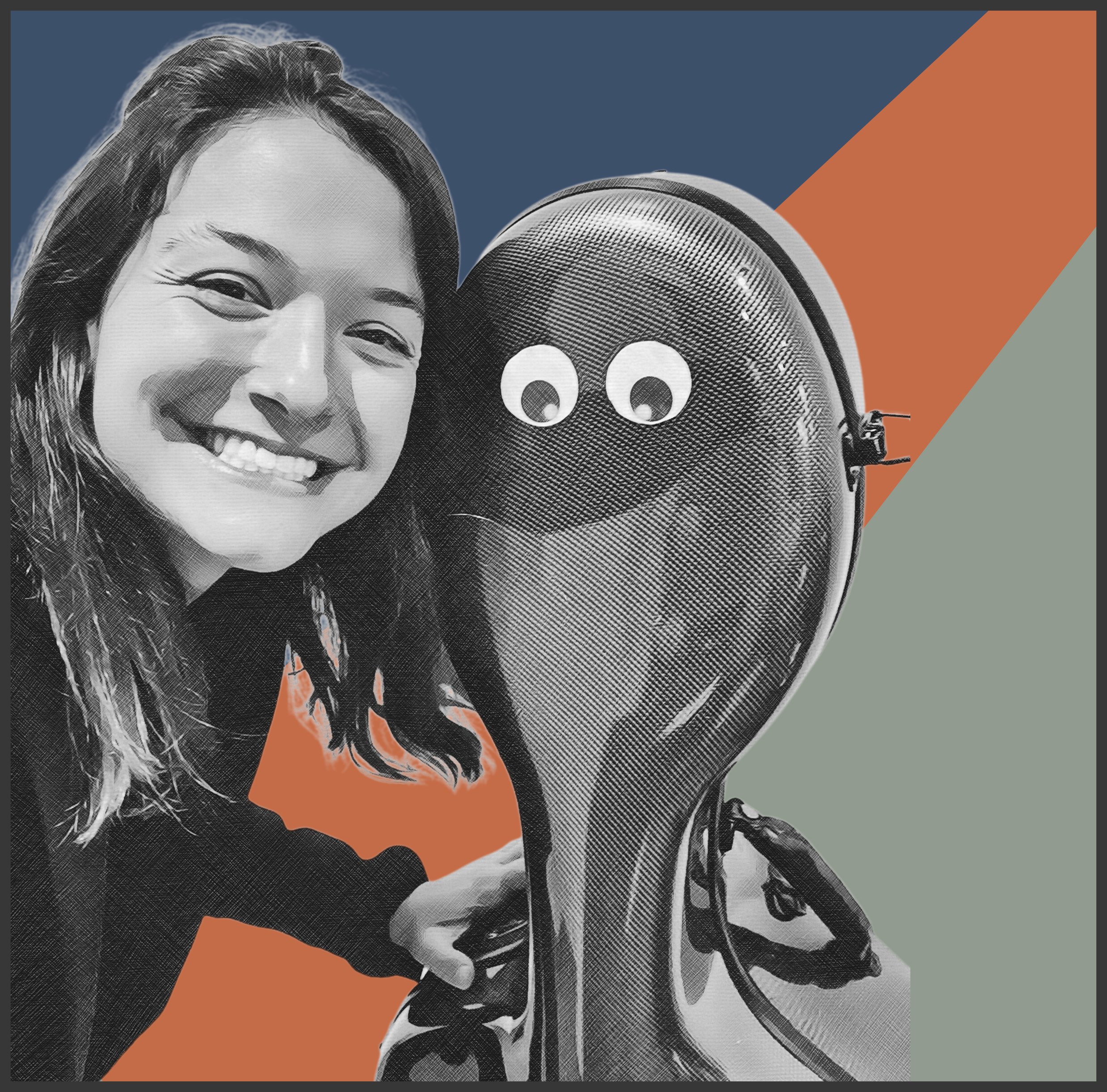
Our guest on this episode is Melanie Ambler, fourth-year medical student at Stanford and professional cellist. As an undergraduate at Brown, Melanie began researching the intersection of music and medicine. She then completed a Fulbright fellowship in France where her master’s work centered on the effect of music on patients with dementia. Once she got to Stanford, Melanie and her cello Shelby got to work bringing music to hospitalized patients. In 2024, she founded Musical Rounds – a music and storytelling project for patients in palliative care.
Over the course of our conversation, Melanie shares how her musical and medical journeys melded into one. We discuss the power of music to prompt reflection, draw out stories, and even transform the ugliness of the hospital into beauty. Best of all, Melanie plays for us live while sharing her early patient experiences that motivate her work at Musical Rounds — including the launch of her new Musical Rounds podcast.
-
Melanie Ambler is a professional cellist, a recent graduate of Stanford School of Medicine, an incoming Internal Medicine resident at Kaiser Permanente Santa Clara, and the founder of Musical Rounds. She attended Brown University, earning a degree in Neurobiology with honors in 2019 and subsequently moved to Caen, France as a Fulbright Fellow to pursue a master’s in Neuroscience and study the effect of music on patients with dementia. Melanie received the Rosalind Swenson Enrichment Award from the French Fulbright Commission for her work in providing virtual concerts to nursing homes in France during the COVID-19 pandemic. During this time, she played one-on-one virtual concerts for over 200 critically ill patients with the non-profit, Project: Music Heals Us.
In 2024, Melanie founded Musical Rounds, a music and storytelling project for patients in palliative care. Her research has been featured in journals such as the Canadian Medical Association Journal, Academic Medicine and JAMA Internal Medicine. Outside of medicine and music, she loves playing beach volleyball, going for hikes in the Bay Area and making creative waffles.
-
In this episode, you’ll hear:
3:00 - How playing the cello became a central part of Melanie’s life
13:45 - Melanie play a piece that showcases the beauty of the cello
18:10 - How Melanie became interested in medicine
27:10 - How Melanie merged music and medicine in her research and in the hospital
46:00 - Reflections on the power of music in the lives of physicians
52:00 - How Melanie’s non-profit organization Musical Rounds is working to provide patients moments of reflection through music and storytelling
55:22 - A patient story that exemplifies the power of music at a patient’s bedside
-
TDA 172 final1.mp3
Henry Bair: [00:00:01] Hi, I'm Henry Bair.
Tyler Johnson: [00:00:03] And I'm Tyler Johnson.
Henry Bair: [00:00:04] And you're listening to The doctor's Art, a podcast that explores meaning in medicine throughout our medical training and career. We have pondered what makes medicine meaningful. Can a stronger understanding of this meaning create better doctors? How can we build healthcare institutions that nurture the doctor patient connection? What can we learn about the human condition from accompanying our patients in times of suffering?
Tyler Johnson: [00:00:27] In seeking answers to these questions, we meet with deep thinkers working across healthcare, from doctors and nurses to patients and healthcare executives. Those who have collected a career's worth of hard earned wisdom probing the moral heart that beats at the core of medicine. We will hear stories that are by turns heartbreaking, amusing, inspiring, challenging, and enlightening. We welcome anyone curious about why doctors do what they do. Join us as we think out loud about what illness and healing can teach us about some of life's biggest questions.
Tyler Johnson: [00:01:02] The hospital can be a harsh backdrop to many of life s most pivotal events. Alarms blare at inopportune times. Rounding doctors intrude on delicate conversations, and vigilant nurses disrupt rare periods of rest. All the chaos can add to the stress of a patient's hospital stay and create an emotionally discordant experience, seemingly out of step with the profound grief, joy, or intimacy one might expect to accompany the weighty moments that happen in the hospital. In the face of this challenging environment, what can be done to connect patients to the emotional threads of their lives to invite meaning during these critical times? The answer, at least in part, may lie in music. Our guest on this episode is Melanie Ambler, fourth year medical student at Stanford and professional cellist. As an undergraduate at Brown, Melanie began researching the intersection of music and medicine. She then completed a Fulbright Fellowship in France, where her master's work centered on the effect of music on patients with dementia. Once she got to Stanford, Melanie and her cello Shelby got to work bringing music to hospitalized patients. In 2024, she founded Musical Rounds, a music and storytelling project for patients in palliative care. Over the course of our conversation, Melanie shares how her musical and medical journeys melded into one. We discuss the power of music to prompt reflection, draw out stories, and even transform the ugliness of the hospital into beauty. Best of all, Melanie plays for us live while sharing her early patient experiences that motivate her work at musical rounds, including the launch of her new Musical Rounds podcast.
Tyler Johnson: [00:02:54] Melanie, thanks so much for being here and welcome to the show.
Melanie Ambler: [00:02:59] Thank you so much for having me. Excited to chat.
Tyler Johnson: [00:03:02] So, you know, we almost always have people begin by telling their origin story. But in your case, I guess we either need to explore two threads of your origin story or it feels like we may actually almost have to have you tell two different origin stories. We're having you on the program to talk about the ways that music and medicine have intersected in your life. And so before we get to the medicine piece, maybe just tell us a little bit about your musical background, both in terms of how far that you have taken that, but also how did you get started and how did music come to play an important part in your life?
Melanie Ambler: [00:03:36] My mom likes to say that I think I started humming before I spoke. Music has always been a really huge part of my life and my family's life as well. Things started musically for me way before I was born, and that my grandmother was a classically trained harpist and pianist And was an oral music historian, so she would interview the great composers of the 20th century and kind of preserve their stories for others to listen to and hear about. You know, Aaron Copland and Duke Ellington and John Cage and all of the really big, amazing musical creatives from the United States during the 20th century. She kind of was a really big role model for me growing up. I didn't fully know the extent to her legacy until actually after she passed away a few years ago. But my childhood was kind of surrounded by listening to I've symphonies and Beethoven symphonies while playing in the pool and, you know, just constantly having this kind of auditory soundscape that I realize now probably wasn't the most common, um, as a small kid. It wasn't until I turned eight where in my public elementary school, in a small town in Connecticut. We had this amazing strings program. We had an assembly and people brought in their different string instruments, and we got to listen to each one. And if we wanted to play one starting in the third grade, we were allowed to try it out. And I heard the cello and the violin. Viola and bass actually listed violin as my first preference, and then cello, but had my first crisis when I went home from school one day and said, actually, no, I really want to play the cello.
Melanie Ambler: [00:05:22] And I called my music teacher and I asked her if I could play the cello. She said yes, of course she didn't care. I like to say it was love at first sound. I think the cello is an incredible, incredible instrument, and I've kind of grown up with this extra partner in life. I feel my instrument has kind of gotten me through hard times, exciting times, all the things. She's seen me grow up, I think more than most people and has become a character in a lot of the work that I've done within medicine. My grandmother was also an inspiration for why I went into medicine. She was diagnosed before I was born with Parkinson's disease, and she had quite a slow progression of the disease. But my entire childhood was kind of seeing this disease take over her brain slowly. I saw firsthand kind of what that did for her movement and for her mental health and all of the things that we associate with a progressive Parkinson's diagnosis. That made me really fascinated in the brain. And she was actually the first person I think, that I played for at end of life. And I remember she was not fully with it or aware. But when I started to play, she was kind of conducting the air in her bedroom in her final days. It's a memory that I hold really dear to my heart and was one of the first exposures I had to. What would happen if I combined this kind of academic interest in science and in medicine, and in caring for people, and this really human centered, emotion centered, storytelling centered part of my life, which is music.
Tyler Johnson: [00:07:13] So we will talk at length about the ways in which you are working to combine music and medicine. But before we get there, tell us a little bit about so you're a little kid. You are, you know, one of these people who has an immediate spark, right? You, as you say, love at first listen or love at first sound. So as you moved through sort of the stages of your life into, you know, maybe high school and then into college. Just give us a little bit of a sense. You know, I don't play a musical instrument, I sing, but I don't play musical instrument. And so give us a little bit of an idea of just what the rigor of your musical training looked like during that time. Like, how did you, you know, even maybe seemingly to you anyway, pedestrian things like how many hours a day did you practice? Or how did you, you know, who taught you? Or did you pursue it as part of your college education or just sort of what did your what did your kind of apprenticeship in cello playing look like?
Melanie Ambler: [00:08:18] I think consistency was, is the first thing that comes to mind. Even starting at age eight, I just loved it so much that I wanted to play every day, which I know is probably the dream of most parents, but, um, often just go upstairs and play for like ten minutes a day when I just started off very short but consistent. And as I started growing and, um, showed more interest. I had a chance to meet my private teacher named Marcia, who started me when I was in fourth grade, and we had such a great relationship that I stayed with her all the way until I finished high school, which is not super common within a musical education, especially classical training. You often switch teachers or kind of change around as your skill grows. But I think I kind of grew with her and we had this incredible relationship. What that looked like was, um, I would have kind of a weekly private lesson. I would practice for maybe 20 or 30 minutes each night and was in a youth orchestra in high school, did some concerto competitions and things related to that. But I kind of knew around high school time that there's, there's a technical barrier that you reach in your musical education, where there are certain skills and practices and positions and advanced techniques that require a major hurdle to get over. And that often requires, you know, five, six hours a day of dedicated practice. Going to summer programs where you're just kind of pushed to go beyond that really clear technical barrier. I actually made kind of a conscious decision in high school that that wasn't something that I wanted to do.
Melanie Ambler: [00:10:18] I had reached a point in my musical education and skills that I felt really excited about the range that I had on my instrument, and wanted to keep working within that range and not pushing beyond for the sake of knowing and memorizing the great cello concertos of the repertoire, and really focusing on the joy that I get from my music. So I chose not to go down the conservatory route or pre-college route, which is kind of the way you get there and decided, you know, I really want this to be something that I keep for me and that continues to bring me joy as I continue to live my life and in whatever way that that can weave into what I'm doing, then I will absolutely include it. And I think that was probably the best decision I could have made at the time, because I do feel now that my musical vocabulary and fluency has, has really evolved, and I've found kind of my own voice within this more rigid training that I had growing up, which I think is just the best thing. You know, it's kind of like you when you're learning a foreign language, you learn all of the grammar and the structure of how to create a sentence and how to speak it out loud. And I think I had that entire toolbox, but I didn't have the fluency. I didn't have the ability to improvise a conversation and connect. And I think that's what beyond high school has brought.
Tyler Johnson: [00:11:56] What I think I hear you saying is that it's not so much that you didn't want to invest more time, and it's not that you were sort of, you know, to use a crass word, sort of a mediocre cellist and were content just staying a mediocre cellist rather. The issue was more that you knew that if you jumped into, what, a minute ago you called the conservatory model, it was likely that you would be trained to do one particular kind of playing really, really well. And you wanted to allow yourself the freedom to engage with the instrument in a way that was maybe a little bit nontraditional, maybe a little bit, sort of a mix of what you might learn with a more classical pedagogy combined with sort of what you yourself would bring to the instrument. Is that something like that sound about right?
Melanie Ambler: [00:12:53] Yeah, I think conservatories are amazing, and they train musicians to be the kind of the best versions of themselves musically that they can be. I think I wasn't fully ready for that personally, because I wanted to explore some of the other things in my life more fully as well. And I also do kind of see the way that I approach music as almost a misfit musician, kind of. I have a lot of different things that I like to dabble in, and it's been really amazing to be able to explore those in the last few years and just see all of the different sounds, collaborations, textures, emotions that you can bring to light with an extension of your hands, right?
Tyler Johnson: [00:13:43] So one of the really wonderful things about today's interview is that Melanie has actually brought her cello into the studio and is going to play for us. So before we get to your more recent work, I would love you to actually kind of go back to, you know, maybe high school or early college, Melanie, to a piece on the cello that not that you would do this, but if you were trying to just tell cello playing to some, you know, current eight year old in the world who you think might have that, you know, whatever gene it is that you have or whatever, that could just totally fall in love with the beauty and power and majesty of, of cello music. And you had to play just like a two ish minute clip of something that you think represents the full beauty of playing the cello. Play something for us that you think might fit that bill.
Melanie Ambler: [00:14:41] No pressure.
Tyler Johnson: [00:14:43] No pressure at all. It's only the fate of the future musicians of the world that hangs on your shoulders right here.
Melanie Ambler: [00:14:50] I love it. Do you think an eight year old would prefer something more like super emotional and melodic or kind of boppy?
Tyler Johnson: [00:15:03] Well, for right now, we're going to go with what I prefer, and I prefer something super, super emotional and melodic. So we're going to go for that.
Melanie Ambler: [00:15:12] This is a classic. A lot of people will recognize this piece. It's The Swan by Camille Saint-Saens, and it's from a larger work called The Carnival of the animals. It really gets at the cello in its best possible light.
Tyler Johnson: [00:17:43] Totally lovely. Melanie. Thank you so much for playing that.
Melanie Ambler: [00:17:47] Of course.
Tyler Johnson: [00:17:48] One can certainly imagine how somebody eight year old or much older than that could be bewitched by that kind of music. So let me then ask. You've taken us through. So the first thread we referred to earlier was music. But then, of course, we're talking to you because you're in medical school, right? That's how I met you.
Melanie Ambler: [00:18:10] Yes.
Tyler Johnson: [00:18:11] You grow up during high school and then into college. You're, you know, have this or. Well, up until you left for college, had this same music teacher. This is a beautiful, important thread in your life. But then at some point in college, you decide to go into medicine. So what? What did that look like? How did you end up deciding to become a doctor?
Melanie Ambler: [00:18:31] Well, as I said before, my grandmother Mickey had had Parkinson's disease. And when I got to undergrad, which was at Brown, I took a neuroscience class as my first quarter kind of science exploratory class. And it totally blew my mind. And I fell in love with the brain and how, how it works, how all the senses work, how it can become diseased, all the different functions of memory and creativity and movement. And it just fascinated me to a point that I didn't really know how to return from there. And so we went down the path of studying neurobiology and going down the pre-med route. I think I felt very strongly that my interests in kind of the molecular underpinnings of a lot of these things were directly related to the behavioral and the human side of what that actually looks like as a manifestation.
Tyler Johnson: [00:19:35] I just have to pause you for one second as you're telling this story. So in my medical school, we had about four months of kind of preliminary classes, anatomy and basic physiology and whatever. And then we started what we called organ blocks about halfway through the first year. And then that, and then we had one year of organ blocks. And I still remember our first organ block was cardiology. And whether they had done this purposefully or not. I remember at the end of cardiology, I spent, you know, hours and hours and hours in the library or whatever. And I just remember getting to the end of cardiology and thinking, oh, like, this makes sense. I can like represent a lot of what the heart and the cardiovascular system in general. Like I can represent a lot of what it does by like equations and these like diagrams and these like physics principles and analogies to like voltage, whatever, all these things. And I was like, okay, like the human body makes sense. I think I can do this. So at some point, a few months later, we come back and do a two month block that we had called Brain and Behavior. That two month block, the first month was ish neurology, and the second month was ish psychiatry. And I just remember I got to the end of the second final. So the comprehensive exam for the brain and behavior block. And whereas after cardiology, I was like, okay, I get this, this makes sense. At the end, I was like, okay, so the brain's pretty much a black box and I have.
Melanie Ambler: [00:21:08] No idea what goes on in there. Like this is more confused than when you started.
Tyler Johnson: [00:21:13] All of these hours. Just as many hours at the library studying. And I have no idea what goes on in that weird clump of cells sitting between my ears, like it felt more confusing and more mysterious at the end of studying it than it did before I studied it. All of which is, I guess, to say that the fact that you responded to that by saying, yes, that is the thing that is going to drive me into studying medicine. I have major respect and admiration because that was not exactly my response.
Melanie Ambler: [00:21:44] I totally understand what you're saying. We talk about, you know, the unconscious incompetence, conscious incompetence. And I think I'm I will always be at conscious incompetence with regards to the brain, but that's because I'm using my brain to learn about it. Like, how can you ever know everything you can to know?
Tyler Johnson: [00:22:04] Okay, so but you're fascinated by neurology. Keep going with your story.
Melanie Ambler: [00:22:07] Yes. At the same time, I was, you know, doing all the pre-med things. I was like in a basic science orthopedic trauma surgery lab, doing antibiotic discoveries for joint infections and things like that. And I hated it. I was not having a good time, but I felt like it was this box that I needed to check. Around the midpoint of my undergrad, I had a chance to take a class called Artists and Scientists as Partners. And it was a small lecture, experiential class. So it was community engagement and didactic learning. We would have one lecture a week and then one session, either doing dance classes for people with Parkinson's disease or theater and arts programing for children on the autism spectrum. And each week we would have a guest lecture from someone at the intersection of art and medicine. And that is where I found my home. There was one particular lecture that was given by a public health researcher, and she shared about evidence synthesis and about the state of the research in arts and medicine, and how lacking it was and the heterogeneity of studies that are being done. And it piqued my interest. I said, this is this is research that I. I would stay up at night for that I would want to be doing and, you know, motivated to practice almost just like I was motivated to practice my cello. Um, and so I reached out to her and I said, hey, I actually like really hate the lab that I'm working in.
Melanie Ambler: [00:23:46] Um, but I really like the people that I work with in this lab. I just don't like the subject. And I said, do you have any ideas for me on how I might be able to integrate this interest in music with this basic science orthopedic surgery lab? And she said, I'm not sure, but you should just think about like, what within music do you find interesting with regards to medicine? And I was thinking a lot about music and the brain, music and surgery, those kinds of connections. And I ended up drafting a proposal to my Pi, who was the chief of orthopedic trauma at Brown and the postdoc who was. I was working with. And like 7 a.m. on a Monday morning, I went in and I pitched them that I would do my own independent honors thesis on music and surgery as kind of an evidence map and systematic review of the field. And they initially looked at me like I was out of my mind, just this, you know, sophomore in undergrad coming in and proposing her own research project. But slowly they saw like how excited I was that I think D.O. the postdoc was like, we can't say no to this. And they said, you know, we don't know how to support you in, in doing any of this research because we have no expertise in music and surgery. But if you feel really excited about it, then we will support you.
Tyler Johnson: [00:25:22] Hats off to them. Just saying.
Melanie Ambler: [00:25:24] Hats off to them. And you know, hats off to me too for like, just saying what I wanted to do and seeing what happened.
Tyler Johnson: [00:25:34] But my hat's already off to, you.
Melanie Ambler: [00:25:36] Know, but I think I, I'm saying that because I think it required courage from both sides to like, actually just say, okay, let's, let's see what happens.
Tyler Johnson: [00:25:46] It is not nothing to approach superiors, let alone surgeons. No offense to surgeons, but just saying, you know, be one thing. If it was like a palliative care doctor, right, right. But to a surgeon, especially the whatever you said, chair of orthopedic surgery.
Tyler Johnson: [00:26:00] that's some chutzpah.
Melanie Ambler: [00:26:02] I had known them for quite some time at this point. We just kind of figured it out together. And this other researcher, Stacy, who had given the lecture in the class, became my co mentor in the thesis, and I delved into the state of the research in music and medicine, specifically in surgery at that point, and just began to kind of see what was being done, what were the gaps in what was being done, and how could those gaps be filled with more research, with more programmatic development, with more exploration of, of different parts of the medical system where music could be integrated? So it was kind of the first jumping off point in undergrad of saying, okay, I know that I want to go to medical school. I know that I want to take care of human beings and learn about the pathophysiology behind what is going on for them. And I also know that I'm not gonna lose this passion of music. And what better way not to lose it than to combine it?
Tyler Johnson: [00:27:10] Okay, so you have this chance while you're an undergrad to do this kind of audacious project, to sort of look at the state of the field. But that also then sets you up to kind of have a sense of sort of where things stand and where things might go. And so then you apply from your undergraduate degree to into medical school, get accepted into medical school. And then, you know, as those who have been through medical training or have watched medical training will know, medical school is, you know, roughly divided into two halves, right? And the, I mean, different places do it differently in terms of the exact lengths of the time. But the idea anyway, is that about the first half of a traditional four year medical education is devoted to sitting in a room and reading textbooks and taking exams and etc.. And then the second half is devoted to actually being in the clinic or on the wards, taking care of patients. Right? So as you get into medical school and as you move through the first kind of theoretical half and then into the back sort of practical half where you're actually taking care of patients. From what I understand, from what you're saying, you kind of come in with this sort of big picture more almost than an idea, just this kind of sense that you want to do medicine and you want to do music, and you're going to figure out a way that those two parts of yourself can speak to each other. But as you actually then move through the theoretical and into the practical part of medical school, how did that idea then take on concrete shape?
Melanie Ambler: [00:28:42] So if we kind of pick up where we left off with this thesis in music and surgery, I then had a chance to live in France for a year and work with a team there, doing music and neuroscience research for patients with korsakoff syndrome and Alzheimer's disease, and looking at the ability of learning new music in these populations that have really severe episodic memory deficits. Then we go in straight into the Covid pandemic. And that was the year before I started at Stanford. Well, if I back up, one of my mentors from Brown had read a New York Times article about musicians that were providing virtual concerts to critically ill patients during the pandemic. And she sent it to me.
Tyler Johnson: [00:29:29] The one thing I just have to say to set the stage. So as somebody who has worked in medicine for many years and had been practicing medicine for a good, solid decade before the pandemic hit, I was talking to a good friend just this weekend when I reflected back on the pandemic and working, particularly in a hospital during the pandemic. It was one of the most hellish things I have ever seen. Now, in many places it was that way simply because of the burden, obviously, of what was going on, right? The pandemic and scarce resources and so many people getting so sick at the same time. And the, you know, not being able to keep enough freezer trucks to get the bodies to the morgue. And I mean, it was, you know, that was terrible. All of that said, though, Stanford actually, for whatever complicated demographic and and disease spread epidemiologic reasons, Stanford was never particularly hard hit. I mean, we did have a wave finally, but it was never the sort of overwhelming out of nowhere experience that they had in, you know, Midtown Manhattan or whatever. But even so, it was still hellish, if for no other reason than because, as those who worked in the facilities will be aware, for a good probably about two years, I don't actually know the exact amount of time. And then it was. And then it sort of slowly trailed off. After that, there were no visitors and it was terrible. It's one of those things that until it was gone, you just don't realize how comforting it is. Like when I attend on the wards. I now recognize in retrospect that there's this kind of buzz, this kind of hubbub, right, of patients, family members going to the cafeteria and the family members that are trying to get there for rounds.
Tyler Johnson: [00:31:20] And to some degree, as physicians, it can sometimes be a little bit frustrating because there's always like family members who want to talk to you and ask questions and review the day's findings in the labs and whatever, right? And it can kind of get to be a lot. The point of all of this is to say that even though it can feel sometimes like a lot, then in the pandemic, there was just nothing like it was just this ghostly, eerie silence. And then even, you know, especially for patients who were infected with Covid, there were all of these like additional unusual structures set up about like, sometimes you did visits by iPad instead of in person to try to reduce like instead, unless you were the primary team to try to reduce the infection, the risk of transmission and, you know, anyway, all these different things. But it's just to say that whereas the beating heart of medicine is this sort of up close and personal? Human right. Feeling the patient's pulse and listening to their heartbeat and all these sort of things to then have it reduced to this sort of isolated, atomized, and often eerily silent practice was kind of terrifying. And so I mentioned that just to set the stage for so now here you are sort of at that point still, you know, looking from the outside in to some degree. But anyway, now go forward with your story.
Melanie Ambler: [00:32:39] Absolutely. I think that's important context that I tend to think we all know, but I think you have a perspective that a lot of people don't, um, including myself, you know, I, I was not yet in a position where I was physically in the hospital. Um, and I was feeling a little bit helpless and that I knew that I wanted to have a career in medicine, but there was so little that I was able to do. That's kind of where this virtual concert Program came into existence. I have a colleague who's a critical care physician at a VA hospital in Denver, and I reached out to him. I just texted him and I said, Hey, Tim, can I play for your patients? If anyone needs music, like, just keep me on call. And he said, absolutely. And him and one of their palliative care psychologists, Elizabeth, would just wheel me around on an iPad. We would go into different patient rooms. They would introduce me and just leave me there for 20, 30 minutes and I would just have a session. Sometimes camera was off, a microphone was muted. I was playing into the void, had no context for who was listening. Other times I had zoom rooms filled with ten family members and the patient, and we would have a group concert together and share in a moment of music and reflection and other times I was asked to play for a vets final moments.
Melanie Ambler: [00:34:10] And I think those experiences throughout the pandemic, I played for over 200 people, were some of the most deeply meaningful ways in which I was able to interface with patients and with the health system at a time when it was incredibly isolated and closed off. At the same time, I was helping Tim actually with a study on Post-intensive care syndrome, which is a specific kind of PTSD for family members and patients, but we focus specifically on family members of loved ones who had been admitted to the ICU, and we were interviewing those family members. I was having phone calls with people who had lost their loved ones to Covid and doing stress and anxiety inventories on them. And so I was kind of experiencing this pandemic experience, both from like a musician's perspective, and then also from hearing firsthand about the family experience and the really high rates of post-intensive care syndrome, specifically during the pandemic as compared to other times. And so that was the first time that I really put the research side into practice. And I found that I really enjoyed that. And I thought that there was a especially during the pandemic, such a huge gap in the amount of people, I think, that are musically oriented and would love to share their music with other people and the amount of access that we have to medical environments and to be able being able to meet patients or families where they are and provide some moment of solace or comfort or reflection.
Melanie Ambler: [00:35:47] So that continued during my pre-clinical years, as you were saying, the med school is divided two and two. It wasn't until clinical rotations that I had a chance to play for people in person, which was amazing. I had actually just happened to attend a music program between our preclinical and clinical years. So we have three weeks off, and it happened to perfectly coincide with one of those weeks. I went to a program for misfit musicians that's called Honeywell Arts Academy, and it's run by a Grammy Award winning trio called time for Three. And they essentially just throw 12 musicians into this small town in the middle of nowhere, Indiana called Wabash. And we make music together and we jam, we improvise, we combine instrumentation in ways that we haven't experienced or I definitely hadn't experienced before, and just had a week of creativity and collaboration that ended on a Sunday. And that Monday I started my trauma surgery rotation at Santa Clara Valley Medical Center.
Tyler Johnson: [00:37:00] Okay. Well. Just jump right into the deep end of the pool.
Melanie Ambler: [00:37:06] Which is notoriously known amongst Stanford Med students as one of the hardest rotations. And I just happened to be assigned that one as my first ever experience in the hospital. And I was terrified. I bet the first week, however, one of my patients happened to be a musician. And on rounds one morning at like God knows what hour 630 we walk into this man's room and we start talking to him. And I'm like, the last duckling in the line of surgical hierarchy.
Tyler Johnson: [00:37:43] Ah the ducklings.
Melanie Ambler: [00:37:45] And I'm just kind of standing there and he all of a sudden says, as we're meeting him, am I ever going to be able to play music again? My ears perked up and I, you know, read his chart. And he had fractured his spine and his left hand in a car accident, and I kind of piped up and I said, what instrument do you play? And all the cats turned towards me and were like, why is she speaking? Um, he said, I play the bass. And as a fellow string instrument player, any injury to your left hand is just devastating. He told us a little bit about his music as a pianist and composer and bassist. In the back of my mind, I kind of was like, I'm going to chat to him later because I want to talk to him about his music. And so I went back and we spoke, and I told him that I played the cello, and we had a little moment to connect about that. And he just looked at me and he said, can you bring your cello in? And I said, uh, I don't know.
Tyler Johnson: [00:38:48] Like.You might think I have the power to make decisions here, but in fact
Melanie Ambler: [00:38:54] Yes But then every single day on rounds, he said, Mel, can you bring your cello? And so finally, the surgical team was like, I think you have to bring your cello. There's like, no way he's gonna not keep asking. And so they gave me permission to bring Shelby in and went later that day to play for him. When I was outside of his room, I asked the nurse, I said, can I go in? And he said, yes, but he's actually quite annoyed today because his IV like pump is alarming and we don't have one to replace it. But the alarm is fine. Like there's nothing wrong with it, but it's an ungodly sound, as you know.
Tyler Johnson: [00:39:35] Yeah.
Melanie Ambler: [00:39:35] And I walked into the room. He was visibly really annoyed, but I had Shelby. And so his entire demeanor changed. He was like, oh my gosh, I can't believe you actually brought your cello into work. And I sat down and I unpacked. I started playing the first piece and the alarm went off and it was just the most obtrusive, horrible sound. His body started to tense and I finished the piece, quickly got up to turn off the alarm, and as I was reaching to turn the alarm, I pulled my hand back and he looked at me. I looked at him. He's like, does she not know how to turn it off? And I did know. But I started to listen and I heard a beat and I heard a pitch and I turned back to him and I said, do you hear that? And he said, what? And I said, just listen. What are you here? And I said, just bear with me. And this would not have happened if I hadn't just been at this music week beforehand. But I sat back down and. Can you hear that? Okay, so I hear this and he hears this and I say, you know, I'm going to sit back down and we're going to see what we can do with this. And he said, okay. I said, just close your eyes and and see where you go. And so I found that there was a B. And then I just kind of went for it and saw like what, what we could create together.
Tyler Johnson: [00:42:19] That is wild. So you do that and then.
Melanie Ambler: [00:42:24] I do that. It kind of transports me to it feels like, okay, I'm actually I'm in the hospital. This is the first time I'm playing for a patient. I'm jamming to the IV pole. And it's working. And I opened my eyes. And this man, all of the tents, parts of his body are just like melted into his bed and he was sobbing. And he said, Melanie, you just made something that's been so ugly for me sound so beautiful. And I said, you know, you're a composer. You are a musician. You have all of the tools to sing along to that thing and to not have it ruin your day. So the next time it goes off, sing along. See what happens. You know, like. And as I left the room, he said, this is one of the nicest thing anyone's ever done for me. And that was my first person I ever played for in person in the hospital during my rotations. Funnily enough, this trauma surgery team was super into it.
Tyler Johnson: [00:43:47] Of course they were.
Melanie Ambler: [00:43:49] And so I just started bringing Shelby in like once a week, probably on this rotation, and would play in the team room for the team, would play for the patients. Kind of discovered this like new tool that I had on my rotations and a courage to just show up with my instrument and like, ask for permission, obviously from the team, but offer it as something that inevitably med students always have time in the afternoon where they look like they're doing shit, but they're actually not. And I just would take those 20 minutes and say, hey, can I go play for Room Blank? And then would have an opportunity to really learn about people's like, lives and their stories and their social histories and the things that give them meaning outside of the hospital, which is basically all of their meaning. And that inspired musical rounds, which is a year that I took off from medical school and now a fully fledged, uh, program that I'm happy to share more about. But yeah, rotations became this time where I made it a goal to bring my cello in at least once on every rotation. And I was successful on most of them, except for like emergency medicine. That was a little tricky.
Tyler Johnson: [00:45:13] Yeah. You know, it's interesting. Sunita Puri is an author and colleague and friend who has been on the show several times. She's a palliative care doctor. And one of the things that she talks about is being a person who, in addition to caring for the patients in the hospital, she feels like she often cares for the doctors in the hospital. Right? As a palliative care doctor, she will sort of like as much time as she spends in the room with the patient. She will also go into the team rooms with the doctors and take care of them. Right. Debrief with them. Decompress with them. Help them to. Process often very difficult and traumatic things that they go through.
Melanie Ambler: [00:45:55] Right.
Tyler Johnson: [00:45:56] I really love the idea of you also playing in the team room. I know that music. I think it accesses a part of us that otherwise remains carefully locked away. Right on the very first episode of this program, I told the story of having watched my very first day of medical school. We did like sort of technical, logistical introductions, blah, blah, blah, whatever. And then after we did that, we had lunch, and then they gathered the entire medical school class into this big auditorium. And I don't know if you have seen this movie, but they had us watch the HBO cinematic version of the play wit. And in this play and movie, in the movie version, Emma Thompson plays a woman who is diagnosed with metastatic ovarian cancer. And the. The play basically starts with the moment of her receiving the diagnosis and ends with her dying. There's a scene in that movie towards the end that is, the whole play is just devastatingly beautiful, but there's a scene toward the end that in particular, is one of the most beautiful scenes of any artwork that I'm of, which I'm aware. So late in the movie, Emma Thompson loses all of her hair because or the character that Emma Thomas was playing loses all of her hair because of the chemotherapy and then is in the hospital, sort of curled in the fetal position and then has this sort of actually beautiful, although difficult experience with a friend of hers who comes to visit her.
Tyler Johnson: [00:47:29] So when I saw this movie as a little baby miss one in medical school, it just hit me with this force that is difficult for me to articulate. It was like the deepest part of my soul knew that this was what I wanted to do. And then when I had been in attending for about five years, I was going to visit a patient of mine in the hospital, and it was early in the morning, and I opened the door and saw her curled in the fetal position in her bed with no hair, and I took a couple of steps into the room. And then I had this sort of shock of like an out of body moment where I looked at her, and then it was like I was looking down from the ceiling, looking at myself, looking at her, and I thought, oh my gosh, I am the doctor caring for this patient. But the thing that is also that I don't believe that I said or maybe I did when I shared that story, the very first episode is that the other thing that immediately sprang into my mind as if I were hearing it from some, you know, unseen place that was playing. It was this. What I recognized a moment later is that that piece of music is what plays in the HBO version of the play. When Emma Thompson is dying.
Melanie Ambler: [00:49:50] Mhm.
Tyler Johnson: [00:49:51] And it it was just this sort of like shock of transcendence in the middle of this bustling day in the hospital. And to be clear, I don't play an instrument. I am, you know, only the very most novice of of musicians. But nonetheless, this music. And I wasn't even actually hearing the music except recalled from memory because of the similarity of the scene in front of me to this scene that I had seen in a movie. However, you know, many years before. But it was just overwhelming. Like the, the impact of the music was just this. It just felt like, you know, some sort of warm rain that was falling on me in some unseen plane. It was really, really striking.
Melanie Ambler: [00:50:44] That's one of my favorite pieces, actually. Do you know the translation?
Tyler Johnson: [00:50:50] No. Tell me.
Melanie Ambler: [00:50:51] It means mirror in the mirror.
Tyler Johnson: [00:50:54] Mhm. And that you have to. I mean, we don't have the 7 or 8 minutes, whatever it is, to listen to the whole thing. But you. But the thing that's so interesting about it, right, is that it doesn't really. It's very spare. It's minimalistic. Right. It's far away from whatever, you know, Beethoven's Ninth Symphony, it's very just kind of like what we heard all the way through. But it is just piercingly, piercingly beautiful.
Melanie Ambler: [00:51:21] And it's actually incredibly difficult to play.
Tyler Johnson: [00:51:24] Oh, I'm sure. Because there's nowhere to hide. Right. It's very naked on the page.
Melanie Ambler: [00:51:28] Yeah. It's a it's a stunning piece. But I was thinking as you were sharing this and as you shared the piece, what an incredible Metaphor that the title of this piece is mirror in the mirror, and that you were seeing yourself as almost a mirror image of what you had seen many years prior. What an amazing serendipity to that, to that, the choice of that music.
Tyler Johnson: [00:51:55] Yeah. So as you mentioned, right, what started as this kind of germ of an idea that you had moving from your undergraduate years to into medical school and then became a little bit more concrete as you started to play for your patient in the, in the trauma ICU and, and then going through medical school now has become a formal, I think it's a 501 C 3, right. And is a formally incorporated organization. Just tell us what is the program now? What does it do currently and what are you looking forward to it to? Like what, where do you hope to take it over the next few years?
Melanie Ambler: [00:52:36] Yeah. So the program is called Musical Rounds, which feels like exactly what I've been doing for quite some time, and that I would just basically go on rounds with Shelby. The kind of overarching goal of this organization is to meet people during moments that are really difficult for them, and provide moments of reflection through music and storytelling. In order to be able to do this, we focus on both the kind of live in person sessions, as well as performing evidence based, peer reviewed research, training the next generation of professional musicians, of med student musicians, of musician clinicians to incorporate their music within the health setting for social impact, as well as creating community. And so we have community chats where we invite anyone that is in the field of music and or medicine to convene and kind of chat about different parts of the field and connect with each other across the US so that we're not existing in silos doing this work. And the last portion is, is also actually starting a podcast featuring patient stories told in their own words, sharing the context that they would like to share about their life and about things that bring them meaning, and sharing the music that was created at the bedside with them live in a single take.
Tyler Johnson: [00:54:09] So two things we'll say about this. You can find out more about it if you want to go. It's musical.com. Is that right?
Melanie Ambler: [00:54:15] Musicalrounds.org.
Tyler Johnson: [00:54:17] Dot org. Okay. So you can find out more about it by going there. And then hopefully around the same time that this episode of the podcast comes out, there will also be the debut episode of the Musical Rounds podcast, which we will link in the show notes. And then the last thing I would love for you to do, Melanie, you know, you told us kind of the, if you like, sort of the origin story story of the patient that you met in the trauma ICU. But I would love now that you have done at least dozens, I would imagine probably hundreds of these visits in person, as the germ of an idea has grown in your mind into a full fledged organization. Now. Bring us home by telling us one other memorable story that you feel like really captures for you the power and potential of this idea of bringing music right to the bedside. And then if you could play for us, whatever music it is that goes along with that story.
Melanie Ambler: [00:55:22] Yeah, absolutely. I think to give slight context for what those conversations looked like, they were recording sessions at the bedside of patients that were being seen by palliative care at three different hospitals in the bay. We did 100 recording sessions in the initial year, which was also a research study, and what it looked like as I would go in and consent the patient or family for a recording session in which they got a microphone. My cello got a microphone, and we would talk about their life and things that were meaningful. And as they were talking, I would then create in my mind and then afterwards live at the bedside, a improvised composition soundtrack to whatever story that they shared. Oftentimes these stories related to grief, love, laughter, faith, nature, kind of all of the things that give us real deep meaning in our lives. And there are just so many stories that I can think of that that feel appropriate to share. So if you want to hear more of them, I would say the podcast is probably the place, but there were a few that really stand out in my mind, either from like a musical perspective, from an emotional perspective, from a life lessons perspective that I think have changed the way that I view my life. I view my medicine and I view my music. I was asked one afternoon by one of the social workers on the palliative care team to go see a couple who the wife was in her, I believe her final days to weeks and the husband was at the bedside. Quite a stoic man, I would say.
Melanie Ambler: [00:57:15] He. I think he had a military background was quite guarded when I walked in and the patient herself was, you know, very welcoming and really wanted to have the music session And the session went in a very unexpected direction. And it actually didn't follow the typical structure of a session in that, as I started playing the first kind of musical reflection, they asked for something calming and kind of just like to put them in the mood of, of talking about their life. As I started playing, they started whispering to each other and they were having like a full conversation. And I was sitting there just playing and I, I heard little kind of like that they were speaking to each other, but I had no idea what was being shared. I'm playing, I'm witnessing this. I'm seeing them holding each other, holding each other's hands. I'm seeing the husband start to tear up and I can't stop playing like something was happening with this couple. And I kept playing and playing for much longer than I normally do. When I stopped, they both kind of said, you know, that was really beautiful. I said, where did you go? And the patient said, I was flying. She said, I want you to keep going. I want to keep flying. I said, okay. And so, you know, we spoke very briefly. And then they kept talking and I kept playing. And I was sitting there internally thinking. Both what a privilege it was to be in the room witnessing something that was going on that I had no idea what the context was, but being kind of like the ambiance Setter for that conversation to happen.
Melanie Ambler: [00:59:29] And the really interesting part about that session in particular was that it was recorded and I left the room. They were both very appreciative, and I still had no idea what had been shared. And then I went home and I plugged my recording device into my computer, and I heard what they had shared with each other. And what they shared was something that will sit with me forever. And. That is the most pure expression of love and devotion that I had ever heard. And so I can read a quote from that. But I started the session and I said, where is your favorite place? And she said in his arms, I feel safe there. I feel loved, and I hate that I'm not going to be in his arms every night. And I asked the husband, what does it feel like when you're holding her in your arms? And he said, like, everything is right in the world. And so I kept playing at the end, she said, you gave us something beautiful. I feel enriched and like I got something. I feel we've communicated with each other beyond what we've been able to do through the music that you played. So thank you again. When I pulled up the conversation, I realized very quickly that the patient shared her goodbye with her husband. Um, and she said, I will be there as long as I can to watch over you and to make sure you're okay. You will feel it.
Melanie Ambler: [01:01:19] And when you don't pull up this song and I will be there. I will wait for you as long as you take. I will wait for you. That's my promise to you. I love you, and my promise to you is that never changes in the next life. In the next life, I will meet you. No matter who you are or where we are. I'll be okay. This is beautiful. If I died right now, this would be perfect. Except I'm not home. And that's where we need to be. If I could, I would dance with you. I would feel you holding me. And I feel that when I close my eyes. I feel like I'm floating through the sky. I'm holding on to you. And we're floating through the sky to different clouds. I'm just checking things out. I'm watching you and seeing that you're okay. And when you're not okay, just know I'm hugging you. That's what I'm thinking about. And I was sitting at home just crying at my computer, having a window into that conversation between two people, and that those two people wanted that story shared with others. The reflection back that in that exact moment, if that patient had passed away, it would have been okay. What a profound thing to witness and to learn. As someone who's just starting a career in medicine, but more importantly, just starting my life as an adult. I don't think there's any greater gift that these participants could have given me, then expanding my perspective beyond anything that I could have even imagined in the start of that year.
Tyler Johnson: [01:03:15] Well, Melanie, we we salute your work. I think the insights and the long drawn epiphany that you've described in this podcast, in some ways, starting when you were, you know, an eight year old girl and had your love at first listen or and in some ways over the, you know, last few years moving from playing virtually in the pandemic to playing in person more recently, we wish you the very best with the podcast. Not so much. I mean, yes, also because we want the podcast to do well, but mostly because of the importance of the message. And we wish you the very best as you look for ways to weave together these threads of music and medicine as you launch into your professional life. And we are so grateful to you for giving to us of your time and your talents today. And thank you so much for being on the show.
Melanie Ambler: [01:04:16] Thank you so much for having me. It's such a great way to also cap off medical school in the start of residency. Feels like a new chapter is beginning. So thank you.
Tyler Johnson: [01:04:28] 100%.
Henry Bair: [01:04:31] Thank you for joining our conversation on this week's episode of The Doctor's Art. You can find program notes and transcripts of all episodes at the doctor's art.com. If you enjoyed the episode, please subscribe, rate and review our show. Available for free on Spotify, Apple Podcasts, or wherever you get your podcasts.
Tyler Johnson: [01:04:50] We also encourage you to share the podcast with any friends or colleagues who you think might enjoy the program. And if you know of a doctor or patient or anyone working in health care who would love to explore meaning in medicine with us on the show, feel free to leave a suggestion in the comments.
Henry Bair: [01:05:04] I'm Henry Bair.
Tyler Johnson: [01:05:05] And I'm Tyler Johnson. We hope you can join us next time. Until then, be well.