
EP. 172: WEIGHT AND SEE: THE ONGOING GLP-1 REVOLUTION
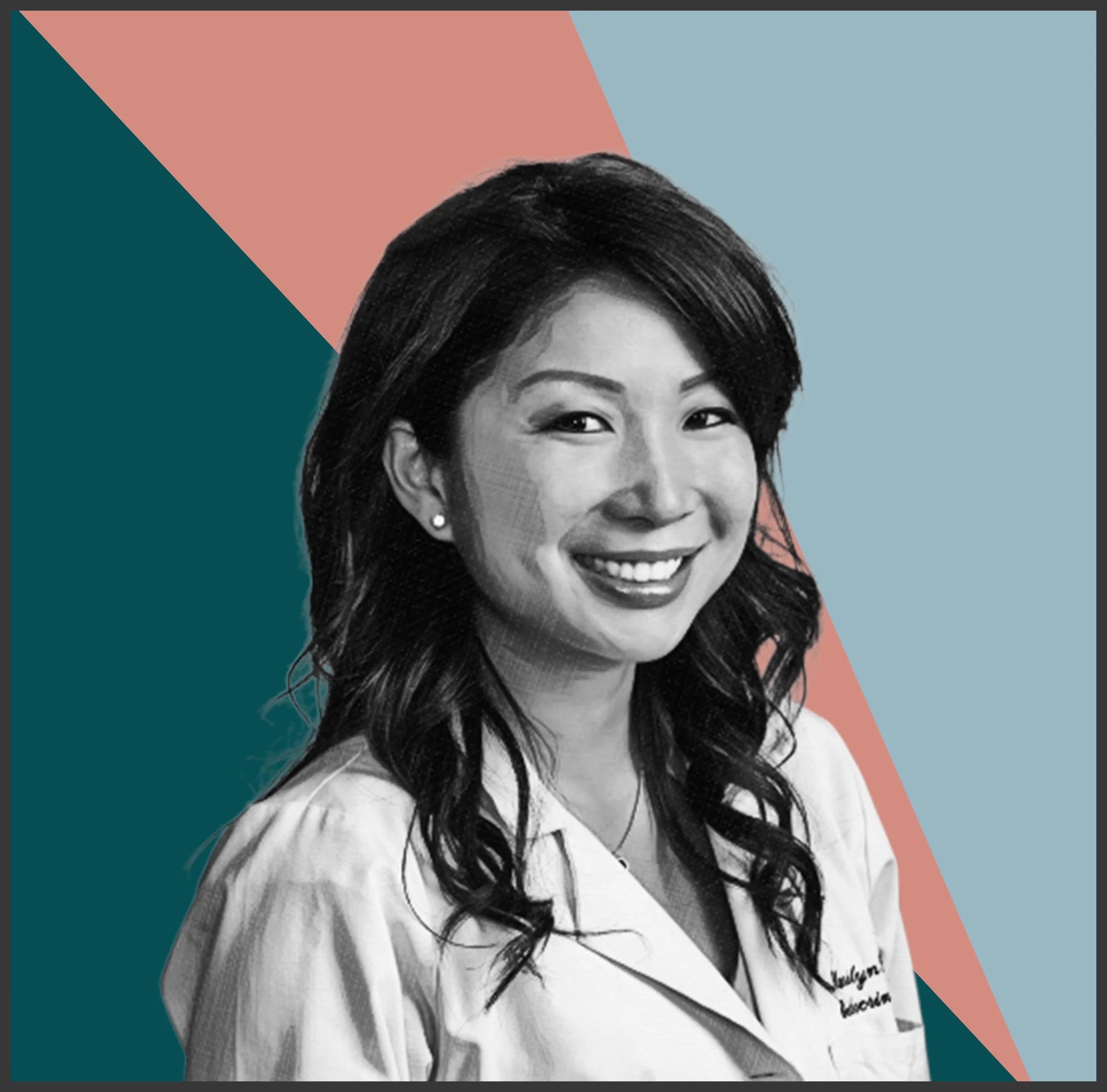
WITH MARILYN TAN, MD, FACE, FACP
The chief of the Stanford Endocrine Clinic sheds light on the explosion of GLP-1s in healthcare — and discusses the intriguing use cases on the horizon.
Listen Now
GLP-1s have taken the country by storm. Patients are losing and keeping off weight at levels previously only seen through bariatric surgery. Research trials have shown the drugs to be effective at reducing the risk of heart attack, stroke, and cardiovascular death. They protect the kidneys, reduce sleep apnea, and treat fatty liver and peripheral artery disease – all while being studied for a laundry-list of additional indications. The drugs originally designed for glucose control in diabetes are transforming lives — and raising big social questions.
Our guest on this episode is Dr. Marilyn Tan, clinical professor of medicine at Stanford University and chief of the Endocrine Clinic at Stanford Health Care. Dr. Tan focuses on diabetes management in both her clinical practice and research, and she is on the front lines of using GLP1-1s in patient care.
Over the course of our conversation, Dr. Tan provides a brief history of the development of GLP-1s and describes just how large a leap forward these medications are in weight management. We discuss the patient experience of being on GLP-1s for weight loss – and the stunningly wide array of other uses for the drug beyond weight loss and diabetes. Finally, we discuss the curious effect these medications seem to have on cravings beyond food, and reflect on the use of GLP-1s in the context of an addiction-saturated society.
-
Dr. Marilyn Tan, MD, FACE, FACP is double board certified in Endocrinology and Internal Medicine. She is a Clinical Professor of Medicine at Stanford University School of Medicine. Dr. Tan practices general endocrinology, but her main clinical interests are outpatient and inpatient diabetes management. Her research interests include diabetes and post bariatric hypoglycemia, and her other academic work includes value based care and quality improvement. She is actively involved in resident and fellow education and mentorship. Dr. Tan is the chief of the Endocrine Clinic at Stanford Health Care.
-
In this episode, you’ll hear about:
2:37 - Dr. Tan’s path to endocrinology and her work in the field
7:45 - The challenges and rewards inherent in treating a disease like obesity or diabetes that is strongly affected by factors beyond the control of the patient but still requires behavioral interventions
15:45 - The landscape of obesity treatment prior to GLP-1s
22:45 - How GLP-1s function and how they differ from the drugs that came before them
28:10 - Common patient experiences and treatment courses with GLP-1s
35:30 - The growing evidence that GLP-1s can be effective in treating addiction, and the complexity of medicating individuals to address issues with systemic roots
49:00 - Improving your overall health while living a busy life
-
Henry Bair: [00:00:01] Hi, I'm Henry Bair.
Tyler Johnson: [00:00:03] And I'm Tyler Johnson.
Henry Bair: [00:00:04] And you're listening to The doctor's Art, a podcast that explores meaning in medicine throughout our medical training and career. We have pondered what makes medicine meaningful. Can a stronger understanding of this meaning create better doctors? How can we build healthcare institutions that nurture the doctor patient connection? What can we learn about the human condition from accompanying our patients in times of suffering?
Tyler Johnson: [00:00:27] In seeking answers to these questions, we meet with deep thinkers working across healthcare, from doctors and nurses to patients and healthcare executives. Those who have collected a career's worth of hard earned wisdom, probing the moral heart that beats at the core of medicine. We will hear stories that are by turns heartbreaking, amusing, inspiring, challenging, and enlightening. We welcome anyone curious about why doctors do what they do. Join us as we think out loud about what illness and healing can teach us about some of life's biggest questions.
Tyler Johnson: [00:01:02] GLP-1s have taken the country by storm. Patients are losing and keeping off weight at levels previously only seen through bariatric surgery. Research trials have shown the drugs to be effective at reducing the risk of heart attack, stroke and cardiovascular death. They protect the kidneys, reduce sleep apnea, and treat fatty liver and peripheral arterial disease, all while being studied for a laundry list of additional indications. The drugs, originally designed for glucose control in diabetes are transforming lives and raising big social questions. Our guest on this episode is Dr. Marilyn Tan, clinical professor of medicine at Stanford University and chief of the Endocrine Clinic at Stanford Health Care. Doctor tan focuses on diabetes management in both her clinical practice and research, and she is on the front lines of using GLP-1 in patient care. Over the course of our conversation, Doctor Tan provides a brief history of the development of GLP-1 and describes just how large a leap forward these medications are in weight management. We discuss the patient experience of being on GLP-1 for weight loss, and the stunningly wide array of other uses for the drugs beyond weight loss and diabetes. Finally, we discuss the curious effect these medications seem to have on cravings beyond food and reflect on the use of GLP-1 in the context of an addiction saturated society.
Tyler Johnson: [00:02:32] Marilyn, it's really a pleasure to have you on the show. Thanks for joining us.
Dr. Marilyn Tan: [00:02:35] It's an honor. Thank you.
Tyler Johnson: [00:02:37] So, you know, the genesis for this episode was a New York Times op ed. That was the thing that got me thinking about inviting her on the show. But before we get to that, Marilyn, can you just tell us how did you end up becoming a doctor? We usually like to ask people's origin story to start things off.
Dr. Marilyn Tan: [00:02:53] So I went through many iterations of what I wanted to be growing up. I think my parents hoped I would be a doctor, but never actually gave me the overt pressure. And at times when I was upset with them, I would say I wanted to be an artist or a writer or something, you know, non science based. And eventually the science drew me back. So during undergrad, I really enjoyed biochemistry and organic chemistry. Oddly enough, I never thought I would really enjoy the sciences as much and then ended up going to medical school. And because I liked all of the arrow pushing that you do in organic chemistry, for me, endocrinology made a lot of sense, a lot of feedback loops and things that really you didn't have to memorize, but just to me physiologically were logical. And so that's how I ended up becoming an endocrinologist.
Tyler Johnson: [00:03:51] Mm. I had never exactly thought of that. You know, it's funny to hear you say that you liked organic chemistry. I think I was one of the at least I felt like I was very unusual in my premed group because most people couldn't stand organic chemistry, but I liked organic chemistry much more than. I liked basic chemistry in the same way that I liked geometry much more than I liked algebra. Right? Because precisely like you say, I felt like algebra and general chemistry were both sort of like, here's a rule. Now apply it in a hundred different problems or scenarios the same way over and over again, which I found to be really boring, but organic chemistry and geometry. And I had never thought about this, but I can see what you're saying. Endocrinology. Also, you sort of learn some first principles, and then it's a question of applying those first principles in different scenarios where it's not so much about getting to the right number in the way that it would be in like an algebra problem, but it's more about sort of how you get there and kind of the quality of your thinking and reasoning.
Dr. Marilyn Tan: [00:04:50] Exactly.
Tyler Johnson: [00:04:51] And tell us, I think it is the case. I could be wrong, but I think it is the case that you are the first endocrinologist that we've talked to on the show. Talk to us both about, I guess, two things. So one is like, what is your job description at Stanford? How do you kind of divvy up your time? But also just what does an endocrinologist do in general and like what tends to fill up most of your time?
Dr. Marilyn Tan: [00:05:14] Yeah. So that's a great question because as a parent, when I meet other parents or I meet people in social situations, people ask what I do, and other doctors will say things like, I'm an orthopedic surgeon or I'm a cardiologist, and everybody knows what that means. And when I say I'm an endocrinologist, I think it's not clear that I'm a physician to most people. So I started saying, I'm a hormone doctor. Sometimes I say I'm a diabetes and obesity doctor. But endocrinology is not a specialty that people are generally as familiar with. And so Endocrinology is usually thought of as kind of a lifestyle, specialty and outpatient practice where we do chronic disease management, take care of patients long term and don't take a lot of hospital call, don't have to rush in in the middle of the night. I do a mix of inpatient and outpatient endocrinology, so both a clinic as well as inpatient diabetes call and too much people. Surprised. There are actually endocrine emergencies. Not so common, but we do get involved. And so as an academic endocrinologist, in addition to seeing patients, I also have various administrative roles, work on projects related to quality improvement and value based care, as well as do some clinical research on the side.
Tyler Johnson: [00:06:39] And just to kind of fill out the picture of your day to day job, if we were to follow you around, let's take them separately, both your inpatient call and your outpatient clinic. How does your caseload tend to divvy up? Like what? Just what do the patients that you're seeing, what do they have? What are you treating them for?
Dr. Marilyn Tan: [00:06:57] So I tend to spend my mornings in clinic with or without a trainee that I'm educating. Since we're at an academic medical center, and I would say I see about two thirds diabetes and obesity, and then about one third general endocrinology, which spans from adrenal disease to osteoporosis to adrenal cancer to thyroid disease. So really, endocrinology affects most organs. It's a really a whole body specialty, even though it's a subspecialty. And then usually we move on to afternoon inpatient rounds with our fellows and other trainees. We do teaching rounds. And then I have patient care on the inpatient side and then various administrative meetings that kind of carry me through the rest of the day.
Tyler Johnson: [00:07:45] And I think it is interesting. You mentioned earlier the term lifestyle specialty. And what I gather from the way that you use that phrase is that you were using it in the way that doctors use it, right? Which if you are not a medical trainee or practitioner, or if you haven't been in those circles, one of the things that you learn in medical school is that doctors tend to have this kind of special subset of things you can do when you grow up as a doctor that are considered lifestyle specialties in the sense that, at least in theory, they are supposed to offer you a better lifestyle than going into other stuff, right? So as you mentioned, if you go into cardiology, most people sort of understand that if you're a cardiologist, you may get called in the middle of the night by your patient who's having chest pain. Or you might, if you're working certainly in the CCU or something, you may have to, you know, rush in multiple times in the middle of the night when you're on call. But then there are other things like dermatology and radiology, and you said endocrinology that are thought to allow you to have your evenings and your weekends and all the rest. So when people say lifestyle, specialty, They are supposed to allow you to have a better lifestyle.
Tyler Johnson: [00:08:48] That's what that phrase is referring to. But at the same time, it's also true. One of the things that strikes me about what you do. So you mentioned it's interesting to me that you mentioned not just that you take care of patients with diabetes, but with diabetes and obesity. And that's just to say that one of the things that I I'm clearly not an endocrinologist, but I did a little bit of, you know, rotating endocrinology clinic back in the day when I was in training. And one of the things that I remember from my time in endocrinology clinic is just that much more than I think even in a primary care clinic, let alone in an oncology clinic, which is, you know what I do now? Yes, it is true that occasionally we will say something about I mean, usually in my line of work, we want people to have more weight, not less weight, which is a weird quirk, but people who've been cured of their cancer and now they're gaining weight afterwards or whatever. Sometimes we will very briefly mention like, oh, you should be watching your weight. Like, you know, you really need to be careful and da da, da da. But two things are true about that. One is that I know because there have been a lot of studies to show this, that usually, no matter what I say and no matter what the patient's intentions, those are going to be really hard battles, right? If a person's weight is going up, up and up and they want to try to reverse it, although there's sort of an exception to that, which we'll get to later.
Tyler Johnson: [00:10:01] But the other thing is that I think most doctors, whether consciously or unconsciously, kind of want to move past those conversations as quickly as possible, precisely because the only thing we kind of know is that we don't know how to have that conversation effectively. And like, we sort of know that it's important, but we have no idea like how to actually engage in that in an effective way. So putting aside GLP-1 drugs, which we'll get to in a second, especially in the pre GLP-1 era, and even now, when of course, not all of your patients are taking GLP-1 drugs, what is it like to have as your subspecialty, something that is not just about, oh, here's your blood pressure medication or even Here's your chemotherapy. Like so much of endocrinology is wound up in just how a person lives their life and what they do from day to day. Is that challenging or rewarding as a practitioner? What's that like for you?
Dr. Marilyn Tan: [00:10:56] For me, it's both a challenge and it's rewarding because it's not just about prescribing a medication. For example, for a diabetes visit, we may spend some of the time talking about the glucoses, but so much more goes into how people live their lives. And you need to really understand their lifestyle, their culture. And without knowing that, you can't take care of a patient with diabetes and obesity, right? So there are psychosocial issues, right? A lot of times obesity is very deep seated with psychological things, a lot of childhood trauma, abuse, etc. and until you dig into that and really go back that far, it becomes very hard to really effectively treat the weight and the obesity in the lifestyle. And there are so many things that people don't have control over. For example, genetics or certain medications they have to take. And then, you know, to a large degree, don't have control over, for example, where they can live. Right. We know people who live in areas with green spaces have better health, but not everybody can do that. And of course, people know about healthy eating, but it's not always feasible if they can't afford the food, if they can't get to the healthy food, if they don't cook for themselves, if they have to cook for other people with other preferences. So it just becomes this really complex, kind of more social digging type of visit rather than just talking about medications. And even now with the GLP-1 agonists, all of this is still as important as it was before these drugs came along.
Tyler Johnson: [00:12:30] And I'm just curious. So cancer is a very different animal. Well, it's different and it's not the way, at least that it feels different. Right? Is that I mean, literally, it's the case that in order to get into my clinic, they must have a tissue diagnosis of cancer, right? It can't be that someone suspects they have cancer. It can't be that they might have cancer. They actually have to have had a biopsy. And it shows cancer cells, which is to say that, you know, in some degree, once they come to see me, the disease is a fair, complete, right? Like there's not the prevention didn't work, whatever that may have looked like. And it's not like, I mean, we do talk about secondary prevention, which is a separate issue, but, you know, at least as it relates to the cancer that is there now, it's already there and we have to deal with it. Right. But diabetes in particular is kind of a strange thing in the sense that it's not a disease. Like it makes you feel like you have, you know, an infection or it makes you, you know, sick in the way that cancer does.
Tyler Johnson: [00:13:29] It's more sort of a disease that predisposes you both to its own complications and to diseases in other places, whether the heart or the kidneys or whatever. Which is just to say that I have to imagine, like in my world, one of the things that is straightforward about taking care of patients with cancer is that I virtually never have a patient who comes and doesn't get that this is a serious thing, right? Like everybody who comes to talk to me has, you know, eyes as big as headlights and basically will do almost anything I tell them, usually with great fidelity to try to get better. But I have to imagine that for you where, you know, with a lot of your patients, it's like, well, this blood number says that you're not as healthy as you should be. And these things could happen five, ten, 15 years down the road, but they don't even feel like anything is wrong. I have to imagine that that's pretty challenging, especially when you're asking them to make what are in some cases, pretty significant or dramatic life changes. Is that fair?
Dr. Marilyn Tan: [00:14:23] You are absolutely correct. So diabetes is largely asymptomatic unless you present in diabetic ketoacidosis, for example, or when you end up with severe complications, as you alluded to, like a heart attack or you end up on dialysis. And so it's also very hard to take care of an asymptomatic disease sometimes because if you skip your medicine, you don't necessarily feel worse, right? So if you have chronic pain and you need to take pain medications, if you skip your medication, you definitely feel it. And there are many other diseases that are like that. But if you skip your insulin or if you're off your diet, for the most part, unless you have a continuous glucose monitor that's beeping at you, you don't know what your blood sugar is. You know, even when people have fingerstick glucose, they may check a glucose in the morning and they think they're fine and they live the rest of their day. But it turns out that they're actually hitting glucoses that are very high once they eat later in the day. And most people with type two diabetes have had the disease for many years before they are actually diagnosed. And so for that reason, right at the time of diagnosis, we already start screening for these downstream complications like the kidney disease and the nerve disease and the heart disease and all of that. So it's very often that people go a long time without being diagnosed.
Tyler Johnson: [00:15:45] Okay. Well, let's circle over to sort of the thing that got me to reach out to you specifically about coming out to the podcast. So a few weeks ago in the New York Times, there was this kind of a I'm not sure whether to exactly call it an op ed or an investigative report. It was kind of a blend between the two, but it was an article that was entitled The Great American GP1 experiment. And then the, the sort of subheading was online and in doctor's offices, people are finding that GLP 1st May help with everything from arthritis to addiction to migraines. Before we get to the New York Times article and some of the bigger questions that it raises, let's just back up for a minute. As an endocrinologist, when did you first start seeing GLP-1 drugs come on the scene. And what were they initially used for?
Dr. Marilyn Tan: [00:16:36] Yeah. So the GLP-1 agonists were initially developed for treatment of diabetes. And I believe the first one that was approved was Exenatide, which was now about 20 years ago, it was branded as Byetta. It was a twice daily subcutaneous injection. And it was effective in studies. And it was the first in its class. And it was very exciting. But nobody wanted to do two extra injections a day on top of their insulin, or if they weren't on insulin, to have to do any injections at all. Moving forward, you know, we went to once daily with liraglutide and then started moving to once weekly. And with each new generation of the GLP-1 agonists, the medications have been more effective, both at A1 C lowering, which was the very early initial goal, but also, incidentally, at lowering weight. And now fast forward to today. We even have oral GLP-1 agonists as well. So we really come a long way. And it went from very skeptical thoughts around these injections to now everybody just jumping to be on them without fully understanding necessarily what the drugs are doing.
Tyler Johnson: [00:17:47] That's a really helpful sort of historical overview. So I remember when I rotated in the endocrinology clinic, you know, 10 or 12 years ago with some of your colleagues as my attendings. The thing that I remember most. So we had many visits, I would say at least what from what I remember, most of the visits that we shared were for patients who had some combination, as you mentioned, of obesity and diabetes, and for patients who were there mostly not to talk about their diabetes numbers, but instead to talk about weight management at that time. The thing that we that was kind of the new cool thing on the block, at least as best I could gather as a resident in the clinic, was effectively calorie counting apps. Right? There was one of your colleagues in particular who I worked with just, you know, by luck of the draw, a number of days in a row and the endocrine in the endocrinology clinic, who that was kind of the thing it felt like with every patient was there. I don't even remember the name of the app anymore, but there was some app that she particularly liked. She would have all of her patients download the app, and then we would go through in clinic, like how to use it and how to, you know, enter the things that you had eaten and how to categorize things and on and on and on. Having said all of that, what is also true is that my understanding, but I'll ask you to fill in the details about this, is that with that, there had been up to that time, let's say before ten years ago, many studies that had been done looking at all sorts of different things to try to help people lose weight, right? So whether it was a ketogenic diet or whether it was the Mediterranean diet, or whether it was a particular app, or whether it was a particular workout regimen or whatever the thing was.
Tyler Johnson: [00:19:27] What I recall from being in clinic, was that basically what all of those studies showed is that if you tried to do a scientifically rigorous study where you enrolled, you know, hundreds of people. Yes. It was true that almost no matter what you did, as long as it was some rigorous, logical thing, there would be people for whom it worked, especially in the short term. Right. There would always be people who were just, you know, apparently go getters or whatever, who could make a particular diet or whatever it was work. But then two things were true. The first was that almost nothing worked on sort of en masse, right. Like it was, it would work for individuals, but for most people it wouldn't have much of an effect. And the second thing is that even the people who saw an upfront effect, the effect almost never lasted. Right? It would be like a dip of 10 or 20 pounds. And then within six months, 12 months, whatever it was, the weight would come right back and sometimes actually would sort of rebound beyond what it was at the beginning. So prior to the GLP-1 drugs, can you just talk to us a little bit about what was the landscape like, like when you tried to have when you had patients who wanted to lose weight and you were trying to help them? What did that look like and how well did it work?
Dr. Marilyn Tan: [00:20:34] So I remember in medical school, one of my attendings said, it's just very simple. It's calories in, calories out. Right. That's 3000 calories or so, you know, is 1 pound. That's what happens when you're in a lab. But we all know that the reality of real life is that there are people who can eat whatever they want and never gain weight, and those who truly restrict themselves and cannot lose weight. So while the science says it's calories in, calories out, there is certainly more to it than that. There's basal metabolic rate and various other things. But you are absolutely correct that before the GLP-1 agonists, even though there were FDA approved weight loss medications, we tended not to really use them. And we really focused on lifestyle. There are various reasons for this. So for example, cost was always an issue with the weight loss medications as well as safety concerns, as many of them ended up getting withdrawn from the market. But really putting medications on board without doing lifestyle changes is like putting a Band-Aid on, and it's not sustainable, and it causes long term dependance on these medications that previously were not necessarily safe long term.
Dr. Marilyn Tan: [00:21:45] So as you said, we always talk about diet and lifestyle, and you're absolutely correct that there is no one size fits all diet. There's a lot of excitement about, for example, the ketogenic diet. And I remember growing up, it was the low fat diet, right? So every couple of years, there seems to be a new diet that people swear by. And just like you said, for some people it works and for others it doesn't. And really what people need to do is find something that is sustainable for them long term, right? I remember friends in college doing the jello diet. Two weeks of jello. Sure, you can lose 10 pounds, especially if you're in your 20s, right? You lose weight more easily, but you have to go back to eating regular food, right? So unless you've changed how you are approaching food long term, you're going to gain that weight back. And actually fast forward to now. The same goes for if you use a GLP-1 agonist, which we can talk more about later. But really it's about finding something that you can sustain long term, you know, with or without medications.
Tyler Johnson: [00:22:47] So I think it's an important thing to recognize that it's not like the GLP-1 drugs are magic, and it's not like they can be used in isolation without also addressing the other complicated issues that you mentioned earlier. Having said that, I think it is also true, and I'll ask you to fill in the details about this, that the GLP-1 drugs really do represent a dramatic sea change, right? Their effects are unprecedented. So can you just talk to us? I know there have been many studies over the last, you know, five or so years, but what is different. Like when you look at the the statistical effects of the GLP-1 drugs, what is it that you see and how are they different from the various pharmacologic attempts that had come before them?
Dr. Marilyn Tan: [00:23:34] Yeah. So the prior pharmacologic medications that were FDA approved usually got to maybe five, 10% weight loss. And with the GLP-1 agonists, if you look at their dedicated weight loss studies in patients without diabetes, we're hitting 20 plus percent weight loss, which is very revolutionary. It's the first non-surgical option that can give you that much weight loss. Now, we also have to keep in mind, though, patients in these studies are not just taking a GLP-1 agonist and living their regular lives, they're getting intensive diet counseling. They are reducing calories, they're doing regular exercise. And so it's really kind of an ideal situation. And not everybody who takes one of these medications is going to lose that 20 whatever percent over the course of 50, 60, 70 weeks. The other part to keep in mind is that patients with diabetes tend to lose less weight than those who don't have diabetes. So if you actually look at these GLP-1 agonist studies, they usually have a weight loss study in patients without diabetes, and then a study of patients with diabetes. And consistently those with diabetes tend to lose about half as much as those without diabetes.
Tyler Johnson: [00:24:51] And do we know why that is?
Dr. Marilyn Tan: [00:24:53] There are various factors. So some people think maybe insulin resistance may make it harder to lose weight, as well as the medications that patients with diabetes are on. So for example, if they're on insulin, it can be a little bit harder to lose weight. Similarly, some people think that sulfonylureas may make it a little bit harder to lose weight, not that they actually cause weight gain per se, but in my experience, it's that people may sometimes want to eat if they don't necessarily want. They have to eat to avoid low blood sugar, or if they have a low blood sugar, or they have to eat something else and you end up consuming more calories than intended.
Tyler Johnson: [00:25:31] Okay. I think it's important to recognize that what you're talking about is game changing, right? If if a person weighs just to give a round number, if a person weighs 200 pounds and they lose 25% of their weight, right? That means they would go from 200 to 150. That's Nana's, right? I mean, that's like what previously you only would have seen probably with having like a gastric bypass surgery, right? Which comes with all sorts of more dramatic complications and is just a, just a huge surgery, right? But going from 200 to 150, that's not like a, a subtle metabolic change that only your endocrinologist is going to notice the difference, right? Like that's something that everybody around you would be able to see that something is dramatically different, right? That's a that is really a game changer.
Dr. Marilyn Tan: [00:26:22] Right? It's meaningful, you know, esthetically, which is part of why there's so much interest, but also health wise, as you said, metabolically, right? You could have potential resolution of diabetes or get off blood pressure medications or cure your sleep apnea, for example.
Tyler Johnson: [00:26:40] So okay, with all of that though, how do the drugs work? What do they do?
Dr. Marilyn Tan: [00:26:45] Yeah. So GLP-1 is actually an endogenous gut hormone. It's in a class of hormones called incretins that are usually secreted from the intestines in response to food when the glucose rises. And it's thought that in type two diabetes, the GLP-1 response is actually diminished. And so that's why they initially started giving the agonists for patients with diabetes. Even before the GLP-1 agonists, we had a class of medications called DPP four Inhibitors. So these had the goal of just preventing the breakdown of your own body's GLP-1 and making it last longer. But like we said, if you're already not making enough, it doesn't have these very dramatic effects. The way that we see with the GLP-1 agonists, where we're getting to much higher than physiologic levels. And so there are multiple GLP-1 receptors. And when we think about the diabetes management, we think about its effects on the pancreas and the liver as well as the stomach and the brain. But when we're thinking about weight loss, really, it's mostly, I would say the stomach and the brain. So at the stomach, it slows down gastric emptying and it makes you feel full faster. And importantly, the GLP-1 receptors in the brain impact your appetite center. So they control hunger. And people say it changes food cravings and food preferences as well.
Tyler Johnson: [00:28:11] And so when you have a patient in your clinic. Let's take the example of someone who doesn't have diabetes. Maybe they have slightly impaired glucose tolerance or whatever, but they don't have diabetes and they have struggled with their weight. You know, the kind of person who maybe has tried a bunch of the stuff that we've talked about before, right? They tried the Atkins diet and they tried the calorie counting apps, and they've tried Weight Watchers and all these things, and they've just never really been able to break through. They've never really, you know, maybe they have a little bit of loss that lasts for a little while, but it comes right back and it's never that dramatic. And then they try one of these drugs. Obviously, every experience is different, but what's it sort of like to be on the ground with them over the course of the next year or whatever, while they're while they're taking the drug?
Dr. Marilyn Tan: [00:28:57] Yeah. So with these drugs, you can certainly have side effects. And actually discontinuation rates can be quite high due to the gastrointestinal side effects. So we typically start patients on a low dose and then monitor their progress and increase every four weeks or so if needed. If their weight is not declining at the rate that we want it to, which in my mind is ideally 1 to 2 pounds a week, although people like to see results faster than that. And so we often, for patients who need to lose a substantial amount of weight, end up getting to the highest dose, which ends up being kind of our maintenance dose. And so a question that I often get is, will I have to take this forever? Can I ever get off of it? The answer is maybe. So we can talk more about that later as well. But we ideally do frequent check ins with the patient to make sure they're tolerating the medication and that they're losing at the right weight, not having side effects, and also, importantly, making sure that it remains affordable. So unfortunately for many patients, they may have coverage in the beginning and then their insurance changes, or it's a new year and their insurance changes their mind on what they're going to cover. And patients may not necessarily be able to sustain the medications.
Tyler Johnson: [00:30:16] And I don't know if you want to tell sort of a general story or if you want to maybe share obviously anonymized one particular story. But for a person in the situation that I described before who has been fighting the good fight, sometimes for decades and just never had any success. Well, for patients in that category, what is it like emotionally, psychologically, socially? What kinds of things do you hear about in your visits with them? You mentioned earlier that endocrinology is somewhat unusual in that you you kind of have to get into some of those deeper issues. But as they're. Now let's just imagine that this is a person who. The side effects are tolerable. They stay on the medication consistently. Maybe they were at, you know, again, whatever the number. But let's say if they were at 200 pounds, now they go down to something like 150 or whatever. Just what is the psychological experience of that like for the patient?
Dr. Marilyn Tan: [00:31:13] So I will say that for the majority of my patients, they are so happy. They're so grateful more than any other patients I've ever treated for any other disease, although I'm not an oncologist. So, you know, maybe it's not like curing cancer, but I rarely see patients that are so happy with the results for the ones who do get results. And I will say, not everybody gets results, but for a patient who has lost the substantial amount of weight I have, people say things like, I am healthier now at age 60 than I was at age 30. Right. And that's very meaningful to them, especially when they hit a milestone birthday later in life. I have others who say I feel confident enough to actually get dressed and get out of the car and take my kid to school, whereas before they were embarrassed about their appearance. So it's really improved confidence for a lot of people. But that aside, I've heard people say, I can focus better. I'm not constantly thinking about food or I can walk better. My joints don't hurt anymore. I just feel better because I'm carrying so much less weight. And that's, I would say, the majority of what I hear from patients.
Tyler Johnson: [00:32:23] Yeah. I mean, I think it's really striking to me that I think an argument can be made if you want to say evolutionarily or whatever, that our bodies were not really designed to be in a place where high density, super caloric, ultra processed foods were ubiquitously available everywhere and always for $0.50. Right. And in fact, where those kinds of nutrition less calorie full foods are often much more easily available than nutrition ful, low calorie foods, right? It's much easier in many places to get a bag of Doritos or a Twinkie or whatever, than it is to get carrot sticks or a banana or whatever food you like, right? An argument can be made that our bodies were designed to hoard calories, right? Against times of coming famine or, you know, whatever. Right. Against until the next hunt is successful or whatever, you know, whatever. And so I think it is, it is true that there's a sense in which the body understandably just wants to cling to calories. And now we've introduced our bodies into this situation where the calories are just everywhere all the time.
Dr. Marilyn Tan: [00:33:43] Absolutely.
Tyler Johnson: [00:33:44] The other thing is that one of the most you know, there's been a lot of cultural commentary about GLP-1 drugs over the last however long. And one of the most interesting pieces that I've read was one in the Atlantic, a person who I think was roughly in the situation that I described earlier, had been trying to lose weight for a long time, didn't work, didn't work, didn't work, and then got on a GLP-1 drug. And the thing that this author commented was that it wasn't until she was on the GLP-1 drug that she realized that for decades before starting it, she had had this incessant chorus in the back of her head saying, eat, eat, eat, eat, eat all the time. And she had become so accustomed, as she described it to this chorus, that it wasn't until finally that eat, eat, eat, went silent after she started the medication that she realized it had been there at all, because she had become so sensitized to it that she didn't even know that it was there anymore.
Dr. Marilyn Tan: [00:34:45] Yeah, this is definitely this food noise that people talk about or the constant, you know, planning the next meal, which I guess though, I will say, I have had some patients say that taking the medication has kind of taken away the joy of eating or traveling or social situations because they no longer get that same reward from the food that they used to, and they no longer get as excited. I've had literally last week, a patient's wife came onto the video visit and said he doesn't want to go on date nights anymore. We used to research restaurants together and plan our travel, and now he's just very kind of unmotivated about everything. And so there is definitely a downside sometimes.
Tyler Johnson: [00:35:32] So the New York Times article that I mentioned earlier, which was the thing that got me to reach out to you, I think was really interesting because what it is talking about is, okay, so we already have very well designed, rigorous well-powered studies that show that the effects on weight and the effects on hemoglobin A one C, those are dramatic and unquestionable. They don't work for everybody. But, you know, on the whole, if you look at a lot of people altogether, there's no question about those. And those are the things that, you know, depending on which drug you're talking about, most all of them are approved for diabetes, and many of them are now approved even if you don't have diabetes for weight loss. But then there is this whole other it's not a black market economy, but sort of using GLP-1 for it starts to seem like everything, right? Like every medical problem you can think of. So talk a little bit about where, besides weight and diabetes, have we seen effects with GLP-1 drugs? And sort of how convinced are you that they are beneficial in some of these other settings?
Dr. Marilyn Tan: [00:36:34] Yeah. So this, I think requires some historical context. And so historically, we know that patients with type two diabetes have double the cardiovascular risk as somebody without diabetes, and that cardiovascular disease is the leading killer for patients with diabetes. And so the FDA actually started mandating these cardiovascular outcome trials now about 1520 years ago to prove cardiovascular safety for all new diabetes drugs. And so this was the first time that there had to be some other outcome explored that was not just glucose. And so I actually was an investigator on one of the early cardiovascular outcome trials. And these were incredibly expensive studies to fund. The companies didn't want to do them because they're so expensive. But basically, you had to prove that they were safe from a cardiovascular standpoint. And no one ever expected that the outcomes would show a cardiovascular benefit. So with the first study, it actually showed significant cardiovascular risk reduction and everyone started getting excited. The manufacturers got excited because they thought, well, not only are we proving safety, we're showing a benefit. Maybe we can get FDA approval for other indications like cardiovascular risk reduction. And so that started this whole sort of snowball of, well, what other benefits can we see? Right. So initially it started out as, okay, is it safe for the kidneys? But hey, it turns out there is a benefit for the kidneys. And then similarly we started exploring other outcomes. So not just heart failure but peripheral arterial disease and obstructive sleep apnea fatty liver. And so increasingly companies are studying these drugs for many weight related conditions as well as even things not related to weight, which you kind of alluded to earlier when you mentioned addiction.
Tyler Johnson: [00:38:34] Yeah. And so I'm interested. One of the things that has been cited frequently now, and which I understand the data, I think is still kind of early and incomplete and complicated about this in terms of formally studying it. But one thing that at the very least, has been frequently anecdotally noted is that people who take GLP-1 drugs in addition to their weight going down and other things related to that. Some people who say have been trying simultaneously for years to stop smoking or to cut back on alcohol or to whatever the thing is, find that, you know, in the same way that I was talking a minute ago about how the body seems to sort of cling to calories, the body can also cling to tobacco, or it can cling to, you know, whatever other addictive substance. But what many people have noticed, at least anecdotally, is that that entire kind of clinging reflex. It's like the the hands open and the body just kind of lets go. Right. And my understanding is that there are many anecdotal reports of people who start GLP-1 drugs and then having been addicted to alcohol or tobacco or whatever the thing is for many years, it just kind of fades away almost quote unquote, without them trying. Right. And even I think there are some, even some, uh, reports of things like addiction to gambling or to, you know, to sexual experiences or whatever. Like, just like the entire addictive impulse seems to just sort of lessen and let go. Do you see those things? And if so, kind of how do you put those? Like, how do you put that together? Why might that be the case?
Dr. Marilyn Tan: [00:40:13] Yes. So I think there are a lot of similarities between various addictions. And when we talk about obesity, people don't talk about food addiction as enough, right? We put a lot of kind of blame on patients for not having self-control or not taking care of themselves. But there is more than that. Like you said, with your patient, their brain is constantly telling them to eat. And there have been studies where they've looked at, for example, functional MRIs. And if you give somebody sugar, the same reward centers in the brain that light up with various drugs also light up. And so not only is it this constant thinking and craving about food, there's also a certain reward to it. So it's very similar to a lot of the other addictions. And so I have certainly anecdotally heard people talk about them thinking not only less about food, but also about drinking as well as about smoking. And in fact, there have been some small studies examining the use of various GLP-1 agonists on addictions such as alcohol use and nicotine use.
Tyler Johnson: [00:41:18] You know, one of the things that has struck me as interesting, I don't know if you have read or heard of this book, but very early on in the course of the podcast, we had on an author and researcher from Stanford who's a psychiatrist here, Anna Lemke. She's written multiple books, but one of the books that she has written is this book called Dopamine Nation. And her argument in that book is effectively, I think, really fascinating. And it for me, it's become one of sort of the most important. It's kind of like a Rosetta Stone, I think, for understanding modern society and culture, because what she argues is. So you and I both know as right as doctors that, for example, to take a classic case of addiction, people who are addicted to opiates become sensitized to opiates over time, literally, their opiate receptors become less receptive to the same dose of opiates, which means that if they want to get the same effect from an opiate, like if whether they have ongoing pain or whether they are addicted without pain, if they want to get the same effect from opiates after six months on opiates as they did on their first day on opiates, they have to have a higher dose because the body regulates itself to adjust to the new homeostasis. And then it needs more and more and more.
Tyler Johnson: [00:42:34] And what she has pointed out is that in the same vein, we are now in a place where if you go back 100 years, the ways to get a so-called dopamine hit were kind of few and far between, right? Like it was like we forget that even a hundred years ago, sugar was kind of a luxury, right? Like people, if they got hard candy or whatever, they're, you know, like I, I have stories from my great grandparents. They would get a piece of hard candy for Christmas, and they would literally keep the wrapper and they would lick it once a day because that was how much they valued having a little bit of like concentrated sugar. You just didn't have that very much. Right? Yeah. And by the same token, like if you think about, you know, for example, online pornography now, like it used to be that pornography, if it was a thing at all, was like a magazine that you had to like, go to a disreputable place and pay under the table. Right? It was just hard to get right. Whereas now, of course, it's available on any, you know, smartphone, whatever. And so what Anna Lemke has surmised is that in the same way that a person can become sensitized to doses of to increasing doses of opiates, it is as if culture has become wider.
Tyler Johnson: [00:43:42] Culture has become sensitized to such high, if you will, doses of dopamine that now sort of collectively, we have become habituated to having, in effect, an endless stream of high doses of dopamine all the time. Right? Whether it is a high calorie, low density, low nutritional value foods, or whether it is pornography, or whether it is online gambling, or whether it is like or whether it is the more classic alcohol, tobacco, blah, blah, blah, whatever. Like all of those things are just so easily available all the time that in effect, it's almost as if addiction has become kind of the default cultural state, right? It's almost like all of us are addicted to something and usually some things, and it's just a question of what and in what doses and what kind of impact they have in our lives. And I bring all of this up because it seems to me that an argument can be made that the popularity and sort of medical necessity of GLP-1 drugs as much as anything, is sort of like a comment on the ubiquity of addiction to all of the things all the time by pretty much all of us. Can you comment a little bit on that? As an endocrinologist and someone who uses these drugs all the time?
Dr. Marilyn Tan: [00:45:06] Yeah. That's true. I mean, the food addiction is real. And I guess I never thought about the kind of down regulation of the receptors and this constant need for the additional hits. And I think this does disrupt that. But I guess the other question is, you know, do people end up just relying on the drug and not making other changes? Right. And I see that from the weight loss side. So the studies show that the majority of patients will regain most, if not all of the weight and similarly have their metabolic parameters go back to their baseline if they suddenly stop the GLP-1 agonists. And we don't have, you know, a lot of long term data on use for other addiction. But I and my clinic have had multiple patients who have successfully come off the GLP-1 agonists and maintained their weight, but that's only with very significant effort and changes with everything else in their lives. And so I think it's important to remember that for these other addictions, just taking the drug alone is not going to be enough long term that you really do have to do this in combination with a completely different approach to how you're living your life and approaching these various reward pathways.
Tyler Johnson: [00:46:17] You know, there's something to me that is particularly troubling and kind of, I don't know, that strikes me as particularly unfortunate and frustrating. It makes me something between sad and angry that the other thing that's true is that there are enormously popular, rich and powerful companies that effectively profit off of our collective state of addiction. Right? So whether it's Frito Lay that basically makes nothing but foods that are toxic to us, right? Or whether it's meta and the stuff that, you know, the algorithms they use to addict people to Facebook, or whether it is Tik Tok or whether it is, you know, whatever the or, you know, the pornography industry or whatever, like, or the there was a recent cover article in the Atlantic, for example, about the, like, enormously popular over the last five years, online gambling, economic infrastructure, because that used to be sports gambling used to be illegal until very recently and now has just, you know, ballooned in popularity. But but the point is that all of those places or all of those companies rather profit off of us being addicted to whatever it is they're selling. Right. And I have to say that there's something just sort of unseemly about the fact that, in a weird way, I feel like you as an endocrinologist. And then there's all sorts of people who are working as psychologists and therapists and, and cardiologists and whatever that so much of the work that is being done writ large by health care providers effectively is dealing with the individual consequences of an economy and culture that is largely set up in such a way that a small number of people can profit immensely off of the addiction of the masses.
Dr. Marilyn Tan: [00:48:19] Yes. I mean, they lose profit and they get concerned when they don't have as many, you know, daily active users or as much engagement. And similarly, I remember when people started using the GLP-1 agonist more for weight loss. There were certain companies that were concerned about their sales of various food snacks going down because of the GLP-1 agonists. And so clearly that made it seem like that company was not invested in the long term health of people, but rather really just their profits. But from a health care provider standpoint, we should be celebrating that people are eating fewer processed foods and having better health, but we have very different priorities.
Tyler Johnson: [00:48:59] So I want to turn the conversation in a different, but I think important direction as we as we finish up. You know, most of the time what we do is we have our our guests offer some sort of parting advice. And I want to have you do that, but I want to have you do it in a very specific way. Many of our listeners are health care professionals of one kind or another. A lot of medical trainees, from what we can gather, but also a lot of established doctors. And then, of course, there are other people who are not health care providers at all. But one of the things that I recognize looking back, particularly at my time in training, but even in my life as an attending, is that I feel like we are often so consumed with caring for others that it can be harder than it probably should be for us to appropriately care for ourselves. Right. I mean, I remember sharing rotations with you back when we were internal medicine residents, right? The, the norm then was every fourth day we would be on a 330, a 30 hour shift every fourth day. Right. And like our intern year, that was the majority of the months of our lives. And of course, it's just true that if you're on if you're on shift for 30 hours, you're eating in the hospital because you, you're basically not allowed out of it. Right? And the hospital food sort of is what it is. And then the irony, right, is that I think for most medical professionals, you like, finally get done with your training and then you've kind of put your life.
Tyler Johnson: [00:50:29] Many people kind of put their lives on hold. So then it's like the second you get to the, you know, the downhill slope and fellowship or whatever. Now you're trying to have kids or you're, you know, and so then you're like, now you finally have some kind of offloading of you're not doing 30 hour shifts anymore, but now you're doing whatever, you know, your inpatient diabetes call and your clinic and whatever. And oh, by the way, you have to deliver, you know, the baby to daycare first and get the kids to preschool and then help with homework. Right. It's just always crazy. And, and of course, this is just the doctoring version of everybody's crazy, right? Everybody is, is really busy. But here's the question that I want to ask. If you had a moment to speak to, you know, residents, fellows or just busy clinicians or anybody who's just super busy and they were to come to you and they were to say, look, Doctor Tan, like I want to eat healthy, but like, I live in the hospital and I can barely get enough sleep at night and like, whatever, like, how do I actually do that in a meaningful way as a person who is so busy, like, what are some sort of tips and tricks like real world, applicable, doable things that you have found that people who are so super busy could do to try to improve the way that they nourish their bodies.
Dr. Marilyn Tan: [00:51:51] So I gained the intern 10 or 15 or whatever it was. Um, while we took those 30 hour calls, working 80 hours a week and often more beyond that, right? Those are your hours in the hospital. That's not even taking into account what you're trying to do on the side for research to try to get into your fellowship, for example. And they fed us lunch during noon conference, which was really nice, but it was not always the healthiest food. I was addicted to Diet Cokes. I had like six a day. So I, by the end of residency felt horrible. You know, for me, it was detoxing from Diet Coke was very necessary. Um, during fellowship, especially with endocrinology, I actually started, you know, doing meal prep and trying to bring food. And for me, it's always been taking that time for exercise. And so I always have to do it in the morning before I go to work. So I remember on CCU rounds, we'd show up at 5 a.m., I would get on the elliptical at 4 a.m. even if it's 20 minutes.
Tyler Johnson: [00:52:52] Um, my hat is off exercising before CCU, that is next level.
Dr. Marilyn Tan: [00:52:58] There actually was a gym in the hospital and I remember trying to go do some cardio, like before morning rounds when I was on overnight call. But for me, it wasn't so much, you know, you're not it's not like you're burning a ton of calories in 20 minutes. But for me, it was that reset. And I found that those early morning hours are really kind of the only time that you have in your day that for the most part, people leave you alone, right? Like you start off the day, you have a little bit of control over your time. And then the rest of the day, who knows? And the same goes for now having kids, right? If I can do something for myself before they wake up, whether it's a walk or, you know, if you want to read for 20 minutes or something, try to find that short period every day that you can really just dedicate to yourself. And I was not a morning person before, but I really have found that that is the only time I have some control over.
Tyler Johnson: [00:53:53] You know, oftentimes when people are talking about weight loss, the thing that I have seen in, I feel like 17 different, you know, explainer articles in the New York Times and Wall Street Journal or whatever over the years is exercise is a bad way to lose weight. Now, on the one, I mean, obviously you're the expert here, not me. But my understanding is that, strictly speaking, there is truth to that in the sense that if the only thing you do is start lifting weights or whatever, that's alone is not going to result in weight loss. However, I think that one of the key things that you are getting at is that while that may be true from a randomized controlled trial perspective, especially if you just kind of let loose on what you eat, right? Because then you'll just eat enough calories to match what you burned. What is also true, like you and Ashley, who's the chair of the Department of Medicine at Stanford, as you know, has referred to exercise as, quote, the super drug unquote. Right. And I think that the reason that that can be the case is because it just sort of forces your body into a different mindset, right? So I know similar to what you're describing about four years ago or so, I also got to a point where I just sort of, you know, like what you were describing with the Diet Coke. Like I just felt like my body was in an unhealthy place. And for me, the, the difference was to start working out at Orangetheory Fitness, which I know is bougie and expensive and whatever.
Tyler Johnson: [00:55:20] But but the thing about it, right, is that if I just get myself there, then there's a coach yelling at you to just, you know, do whatever this stuff is and you just kind of do it by inertia once you get there, right? But having a consistent exercise, practice that. And then also I bike to work in the morning, which is like a, you know, 30 to 40 minute ride each way. Those two things are hugely important in terms of kind of like, I feel like they kind of set the parameters for the day, right? They just put my body in a different sort of both cognitive and metabolic place. And then also the biking in particular is a fantastic kind of moment of rest and reset as you referred to it. Right? Because I'm not I'm not responding to anybody. I'm not, I'm not doing anything. I'm just writing. Right. And it allows my body to sort of relax into a different place, which is just to say that I think to your point, even though, yes, it's true that exercise doesn't, quote, cause you to lose weight, unquote, if you can do it consistently, I think it just puts your body into a different, better paradigm that especially for people who are, you know, super busy on rounds or, you know, whatever in the hospital, kind of taking that part out of your day to sort of dedicate something to taking care of your body itself is hugely important.
Dr. Marilyn Tan: [00:56:43] I could not agree more. Yeah, you're absolutely right. You're not going to lose weight unless you're, you know, maybe running marathons all day, which you don't have time for as a doctor in training or as a doctor in general for most people. But it completely resets you for the day. And I would say, you know, it's hard to get out there, but you'll never regret it after you do the exercise.
Tyler Johnson: [00:57:07] Well, doctor McClinton, we are so appreciative. We know that you've put years of learning into developing this expertise. I think this was an important thing for us to talk about because GLP-1 are in the news so much. It's important to sort of understand what they do, both on a pharmacologic and physiologic, but also, I think on a cultural and even philosophical level. And we really appreciate you being here. And thank you so much for joining us.
Dr. Marilyn Tan: [00:57:33] Thank you so much for having me.
Henry Bair: [00:57:37] Thank you for joining our conversation on this week's episode of The Doctor's Art. You can find program notes and transcripts of all episodes at the doctor's art.com. If you enjoyed the episode, please subscribe, rate and review our show. Available for free on Spotify, Apple Podcasts, or wherever you get your podcasts.
Tyler Johnson: [00:57:56] We also encourage you to share the podcast with any friends or colleagues who you think might enjoy the program. And if you know of a doctor or patient or anyone working in health care who would love to explore meaning in medicine with us on the show, feel free to leave a suggestion in the comments.
Henry Bair: [00:58:10] I'm Henry Bair.
Tyler Johnson: [00:58:11] And I'm Tyler Johnson. We hope you can join us next time. Until then, be well.
You Might Also Like


LINKS
Read the story of how GLP-1s were discovered and developed.
Read about new indications for GLP-1s here.
