EP. 159: THE THREE DIMENSIONS OF A FULFILLING LIFE
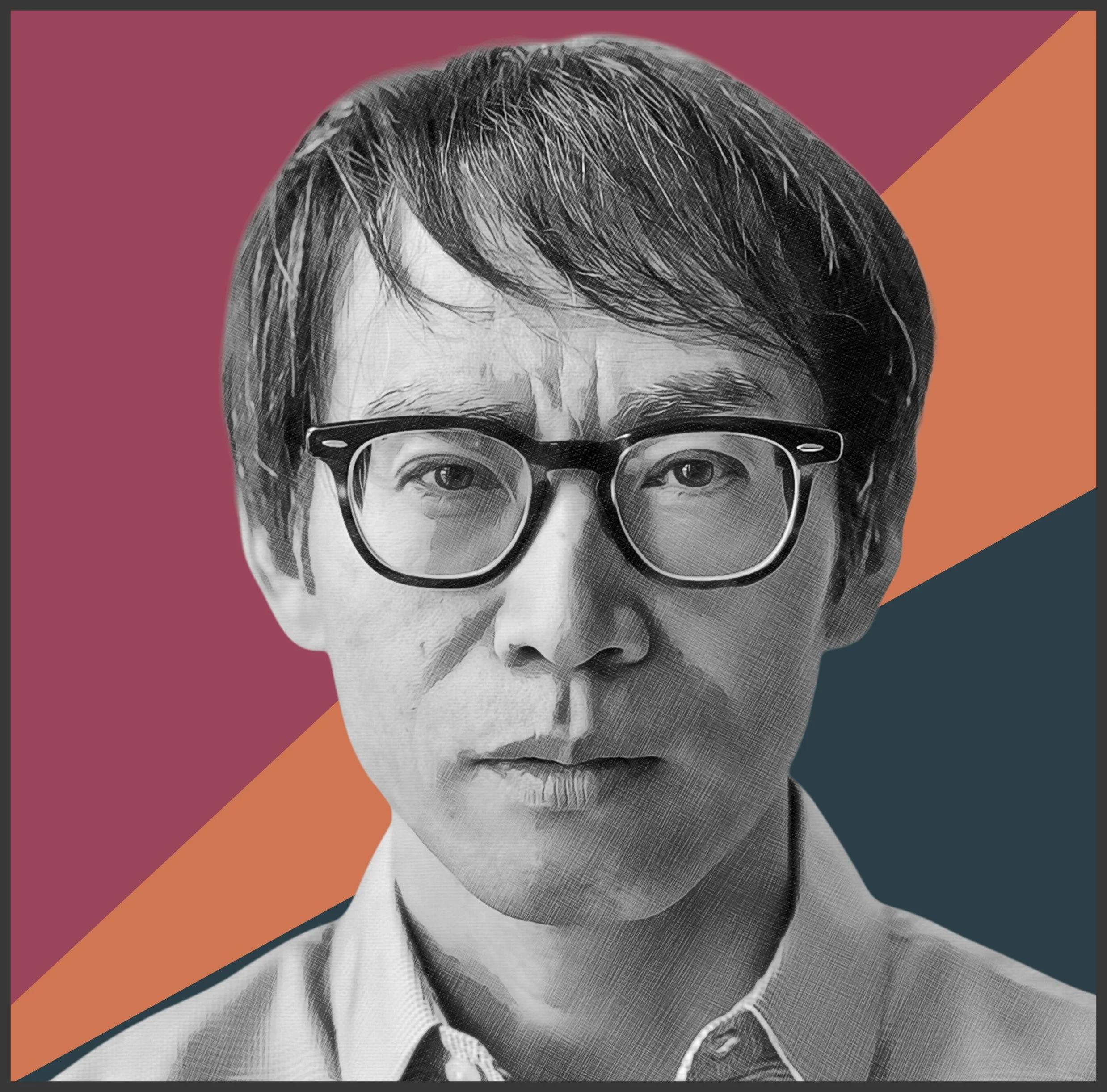
WITH SHIGEHIRO OISHI, PHD
A world expert in social ecology and well-being explains why novel experiences that bring both positive and negative emotions are a key ingredient in a fulfilling life.
Listen Now
We often confuse happiness with the absence of sadness, or a meaningful life with a productive one. The result might be a life that runs smoothly, but feels strangely flat — as if something essential is missing from the story. What if a truly good life isn’t just happy and meaningful, but also interesting?
Our guest today is Shige Oishi, PhD, professor of psychology at the University of Chicago and author of Life in Three Dimensions (2025). Oishi pioneered the idea of psychological richness — the notion that a good life requires a diverse set of interesting, even disorienting experiences. As an expert in social ecology and well-being, his work spans more than 200 scientific articles and has been featured in outlets such as The New York Times, The Washington Post, and The Wall Street Journal.
Over the course of our conversation, professor Oishi traces his own journey from an undergraduate in booming-economy Tokyo — surrounded by overworked, unhappy adults — to a career in psychology in the United States, where seeing professors live differently opened his eyes to alternative ways of being. We explore how cultures like Japan, the United States, Finland, and Denmark differ in what they chase and expect from life; why small, everyday joys and high-quality relationships matter more than grand achievements; and how “success” and “ambition” can quietly shape our sense of happiness.
We then dive into psychological richness as a third dimension of the good life alongside happiness and meaning — one defined by variety, newness, and memorable stories, often colored by both positive and negative emotions. We discuss the risks of chasing only stability and efficiency; the importance of spontaneity; and the surprisingly simple ways we can cultivate psychological richness by staying curious and saying “yes” more often.
-
Shigehiro “Shige” Oishi is a Japanese author and professor of psychology at the University of Chicago. He earned his B.A. at International Christian University in Tokyo, Ed.M at Teachers College, Columbia University, and Ph.D. at the University of Illinois at Urbana-Champaign. He taught at the University of Minnesota, Columbia University, and the University of Virginia before joining the faculty at the University of Chicago.
Dr. Oishi is regarded as a world expert on happiness, meaning, and culture. His research is centered on well-being – its predictors, consequences, and the forms it takes across different cultures. His lab also investigates the socio-ecological conditions that facilitate or impede well-being.
He is the author of the influential book Life in Three Dimensions: How Curiosity, Exploration, and Experience Make a Fuller, Better Life. In 2017, he was awarded the Society of Experimental Social Psychology Career Trajectory Award, followed by the Carol and Ed Diener Award from the Society for Personality and Social Psychology in 2018 and the Outstanding Achievement Award for Advancing Cultural Psychology in 2021. His work has been published widely in popular media outlets including The New York Times, The Washington Post, The Wall Street Journal, and The Financial Times.
-
In this episode, you’ll hear about:
3:00 - Oishi’s path to studying the psychology of wellbeing
8:45 - Rising competitiveness in American culture and how it is affecting lifelong happiness
13:30 - Why Finland and Denmark are regularly rated the happiest countries
15:55 - Whether there is a “correct” way to find meaning and happiness
19:15 - What it means to be “psychologically rich”
28:00 - Balancing positive and negative emotions in a happy, meaningful, and psychologically rich life
41:30 - Developing psychological richness
45:45 - How psychological richness can help address physician burnout
-
Henry Bair: [00:00:01] Hi, I'm Henry Bair.
Tyler Johnson: [00:00:03] And I'm Tyler Johnson.
Henry Bair: [00:00:04] And you're listening to The Doctor's Art, a podcast that explores meaning in medicine. Throughout our medical training and career, we have pondered what makes medicine meaningful. Can a stronger understanding of this meaning create better doctors? How can we build healthcare institutions that nurture the doctor patient connection? What can we learn about the human condition from accompanying our patients in times of suffering?
Tyler Johnson: [00:00:27] In seeking answers to these questions, we meet with deep thinkers working across healthcare, from doctors and nurses to patients and healthcare executives those who have collected a career's worth of hard earned wisdom probing the moral heart that beats at the core of medicine, we will hear stories that are by turns heartbreaking, amusing, inspiring, challenging, and enlightening. We welcome anyone curious about why doctors do what they do. Join us as we think out loud about what illness and healing can teach us about some of life's biggest questions.
Henry Bair: [00:01:02] We often confuse happiness with the absence of sadness or meaningful life with a productive one. The result might be a life that runs smoothly but feels strangely flat, as if something essential is missing from the story. What if a truly good life isn't just happy and meaningful, but also interesting? Our guest on this episode is Shige Oishi, a professor of psychology at the University of Chicago and author of Life in Three Dimensions. Doctor Oishi pioneered the idea of psychological richness, the notion that a good life requires a diverse set of interesting, even disorienting experiences. As an expert in social ecology and well-being, his work spans more than 200 scientific articles and has been featured in outlets such as The New York Times, The Washington Post, and The Wall Street Journal. Over the course of our conversation, Professor Oishi traces his own journey from an undergraduate in booming economy Tokyo, surrounded by overworked, unhappy adults to a career in psychology in the United States, where seeing professors live differently opened his eyes to alternative ways of being. We explore how cultures like Japan, the United States, Finland and Denmark differ in what they chase and expect from life. Why? Small, everyday joys and high quality relationships matter more than grand achievements, and how success and ambition can quietly shape our sense of happiness. We then dive into psychological richness as a third dimension of the good life, alongside happiness and meaning, one defined by variety, newness and memorable stories, often colored by both positive and negative emotions. We discuss the risks of chasing only stability and efficiency, the importance of spontaneity, and the surprising, simple ways we can cultivate psychological richness by staying curious and saying yes more often.
Henry Bair: [00:02:53] Shige, thanks for being here and welcome to the show.
Shige Oishi: [00:02:56] Thank you for having me.
Henry Bair: [00:02:57] I came across your recent book on the psychology of living a happy, meaningful, and rich life and immediately knew we had to bring you on the show. Can you start by giving us a brief overview of your life trajectory, and what led you to the work in this book?
Shige Oishi: [00:03:12] So I was an undergraduate student in Tokyo. It was late 80s, early 90s. So Japanese economy was great. So, you know, regardless of your GPA, essentially you could get a pretty good job if you went to a, you know, elite university. So when I was undergraduate, I was thinking about why, you know, why should I do for the future? And, uh, most obvious and easiest option was to work for Japanese company, which was certainly, financially speaking, uh, you know, stability, life of stability and everything. It was great, except that I realized that I have to commute in a packed train for like one hour or sometimes hour and a half because housing was very difficult there. So that's when I was started thinking about, so what is school life? And also around that time there was a phenomenon that Japanese workers, office workers, especially male workers, they work so hard, you know, 60 to 80 hours a week and spend so much time with the coworkers that they feel more comfortable with coworkers than with their families. So they didn't want to go back home, some of them. So just like some kids don't want to go to school, there were people, business people who didn't want to go back home. So I really wonder about like, what's wrong with these people? And how can I avoid to become an adult like that? And therefore I study psychology. And I realized that the midlife crisis is one of those popular topic back then and wanted to study. And I realized also that United States is the best place to study psychology. So for for my PhD, I decided to go to University of Illinois Urbana-Champaign because at that time there were only 1 or 2 people who study happiness scientifically. Psychology. So that's how I got into psychology and became interested in studying psychology.
Henry Bair: [00:05:16] That's fascinating that you talk about growing up in that environment, you know, so I grew up in Taiwan, and Taiwan does not have the same work culture as Japan, but I think I'm pretty familiar with just because of the close cultural ties. Sure, I'm aware of that culture in Japan. You grew up there. You witnessed that all around you. Was there any particular reason why you stepped outside of that environment and took a look and said, wait, is this right? Why is this happening? You know, like everyone around you is doing this. Like what? What about you or your life experience or people around you. Do you think made you sort of want to question that system?
Shige Oishi: [00:05:57] Yeah, I think I was questioning, but also the big thing was that in my senior year, I got this fellowship. So I was able to study in the United States. And once I lived in the United States and then saw the academic world, I also thought, oh, this is this is really amazing. Actually. American professors like at least the school I went to, Bates College in Maine, the small liberal arts college professors leave the door open and invite students to come. And in Japan, it was like so difficult to find our professors. The door is always closed. And and so the relationship between students and professors were closer. And I thought, being professor seems like a wonderful job. You know, in a very hierarchical society of Japan, like, professor is like a god and you can really see, you know, them to sort of really actually engage intellectually day to day. So so that was really, really attractive as well.
Henry Bair: [00:07:00] Yeah. So your multicultural experiences obviously. I mean, it sounds like that was a huge reason. And maybe one of the main reasons was just stepping out literally when I when I asked you, you grew up in that environment, but what made you step outside that system and think critically about it? It sounds like your answer was literally stepping outside of the country and sort of leaving and realizing there was a different way to living and working.
Shige Oishi: [00:07:22] Definitely, definitely. That was totally out of box to me. Even professors in Japan, the way they work is very similar to like a somebody who is working for a corporation. So, so that that lifestyle and the relationships and so forth seems very, very different to me now.
Henry Bair: [00:07:40] So then here's a question. Do you think the people who are in that system in Japan, do you think they are happy in their own, in their own minds, in their own ways?
Shige Oishi: [00:07:48] Yeah. They're not that happy, right? I mean, there are huge international surveys again and again saying Japanese are not that happy. And it's in part because of the time, lack of free time. I mean, they don't have time to enjoy their lives. So there are many, many good things about Japanese societies. You will be very close with your coworkers. You have dinner. Lunch? You know, drinks very often, like in the United States. Like there's quite a bit of separation between work and private life. So you don't hang out with your coworkers all the time. Whereas in Japan, very much a huge camaraderie, a sense of camaraderie, you know, social support and things of that nature, just that you have so many obligations and duties and you know, when your boss is still in the office, you cannot leave your office even if you are done with your work. So that's not a recipe for happiness, right?
Henry Bair: [00:08:43] Hmm. Fascinating. So. So, okay, so coming to the United States made you think critically about what it was like in Japan. But let's flip that for a second. Has your personal journey and subsequent explorations, because I know one of your one of the pillars of your academic work is looking at cultures across the world and looking at how different people work and find happiness, meaning in life. Has all of this together changed your perception, or your idea of what it means to find fulfillment in life? Like you know, has your experience in Japan made you think critically about the United States? Like, what do we not do well here? Um, or what do people conceive differently? What do Americans conceive about? Happiness and fulfillment that might not necessarily be complete based on your studies and your experiences?
Shige Oishi: [00:09:32] Yeah, definitely. So the funny thing is, 30 years ago when I came to United States, now 40 years ago. Yeah, sorry, 40 years ago, when I came to state, essentially, I felt like America had a lot of opportunities. And also, you know, there are lots of second chance opportunities, whereas in Japan, maybe Taiwan, two, unless you go to enter like right school, your future feels like very, very limited. That was really revealing about the US to me, that somebody can go to community college and then transfer to the state college and then eventually go to a place like Stanford. That's possible. Whereas in Japan that's not going to be possible at all. Unfortunately, however, last 30 years or so, I feel like America became also very, very competitive. The college admission became so, so, so competitive. So now ironically, I see like very much like Japanese, like high school experiences here. And people are really worried about not getting into right schools and so forth. And people tend to equate, I feel like that personal success with happiness. Whereas Japan, yes, educationally very, very competitive. But at the same time, people think of happiness as good luck and fortune. If you're lucky, you get to be happy, so personal failure doesn't hurt them that much. Whereas here, because they focus so much on the personal accomplishments and so forth, and that is requirement for happiness, that I feel like there are lots of depressions in the United States and anxiety. Right. Anxious generation now. So that's that's something I'm a little bit concerned about American society today, compared to 30 or 40 years ago, where there were lots of like leeways to like, you can be successful in very many different ways, but now I feel like a little more obsessive thinking that you have to go to elite school.
Henry Bair: [00:11:38] Yeah, it's fascinating because I grew up in Taiwan. I see what you mean. Definitely. There's that. That whole idea of your life is so dependent on the first 25 years of your life, essentially. And that in turn rests so strongly on academic achievement and tests. Right? And it's not even like a lot of different tests. It's a few tests.
Shige Oishi: [00:11:58] Yeah.
Henry Bair: [00:11:59] Like 1 or 2, you know, for high school entrance exam and then college entrance exam. And that sort of determines not only what school you go to that determines what you study. Right. Because I remember my father was telling me he's a physician in Taiwan, and he was telling me that there really isn't a choice. You know, you do as you try your best to score as high as possible on the exam. And then if you score really well, like in the top, literally the top 1%, then of course you go to medical school. There's not even an option. It's not a debate. That's what you do and that's what's going to make you happy and successful. And in the US, I think I agree with you. I think growing up, I growing up in Taiwan, I perceived of the US and in fact, my parents told me that I should come to the US because I could define my own meaning of what it means to be successful and happy. And actually, I don't know if that's necessarily a true distinction anymore, just because when I went to Stanford for medical school and Stanford is one of the best colleges, uh, so, I mean, I never I didn't go to Stanford for undergraduate, but I interacted with a lot of undergraduate college kids. And across the street from Stanford was were two high schools. One is called Palo Alto High School and one is called Gunn High School. And and these are some of the most elite high schools. And I remember thinking when I first heard about elite high schools like, wow, this sounds like Taiwan. It's like I didn't, you know, I realized, like, high schools could be so elite and competitive and and at the same time, I heard stories of how these high schools had such extremely high depression and anxiety rates.
Shige Oishi: [00:13:26] Yeah.
Henry Bair: [00:13:26] That's right. Where I went to college was at Rice University, and Rice University was one of the the more well-regarded schools in Texas. So I saw the same phenomenon in Houston, Texas, as well, where you had elite high schools and people were so stressed to get into the best schools in the state and the best schools in the country. So it's fascinating that you draw that parallel. So you talked about Japan. You talked about the United States. Have you come across other modalities of happiness and fulfillment from other cultures that you feel like are worth highlighting?
Shige Oishi: [00:13:56] Definitely. So, you know, when you look at the international ranking of happiness, always like Finland and Denmark score high. And what is really fascinating is that if you dig deeper and then you know the explanation as to why they are so happy is not what we expect, right? I mean, Japan, us very, very success oriented society. But what they say is that, well, we don't expect that much. So we're grateful for what we have. So it is really interesting. What they are happy with is pretty much the contentment, you know, rather than just trying to maximize the success. So William James, the founder of psychology, wrote in The Principles of Psychology back in 1890 that the self-esteem could be construed as the amount of success divided by your ambitions and happiness is very much similar thing. The happiness you know, you can think of success divided by the ambitions, and Americans in particular, are trying to be happier by maximizing that success. Whereas I think places like Denmark and Finland, they're trying to reduce the ambitions and thereby increasing the overall happiness. So I think that's a very, very good model of happiness. And of course, Finland and Denmark is social democratic society, so they don't have to worry about, you know, retirement education is completely free and so forth. So social network safety net is right there. So I think you don't have to be so competitive and try to maximize your income or anything like that to live a decent life. So I find that very, very appealing to me. And my plan is spending my sabbatical in part in Finland, in part in Japan.
Henry Bair: [00:15:55] Fascinating. So here might be a kind of a controversial, well, not controversial question, but just just a more pointed question to, well, you've obviously dedicated your academic life to studying these concepts, you know, happiness, fulfillment and psychological richness. We'll get to that in a bit. But happiness and meaning, these are things that have long been in the domain of philosophy, not necessarily psychology or the sciences, but for the longest time it's been a more so just thinking about this, more like the domain of the humanities and the arts. And in fact, you could argue that you might argue that the pursuit of happiness and meaning is the fundamental reason that people pursue the arts and humanities. Do you think, based on your studies, that there is a right way or a proper way or a way that is somehow better than others of trying to find meaning and happiness? Right. Because you're talking about all these different cultures and comparing them and say, well, some countries clearly are happier. Is your take away or are you going to make the claim that there are there is a better way to be happy and find meaning than others?
Shige Oishi: [00:17:02] Yeah. So I think that international surveys and cross-cultural data shows that some societal conditions are more conducive for happiness for individuals to pursue particular happiness. I don't like to give them prescriptions because, you know, for psychologists like me, what we are trying to do is just try to quantify and measure individual differences of who is happy, who is less happy, and what predict those differences. But in terms of how they define their own happiness and so forth. I think it's completely up to them. So oftentimes the question is like, okay, imagine your life in terms of the latter. The bottom of the ladder is the worst possible life for you. And what might be the worst possible life for you personally. And then they can think about illness whatever. Right. So that's totally up to them. And also that the other end is top of the ladder. Let's say that's ten and that's the best possible life for you. And what does that look like to you. So it might be healthy or wealthy or whatever you want to define. But then we ask okay, so where do you think you stand in terms of your current life? So what life satisfaction question I'm satisfied with my life. The conditions of my life are excellent. And then you just agree or disagree and specific sort of content of what looks like the excellent life conditions or satisfying life itself is all up to you. So that part I don't. I don't dictate at all, just that I do believe that you can quantify individual differences are meaningful. For instance, those people who have a lot of good social relationships tend to say they are happy. And therefore you might infer that, yeah, if you want to be happy, you should have some good friends and relationship around. But I don't necessarily say this is the best way to achieve the happiness or meaning or richness. There are a lot of hints based on the evidences, but.
Henry Bair: [00:19:11] The last point you made reminds me of guests that we had on the show Doctor Robert Waldinger, The Harvard Study of Adult Development, which which he runs, he tracked many, many generations of people all the way back from, I don't remember like the 30s. I think it was when the study started. And to look at basically the question is what ultimately makes people happy? And and as it turns out, it's consistently regardless of where people end up in life, regardless of where people started in life, what job they're in. Ultimately, the one thing that seems to come through, uh, sort of, regardless of all those other factors, is having good social connections. Mhm. Um, and so when you ask, when you ask people at the, at the later stages of life to reflect on what made their life well lived, it wasn't really so much about how much money they made or what company they worked for. It was about who they married and who their friends are and who their relationship with their children. So that's really fascinating. Um, and sort of lines up with what you just shared with us. So I alluded earlier about third dimension psychological richness. Um, and, you know, I think certainly happiness. Okay. Everyone talks about happiness. And then there's meaning, which we on this show, we've talked a lot with, with patients and caregivers and doctors and psychologists about finding meaning. Actually, we've talked to theologians and ethicists and writers. Then you have this. You extend that and say, oh, wait, there might be a third thing that that's worth considering. Can you tell us what that third thing is and how it's different from the first, from happiness and meaning?
Shige Oishi: [00:20:43] Sure. So personally, I studied up in the lab research lab on happiness and happiness is being satisfied with where you are, happy with where you are. And when I got my PhD in 2000, one of the first student, Mike Steger, wanted to study meaning in life. So we started studying meaning in life. And then the meaning in life consists mainly of the three parts. One is the sense that your life matters to others. So sense of significance. And the second part is having sense of direction or purpose. And then the third is the sense of coherence that we have so many different roles. Professor. Doctor, husband, wife, etc., etc. and you know, it's often fragmented, but the person who finds their life to be meaningful, you know, feel that all different roles they play fit together. So those three are the important factor for the meaningful. So I studied happiness and meaning for maybe 20 years or so, and realized that the predictors of happiness and meaning are very, very similar. So close social relationship is one, but also having a lot of stability in life. So biggest finding in happiness is that it's not a rare big positive events like wedding or birth of a baby and so forth that makes you happy in the long run. It's more the small joy in life. So having a cup of coffee with your best friend every week, you know, taking a walk with your spouse every morning and that type of thing.
Shige Oishi: [00:22:25] And then that gives you a sense of meaning as well, that you're you're there, you're making a difference in the world. And then realize that in 2015, you know, I was 45 years old and asked myself, am I happy? I say, happy, yes, I'm happy. And find my life to be meaningful. And I say, yeah, I find my life to be meaningful. I play catch with my kids and try to coach them baseballs and, you know, things like that, right? But then I ask, is it the complete life? It's a full life. And I couldn't say yes. And therefore, when I had my first lab meeting in the fall semester, I asked my graduate students and a postdoc, what do you think? If I'm happy with my life and find my life to be meaningful? Is it the full life? And about half of them said she gave. Don't be so greedy. If you are happy and find your life to be meaningful. That's great. What else do you want? And I feel like, oh, yeah, that's true. But then again, the other half say, yeah, you're right. I think something is missing. And then we systematically listed the predictors of happy life and meaningful life and realize how, you know, bias those factors are toward the stability and what we admire in life. At least some life is not about the stability, but the people who challenge themselves.
Shige Oishi: [00:23:54] And they those who live very adventurous life, sometimes even dangerous life, artistic life. And we started thinking about people who might say their life is not happy or meaningful, but nevertheless, people find that other people think that those are the admirable life. And we found so many examples of those. And in the end, initially we thought about, well, maybe call it experientially rich life, rich in terms of experiences. But that sounds like a little bit of sensation seekers who go out and do all kinds of wild stuff. People have very intellectually rich life, too, by appreciating the arts and, uh, you know, poems and, you know, a bunch of those kinds of things. So we decided to call it psychological richness. So we define psychological richness as the richness in experiences and in the stories you have. So just like some people are materially rich that they have a lot of investments and assets, psychological rich people have a lot of interesting stories to tell. So in terms of psychological portfolio, some people have a really rich because they have variety of interesting stories to tell and life experiences, whereas other people have much, much less. So that's how we define psychological rich life. And we often say psychologically rich life is the life with diverse, interesting experiences, and that often result in the change in perspective.
Henry Bair: [00:25:35] Are there specific elements like, you know, universal elements you've you've identified in psychological richness?
Shige Oishi: [00:25:42] Yeah. So we also did the daily diary study to sort of understand rich life is very abstract. But when you break down to the rich day as opposed to the happy day or meaningful day, maybe it's a little bit more understandable. So we did the 14 days daily diary studies, and every day, essentially, the participants had to say, how happy were you today? How meaningful was the day to day and how psychologically rich was today? And we give the definition of psychological richness first, but then also we ask a bunch of things they did. Did you play video game today? Did you go to gallery art galleries today? Did you take a walk? Did you go to some sporting events? That type of thing. But also we ask how typical was today? How much routine activities did you do as well as? Did you do anything new? Yes or no? Did you meet anyone new? Yes or no? Did you eat anything new? Yes or no? Then we can really just analyze. And what day for this particular individual was psychological rich. Which day was not? And what differentiates these? And essentially we found that on the day they did something new, they felt psychologically richer. But interestingly, we also asked a bunch of emotion how happy, sad, angry and content today. And the psychological rich day was actually the day when they felt a lot of positive emotion, but also negative emotions as well. So that's the huge difference with the happy day. Happy day is the day when they felt a lot of positive emotion. They didn't feel any negative emotions. But to the extent that the psychological richness could be gained through difficult situations or difficult experiences, they do report a lot of negative emotions as well. So you can you can think of psychological richness and rich life to be not just positive emotion and not having negative emotion, but rather not just the positive emotions, but actually having a lot of negative emotions as well.
Henry Bair: [00:27:51] Yeah, the last point is really interesting because it is countercultural. I would say.
Shige Oishi: [00:27:57] Sure.
Henry Bair: [00:27:58] Early on in this podcast, we interviewed a psychologist named Anna Lemke, who's a leading researcher on addiction medicine, but her work really extends far beyond that. She wrote a book called Dopamine Nation, which is very popular and sort of characterizes our, our current age, um, at least in specifically, I suppose in the Western world, as so dominated by the idea that true happiness is just feeling good. Right. It's just it's at its most base level. It is reduced to dopamine. And everything we do in our life from, uh, the interactions we have with other people to how we use technology to the kinds of jobs we find ourselves in, to how we spend our money, is sort of oriented towards maximizing essentially, dopamine. But you're saying that one of the features, when you study people who, on a day to day level, lead psychologically rich lives, are people who have both positive and negative things. And so, I mean, how does that challenge or change your perception of what emotional well-being means?
Shige Oishi: [00:29:00] Yeah. So so oftentimes if you want to maximize happiness, right, or happy life and life satisfaction, then one way is of course try to experience a lot of positive emotion. But another way is really trying to reduce negative emotion so people spend enormous amounts of time managing emotion. Regulation is a huge research area, obviously, because so many people want to get rid of their negative emotions. So how can I get rid of shift and change? Cope. So there are lots of papers, a lot of interesting strategies. But essentially what we are saying is that, look negative things happens and negative emotions is inevitable. So to some extent, you know, you just need to accept those negative emotions. And conveniently we have psychological immune system. So actually we are better. You know, just like the body has the immune system, we do have a psychological immune system. So when negative events happens like a negative event the virus get into your body. We can sort of like, you know get rid of that. There are a lot of like defense mechanism that helps us get rid of it. But even further that I think in terms of psychological richness, oftentimes when we experience something negative, actually, that gives us a moment to think about, okay, why do I feel this way and start thinking about the world and yourself in a little bit different way than just experiencing the positive things, right? If you just succeed, succeed, succeed, you don't have to really think deeply about your life or yourself or the world.
Shige Oishi: [00:30:44] Everything is going well. It is the moment when you fail that actually you think about what did I do wrong? You know, what does it mean to me? And then what? What is this world for? And those are the moments, actually. You realize, oh, maybe I'm this kind of person or oh, I learned this. Therefore I can move on and build on these experiences. And I think the negative emotions and experiences are a really, really critical to build psychological richness and richer and stronger life, more resilient life. Because when you try to avoid everything negative, then you try to stay in the comfort zone. And when you are just willing to embrace these negative emotions and negative events, that's when you can actually go out there and do a lot of interesting things. So, you know, you explore way more. You're more way more curious when you're just really worried about having some negative emotion, then you're not going to go out there and try.
Henry Bair: [00:31:45] At the risk of sounding like coming from a very privileged position, just to be clear, we're not saying that you should actively try to seek negative emotional experiences. It's more so being open to it, right? Being being willing to recognize that certain that certain life experience will open yourself up to experiencing negative things, but not shying away from that and trying to figure out how you can build that into your life and how to process that in a more healthy way.
Shige Oishi: [00:32:07] Right, exactly.
Henry Bair: [00:32:09] And that's fascinating too, because what you've defined, what you've laid out for us as psychological richness, I can immediately see how that can lead us down different paths from if we were trying to optimize for happiness and meaning happiness, like we said. I mean, you've already we've already talked about how psychological richness, it's not the same thing as happiness because it literally contains emotional diversity, positive and negative. Okay, so that's how difference. But when it comes to meaning, same thing here because I can imagine how you were saying that you're reflecting on your own life about fulfillment. You feel fulfilled, you're on a life path. Everything is set for you. And yet you don't. You feel like there's something missing there. And so, in a way, finding meaning and fulfillment in life, at least for many people, depends on a degree of stability. That's right. The idea is that, oh, you found something. You're locked on this, this railroad track. You're on track to be fulfilled. Why step off of it? But you're saying your idea of psychological richness proposes that we take time to step away from that path of being fulfilled and that very scary. So how does that work together? Like how does one okay, let's say that okay, I acknowledge and I and I embrace your this framework of happiness meaning and psychological diversity or psychological richness. But how do I actually live that. How do I if I have found meaning and happiness, how do I bring myself to venture into the third one? This third element?
Shige Oishi: [00:33:32] Definitely. So the meaning is that you have to sort of feel that you're making difference in the world, and in order to make a difference in the world, we usually focus on a few places because it's easier to see how you are making difference. If you're a teacher, you're looking at your your students and how they are progressing, and then you see their progress gives you a pleasure and a sense of meaning that you're making difference in the world. But it doesn't happen for just one day. Teaching. Right? I mean, you have to be there teaching every day for an extended period of time. Volunteering is the same thing. You cannot just volunteer one day and make a difference. In order to make a difference, you have to be there for years and years. So that's when I think the meaning or effort to make your life meaningful becomes a little bit tiring, and some people get burned out. What I'm saying is that that is the way to make your life meaningful. So I encourage you to do that. But at the same time, in the long run, we have enough time to step away from that teaching 9 to 5 or volunteering once a week or twice a week and find yourself doing something different, because the happiness and meaning center around very routinized structured life. And of course, in general in western democratic society, we we have to work hard. We have to be productive. We have to be efficient. So our focus is so much, you know, get things done. We live by the schedule. Every morning you check the schedule and then okay, I have to do these kinds of things. I check off the to do list every day.
Shige Oishi: [00:35:20] So what psychological richness approach proposed is that yes, in order to sustain your academic or professional career, you have to do that. But at the same time, don't do that 100% of the time every day, right? Make sure you have some freedom free time here and there if it's possible, so that you can use that time flexibly. Sometimes if you feel like taking a walk, take a walk right. And then if you can change the commute, then change the commute. Even like when I go to lecture, I try to change the route so that I see a different scenery. I find some beautiful trees or a chapel here and there. So those little things actually gives you sort of the refreshed view of the life. I think when you focus on productivity, efficiency and also making a difference in the world, we become so serious. So, so the psychological richness is proposing is that we need also to be playful and we forget adults in particular, just really forget what it's like to live a playful life, right? When you have a child like five years old, right? They don't live in just a, oh, I have to do this and that, right? They live somewhere between the fantasy and reality and just go after a ball or whatever. So that's I think, what helps. So even if your ultimate goal is making a difference in the world, even if you want to have a meaningful life, I think having sometimes this playful mindset, psychologically rich mindset, I think helps you even, you know, becomes, I think, less likely to burn out of your pursuit. So? So I think that's important.
Henry Bair: [00:37:06] You talked about how across multiple transnational international cultural studies have repeatedly, again and again shown that certain cultures are. Again, when you do these subjective surveys, it's very dependent on what these terms even mean. But you talked about how some countries are more happy than others. You talk about how some countries maybe you have surveys on how people are more fulfilled than others. You know, you've come up with this psychological richness, which is this third dimension. Have you done similar international studies or cross-cultural studies on this? And are there examples of people or groups or cultures that seem to excel or seem to really pursue or value this third dimension and demonstrate why it's worth pursuing?
Shige Oishi: [00:37:54] Yeah, so we have some cross-cultural studies, but one study we published in 2020 had nine countries. And there we asked sort of the preference question, if you can pick just one life, which one would you choose? Would you like to have a happy life? Would you like to have a meaningful life, or would you like to have psychologically rich life?
Henry Bair: [00:38:19] How did you define psychological richness in these surveys? Because people probably have different ideas of what they are.
Shige Oishi: [00:38:24] Yeah. So so we give the short definitions here. We mean, you know, happy life to be a comfortable, enjoyable. You leave the pleasant life a meaningful life. You're making a difference in the world. And psychological rich life is the life where you have, you know, interesting life, eventful life, and where you experience a lot of different things. So give, give sort of a clear definition and then say, okay, if you can pick just one, which one would you choose? And then Americans typically pick like 62% of them, 63% of them choose. I just want to have a happier life. And then about 25% of them pick meaningful life and only 13% pick psychological rich life. So Germany, Norway, Portugal are interesting. About 50% pick happy life, about 30% pick meaningful life, and about 20% pick psychological rich life. So I would say among the countries we surveyed, those European countries seems to be a little bit higher on psychological richness. And Singapore was the lowest. Only like 66% chose psychologically rich life. They wanted either a happy life or a meaningful life. Interestingly, we had Japan and Korea. Majority of them wanted to have a happy life, like 70%. And then the rest was spread in between the meaningful life and the psychological rich life. So what's interesting was that Japanese and the Koreans desired meaningful life the least among the the nine countries, whereas in terms of the richness it was, Singapore followed by Angola were the least favorite. So, you know, there are some some cultural variations, but we don't have a huge international surveys like Happiness or Meaning. So we don't we don't exactly know in which country might be the highest in terms of psychological richness. So we are working on that. But the Gallup organization has one item that is sort of similar. Did you do anything interesting yesterday? Yes or no? And there are quite a I mean, huge cross-cultural differences there. It's sort of random. So we haven't quite figured out like what might explain why certain countries seems to be higher on on that dimensions.
Henry Bair: [00:40:53] Okay. So so you haven't actually found specific themes like there are clearly statistically significant differences, but you can't really haven't really identified any predictive factors for why that is.
Shige Oishi: [00:41:03] Okay. Yeah. But my my sense is that the place where people appreciate the art, right? I mean, there are huge cultural differences in how much they like art esthetics. And I feel like those places where people emphasize and esthetics and the arts, other places probably a little bit higher in psychological richness.
Henry Bair: [00:41:29] So we often think about, you know, when you talk about psychological richness, being open minded and curious and having, I suppose, an esthetic sensibility, we often think of those things. Well, I often think of those things as rooted in personality differences. And, you know, some people are naturally more curious and risk taking than others. And that's right. Just because some people prioritize stability, I don't necessarily think that as a negative thing. I just think of that as just a personality trait. And yet, if your research consistently shows that people who are more open and curious lead more psychologically rich lives, which in turn allows for a more just overly fulfilling life? When taken in context with both happiness and meaning, it would imply that these things, even if they don't come naturally to you, they are worth trying out. I suppose trying to build more into your life. How would you counsel someone who just isn't like that? Some people who just they've always found maybe they might even say I am happy. I feel happy in my stability. How would you counsel them on trying to build more of that openness and curiosity into their lives?
Shige Oishi: [00:42:34] So I like familiarity, I like stability. Actually, I'm not naturally inclined to go out and do different things, but knowing that whenever my wife says, oh, let's go to a museum or let's do something different now, I say yes and tag tagoloan. So. So the easiest thing is if it's not natural for you when your friends or family members suggest something doing, you know, doing something new, then you should be just being agreeable, right? Just say yes and you actually end up with doing something different. And the spontaneity is another. Things like we are. Our life is so scheduled now that we don't do anything spontaneously. So I just consciously try to, to, uh, you know, suggest a cup of coffee with friends and colleagues and so forth, like, you know, more spontaneous, not the planned outing. Uh, I think that's that's another way. And being, you know, trying to be playful, it's okay to take a vacation from your social and economic realities once you know, here and there and be goofy, open to be a fool, essentially. So, so, so I think those are the mindsets that help you become a little bit a person who is open to experiences and curious.
Henry Bair: [00:43:55] What I am taking away that's really important is that it's easy to hear the surface of what you're saying and say, oh, do more experiences. And, you know, obviously now, I think especially with younger generations in, in the West, we're seeing this, this terminology or this concept of like the experiential economy where where young people love spending money instead of on things they're now they want to travel more, they want to have good life experiences and buy good usually entails a lot of times it entails going like, you know, luxurious vacations and fun things to pamper themselves. So I think it's really important, I think, at least from our conversation, to not think of psychological richness as doing a lot of things that might cost a lot of money and only only only available to people who have the means. I think your example of taking a different path to work exactly that, or having a cup of coffee with different friends or going to a free museum. You know, um, I think that's also qualifies. And that can also be very helpful.
Shige Oishi: [00:44:55] And, you know, I have an example in the book that if you want to maximize happiness, then what you do is go on a luxury, you know, package tour. Whereas if you want to maximize psychological richness and you do the backpacking tour and I did I did this ridiculous, uh, Greyhound 30 day trip of the United States when I was 18 years old. And that was painful and dangerous and cheap and definitely more psychologically rich experience. So. So it doesn't cost that much money. And actually the the luxury, you know, brings in some of the predictability and so forth. So in a way, I think it's better to to go cheap if you want to maximize psychological richness.
Henry Bair: [00:45:45] Thanks for clarifying that. Yeah. In our last, uh, sort of like final segment here. I want to bring it to health care workers, because along this conversation, I've thought of so many places where I could have started asking this, which is essentially physicians, clinicians, people in the helping professions, nurses. Intuitively, you would think these people obviously lead very meaningful lives because they've dedicated so much. I mean, doctor physicians, I don't know, like a neurosurgeon, for example. They spent obviously four years in high school, four years in college, four years in medical school, but maybe add one extra year for a research year, and then they do 6 or 7 years of residency and then some of them subspecialize in a certain fellowship. So they start working in their 40s. And all along the way, they've had to maintain this extremely high degree of dedication, commitment, sacrifice, so much sleep, be the top of their class, and all for a good cause, right? Of helping people like, how can that be? Not be a good cause, right? That's that's what you would expect from from just people in healthcare. And yet it's not a secret at all that physicians are extremely burnt out. And the AMA, like nearly half of all physicians in America, report feeling burnt out, like they've lost. They've lost their passion for their work. And when surveys explicitly ask physicians, do you find your work meaningful? A shocking number of them, like a third of them say, no, I don't find my work meaningful anymore. Um, and that's obviously very scary for me.
Henry Bair: [00:47:15] I'm still in training, and lots of people I talk to are pre-medical students, and they're seeing all these doctors find losing meaning in their work. And to me, that's always seemed counterintuitive, partly understandable, just because as a healthcare, as a profession, the day to day of it is a lot of, say, documentation. It's a lot of work that you don't really want to do. It's a lot of dealing with administrative tasks and things like that. So that part I get. But I almost wonder if there's something else about how doctors practice medicine these days that robs them of this psychological richness that you've been talking about, that maybe explains some of the burnout. Yeah, and I understand I understand, you know, you're not in healthcare, but I assume you've talked to many people in helping professions. And it could be in a way, I think even educators, even educators can think of themselves as people who help and mentor people who are who are growing, who are younger than yourself. And again, maybe you've talked to educators who feel burned out and you think, wait, but you live your whole life interacting with very curious young people. How can you feel like your life has no meaning anymore? I don't know if you've if you're able to offer any advice or if you've seen any trends or any explanations for why people who, on the surface, work in very meaningful professions feel burnt out and how psychological richness can help help address that.
Shige Oishi: [00:48:39] Yeah. So burnout is really like right. You are running out of fuel and you just energies. I mean just physically really demanding positions like physicians and nurses and things like that. So, so I think that that just really, really just makes things first of all, very, very unhappy. And unhappiness, of course, could color whether you feel like your life is meaningful or whether you're making a difference in the world or not. So I think it is really like understandable that in a healthcare professions and, you know, really busy, overworked individuals find it difficult to see, you know, their life to be meaningful. So one thing I can say is that, well, first of all, definitely you're making a difference in the world. You're helping other people for sure. But at the same time, I think one thing you can do is we see that the Specialization tend to make things boring. And then by, you know, professions, we have to specialize and get the special skills and knowledges in order to advance. So we spend enormous amounts of time on specialization. But I think we should realize that the specialization often deprive of psychological richness. We have a lot of experiments to show that. And also when we focus on one thing, we really lose curiosity. So we randomly assign participants to specialize versus not specialized and then give a trivia quiz.
Shige Oishi: [00:50:21] Who was the only president who had a patent? You can skip this question if you're not interested in. Or you can wait. But if you wait, you have to wait for like 10s to 30s. So this is a way to measure behavioral sort of curiosity. And what was astonishing was that those students who students were randomly assigned to the the specialization condition. They said, I'm not interested in skip this question, skip this question. And what specialization does is write what is relevant, what is irrelevant. And we don't pay attention to the irrelevance. But once you start, stop paying attention to the irrelevant stuff. You also lose this random serendipitous discoveries of joy. So what psychological richness provide is that sometimes, yes, for professional reason, you have to specialize, but you have to be mindful that that is really, really making you almost unconsciously disregard a lot of potentially interesting information. So sometimes you want to step back and then want to be a little bit like a first year medical students, like generalist, curious about everything. But again, going back to our earlier conversation, you know, being playful and being spontaneous. Enjoy the centipede's encounters and discoveries. And those things are the very difficult things that we forget.
Henry Bair: [00:51:49] Yeah. And another thing is one of the you talk about narrative richness and one of the things in again, like somewhat puzzling, one of the things that draws a lot of people to medicine is encounters with patients when they are literally in some of the most important, pivotal moments of their lives. And in a lot of cases, you're talking about people who are dealing with new diagnoses, dealing with irreversible diagnoses. You're navigating very complicated family dynamics.
Shige Oishi: [00:52:16] Sure.
Henry Bair: [00:52:16] End of life moments. Beginning of life moments. Very happy, very sad. Like it's extreme. Like the amount of diversity. And in the face of that, I'm wondering if you have any advice about how to navigate those things. You know, I think I think actually a lot of healthcare workers, in order to minimize burnout, believe that they have to distance themselves from engaging in these things. They think that witnessing or participating in some way, in these kinds of emotionally challenging experiences, wear them down. And actually what they think is what fuels their burnout. But I don't know if you have any advice based on your studies about how maybe that's not the case. Maybe engaging these things, maybe hearing stories is actually a remedy to burnout rather than a cause of it.
Shige Oishi: [00:52:59] Yeah, I think the important thing here is that, you know, there are a variety of different ways to deal with these kinds of difficult situations. And certainly in the emotion regulation literature, distancing self-distancing seems to be one viable option, that's for sure. But at the same time, I think what I mean, for me, I think that's useful is just just holding to yourself is very, very difficult. So whenever you talk about there is a confidentiality issue, but hopefully you can get out of that with your spouse or something a little bit. And talking about this interesting case I've seen today, or this difficult case talking about it with somebody, you know, discreetly, I think really helps. And this is where the social relationship really, really helps, both in terms of processing this difficult situation. But also, you know, sometimes you are witnessing, as you said, diverse, really interesting rare stories. So sometimes I think it is, you know, good to share those stories and remember some of the interesting cases and what you learn, what you were able to do to this patient or family and so forth, remembering the differences you made in your life, as well as the lesson you learned. So I think those are the things that help you process. I mean, going through these kinds of things alone is so extremely difficult. So talk to your friends. Talk to your friends, talk to your spouse about it. Like frequently I think is one way that you can deal with it and benefit in terms of psychological richness as well as meaning and happiness as well.
Henry Bair: [00:54:50] There are a lot of programs, residency programs, medical schools that are now trying maybe, maybe, I mean, not explicitly trying to cultivate psychological richness, but they have they're trying to start like these rounds, storytelling rounds where it provides a space for trainees and medical students and doctors to come together and talk about their experiences, like, what did it mean for your patient? What did it mean for me? How does it situate and contextualize these experiences within the greater picture? I think it really goes to your point about the importance of storytelling. So with that, we want to thank you so much again for taking the time to join us for sharing your insights. I think it's it was such a great conversation because it tied into a lot of the themes that we've discussed on this show with a variety of people, but actually it adds on to what we've already discussed. So what a great addition. So thank you so much for your time.
Shige Oishi: [00:55:42] Yeah. Thank you.
Henry Bair: [00:55:45] Thank you for joining our conversation on this week's episode of The Doctor's Art. You can find program notes and transcripts of all episodes at the doctor's Art.com. If you enjoyed the episode, please subscribe, rate, and review our show, available for free on Spotify, Apple Podcasts, or wherever you get your podcasts.
Tyler Johnson: [00:56:04] We also encourage you to share the podcast with any friends or colleagues who you think might enjoy the program. And if you know of a doctor, patient, or anyone working in healthcare who would love to explore meaning in medicine with us on the show, feel free to leave a suggestion in the comments.
Henry Bair: [00:56:18] I'm Henry Bair.
Tyler Johnson: [00:56:19] And I'm Tyler Johnson. We hope you can join us next time. Until then, be well.
You Might Also Like


LINKS
Learn more about Dr. Oishi’s book Life in Three Dimensions.
Discover the work of Dr. Oishi’s lab here.